RBI Vs Government: Are India’s Institutions Being Undermined By The Modi Government?

The public fight between the Reserve Bank of India and the Narendra Modi government is the latest instance of an unprecedented crisis in key institutions of the country.
Just this year, four sitting Supreme Court judges held a press conference to air their concerns about case allocations; the top two officials of the Central Bureau of Investigation have been sent on leave following an internal fight and allegations and counter-allegations of corruption. Meanwhile, the government has initiated consultations under Section 7 of the RBI Act, which allows it to direct the Central bank in "public interest".
Is there a pattern to key institutions being undermined by the present government?
Here's what former Finance Minister Yashwant Sinha, former Bombay High Court judge Justice BG Kolse Patil, former Commerce Secretary Ajay Dua and Editorial Director of Business Standard AK Bhattacharya had to say:
'This Government Has No Respect For Institutions'
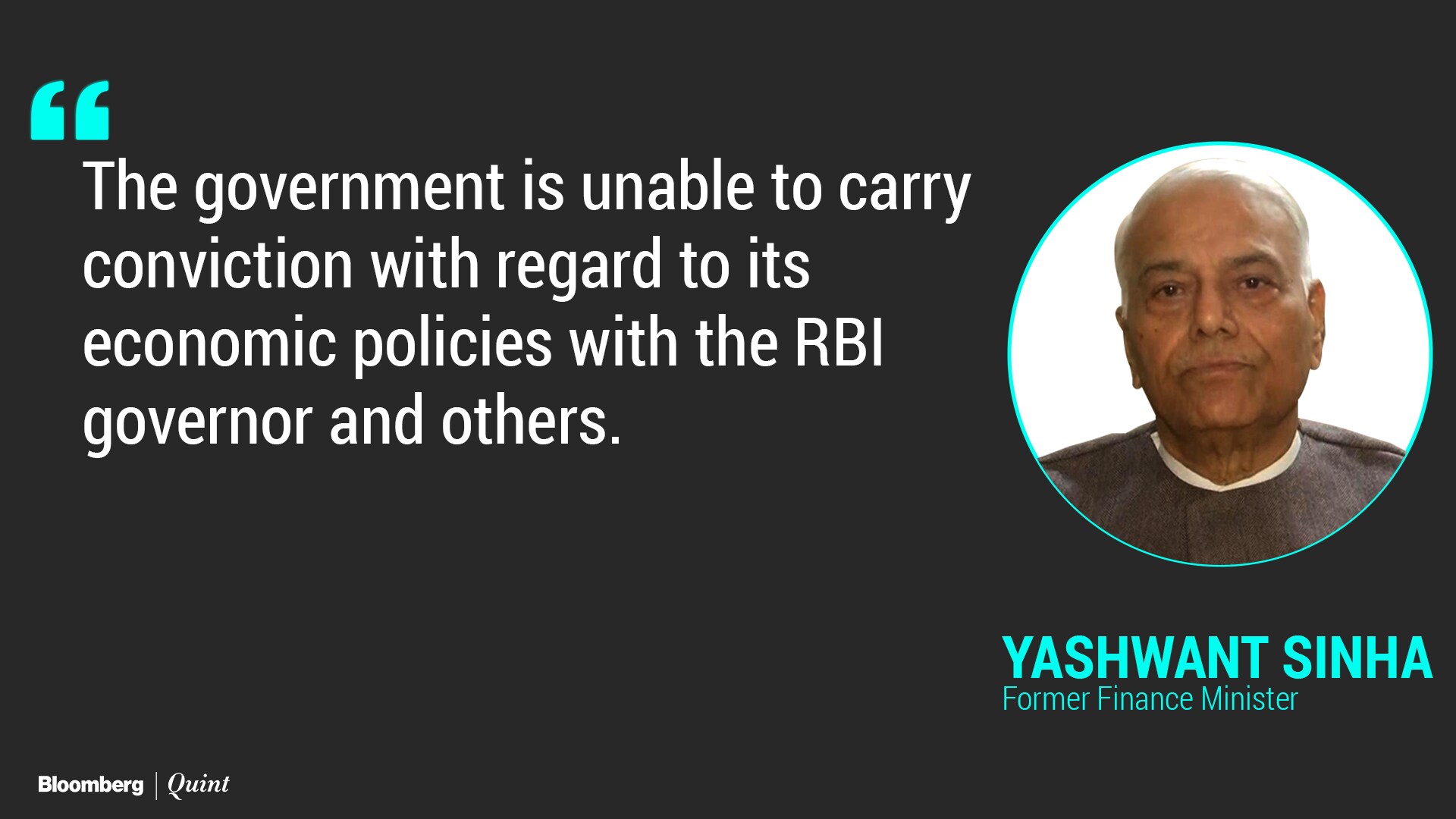
Yashwant Sinha, Former Finance Minister:
There is a pattern because this government has no respect for institutions. That is why all institutions are in danger, their authority is eroded, and the same thing is happening to the RBI. It is unfortunate that the government's quarrel with the RBI should be in the public domain in this manner. Never before has this kind of thing happened.
'All Institutions Are Under Pressure'
Retired Bombay High Court Judge BG Kolse Patil:
The Constitution has given institutions authority to work within their limits. For example, the collegium suggests names for the appointment of judges. Hundreds of posts are vacant in High Courts, but the names recommended are not being accepted. The RBI and CBI (Central Bureau of Investigation) are under pressure. All the other institutions are under pressure. Arun Jaitley said that we have to weigh the function of other intuitions in light of elected representatives. What does this mean?
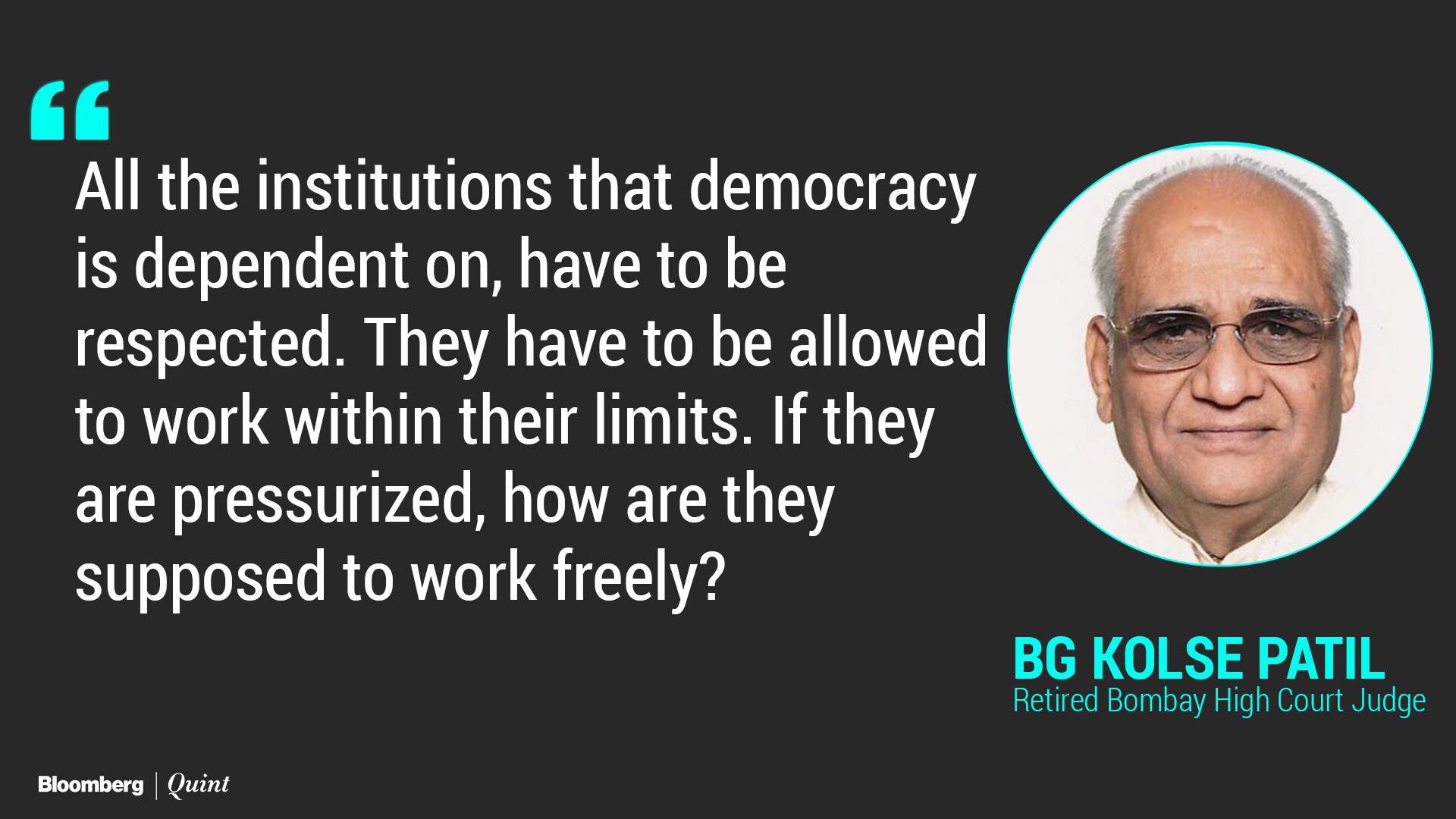
Therefore, all these institutions have to be protected and given the freedom to work which is not being given now.
‘Can't Direct Regulators On Day-To-Day Basis'
Ajay Dua, Former Commerce Secretary:
Elected representatives have their say because they frame the law. The regulations, which are also made under the delegated authority, are also sent back to Parliament for any change that parliamentarians want.
Those regulations and laws also demarcate the areas of independence, areas of autonomy and regulators' constraints. All those things are laid down in black and white.
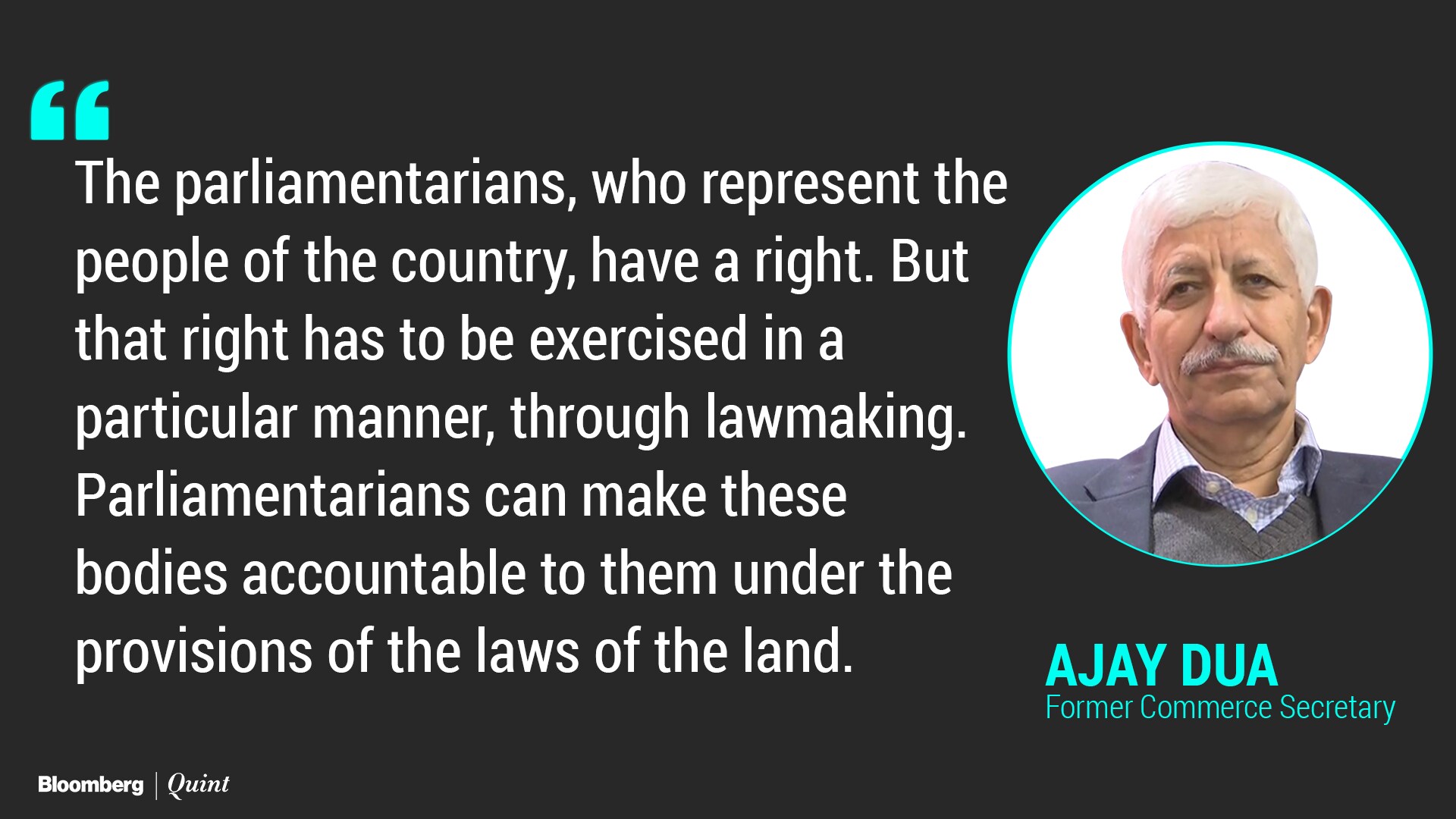
The RBI governor was asked to come before the parliamentary committee and explain his actions with respect to demonetisation and what he thought about the economy. That happened because the Parliament is supreme in terms of accountability of the institutions which have been created by the government, laws of the Parliament and other dispensations.
Directions cannot be given on a day-to-day basis to an autonomous regulator merely because you happen to be elected representative.
‘Government Should Have Been More Proactive'
AK Bhattacharya, Editorial Director, Business Standard:
The government has been found wanting in the manner in which it deals with institutions such as the RBI and the CBI. It is more obvious in the case of the RBI than in the case of CBI. But in both the cases, the government functionaries, including the political leadership, have not done their best to make sure that their appointees are allowed to have their say and ensure that a consultation process is in place.
In the case of CBI and RBI, the government should have been more proactive, more consultative and should have involved itself in negotiations.
Watch the full discussion here:

-
Indians Stay With Family, Not In Hotels | The Reason Why

India still lacks enough clean, reliable and affordable hotels for budget-conscious travellers.
-
The Economic Imperative: Analysing The Material Driving Force Behind India-Canada Strategic Reset
This economic complementarity is further reinforced by deep institutional investment ties and talent mobility, which form the bedrock of the bilateral framework.
-
Medicine Pricing: Where Must Profit Stop?
India must confront excessive margins, hidden incentives and regulatory gaps that threaten the integrity of medicine.
-
Why Amazon And Flipkart Are Struggling To Beat Meesho In India's Smaller Cities
With 274 million users and lowest-cost logistics, Meesho is defending its value commerce crown against giants like Amazon and Flipkart.
-
High US Salaries, No Green Card Certainty: The Financial Calculation Facing Indian H-1B Families
The suspension of PERM processing at eight technology employers does not cancel existing H-1B visas. What it does is force a question many Indian families have been avoiding: is the US salary worth tying your career and family plans to one employer?
-
Swiggy vs Eternal: Food Delivery's Two Rivals Are No Longer In The Same Race
Eternal is building a private AI assistant, dark.ai. Swiggy is still working out how to make Instamart pay, with an operating loss of Rs 895 crore in the July-September quarter while Blinkit stayed profitable.
-
Where You Live Shapes How You Get To Work | The Reason Why
Two-wheelers are the most popular way to get to work in India, accounting for nearly 43% of workplace commutes.
-
Unhedged Position: Can India See An Indonesia-Style Time Correction?
The Nifty is trading below levels it first clocked in 2024. Is there, then, as I have suggested in the headline, potential that the current time correction drags on painfully for the next three-five, even ten years?
-
Navigating Friction And Energy Realities: An Analysis Of Marco Rubio's October Visit To India
Occurring at a critical juncture marked by stalled trade negotiations and escalating geopolitical pressures over global energy supplies, the visit offers a profound window into modern US-India relations.
-
India Exports Capital. Why Not Export Trusteeship?
The big question, then, is whether India can build an institution that global borrowers, investors, banks, and lawyers can trust, even without an Indian connection.










