RBI Monetary Policy: Off-Cycle Rate Hike Intended To Stagger Inflation Response
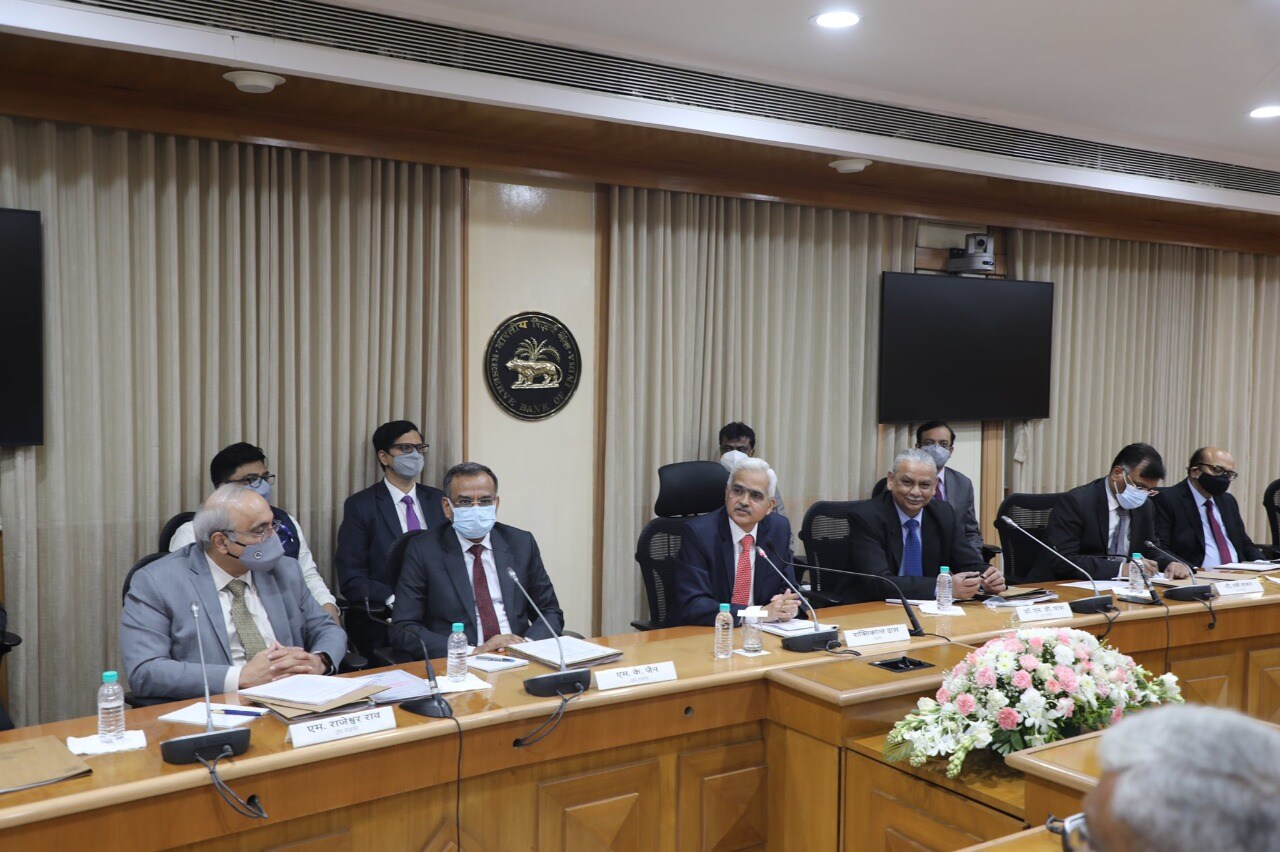
India's Monetary Policy Committee's decision to hold an unscheduled meeting and hike interest rates off-cycle was intended to smoothen out and stagger the policy response to rising inflation, according to a person familiar with the matter, who spoke on the condition of anonymity.
The central bank took financial markets by surprise on Wednesday, when it hiked the benchmark repo rate for the first time in four years by 40 basis points to 4.4%.
While the MPC had realigned its priorities to focus on inflation at its April meeting, markets expected the first rate hike only at the June meeting.
If the central bank hadn't hiked rates off-cycle, the extent of rate hikes necessary at the June and August meetings would have been large, said the person quoted above, adding that the economy would not have been able to withstand that.
The central bank's changed stance and priorities should have given adequate signals to the market, this person said. The view that the central bank has shocked the market is unwarranted, the person added.
In response to the MPC's rate hike and the RBI‘s decision to hike the cash reserve ratio by 50 basis points to 4.5%, bond yields soared nearly 30 basis points and stock markets fell.
It was necessary to spread out the actions, the person said. This is very much still a central bank taking “baby steps“ and “crossing the river by feeling the stones”, the person said.
What Changed?
The duration of the war, a ban by Indonesia on exports of certain categories of palm oil, and a likely high inflation reading for April, were factors that forced the MPC to raise rates before the scheduled June meeting.
Retail inflation, already in excess of the upper tolerance band of 6% in January and February, rose to 6.95% in March, higher than the RBI projections.
Incoming daily price data from the Ministry of Consumer Affairs suggests that prices across food items have continued to see a broad rise in April, and inflation is likely to spike further. The rise could be more than anticipated, the person quoted above said.
The sudden ban imposed by Indonesia on exports of palm oil is set to add to India's edible oil woes. The prospect of higher wheat exports continues to push up prices, turning even positive news to an inflation negative, the person said.
Failure To Meet Target
Given the trajectory of inflation, the central bank has already overshot its target of 4 (+/-2)% for the January-March quarter. It will likely also exceed that in the April-June quarter, bringing it dangerously close to what is defined as ‘failure' to meet monetary policy objectives under the flexible inflation targeting framework.
As per the framework, if inflation remains above 6% or below 2% for three consecutive quarters, the central bank has to write to the government explaining its failure to stay within the inflation comfort band and steps taken to correct the course of inflation.
While inflation did breach 6% for three quarters during the pandemic, there was a break in the inflation data series at the time due to data collection difficulties and the central bank did not have to explain itself.
As such, a failure to stay within the range for three consecutive quarters would be the first formal instance of ‘failure' that the central bank would have to explain.
The central bank will continue to try and prevent this, the person quoted above said.
Move Rates But Not Stance
While the MPC raised rates, the monetary policy stance has been retained at “accommodative with a focus on withdrawal of accommodation”.
Typically, the central bank raises rates when its stance is neutral or in tightening mode. Some see this is as a contradiction.
The stance is intended to reflect that the central bank is moving towards a positive real rate on interest, the person quoted above. It shows that policy still remains accommodative and growth supportive since interest rates are not close to a “neutral rate”.
A neutral rate is defined as the rate at which inflation is within target and growth is close to potential. The central bank still sees growth as being below potential.
The accommodative stance also allows the central bank to move in either direction, the person quoted above said. If the war ends and inflation falls sharply, the RBI may want to turn growth supportive again, this person explained.
Given the volatile economic scenario, each action should be seen in itself and not as a signal of the next action from the central bank, the person added.

-
Signature Play: The Classic Cocktail Is Dead. Or Is It?

Classic cocktails are disappearing from India's cocktail menus. But they're still being ordered, taught to bartenders and borrowed from. So, who's really having the last drink?
-
A New Samvat Wishlist: Inclusive Prosperity And Human Development
India has strengthened its economic foundations through infrastructure, digital access and enterprise. Its next growth chapter must deepen productivity, create better livelihoods and widen participation in prosperity.
-
Love, Sex Aur Dhokha: The Audacious Plot To Spy On Jensen Huang
A Taipei dinner, a Singapore chip buyer and a suspected Chinese asset: inside the alleged spy operation that got close to NVIDIA's Jensen Huang.
-
Ten Things I Learnt This Samvat
Patience can be a trap. Cheap stocks can stay cheap. Leverage can wipe you out. What did Samvat 2082 teach us? Niraj Shah writes on 10 lessons from the year gone by.
-
Talking Points This Week: Tech Nerves, FII Buying, And A Faraway Banking Shock
The global markets are not shining this Diwali. The exception in the large markets is, India.
-
Midterm Rally Lasted A Day. The Hard Reality Of A Divided US May Last Two Years | Opinion
Between a contested AI boom, a debt ceiling that arrives in 2027 and a president with every incentive to act alone, the next two years may prove more volatile than the first day's rally suggests.
-
Blue Wave Will Derail the AI Trade but Won't Dismantle the AI Era | Unhedged Position
The Democrats' sweep of the US Congress will see politics collide with economic forces both over the long and short term.
-
It's Time To Take The GST Council's Bet On Trust Global
Payment records can prove India's services exports, and clear, proportionate rules can bring foreign digital sellers into the tax net.
-
Opinion | India at 38: From Innovation Overperformer to Innovation Powerhouse
India now has 453 VC-backed deep science startups, 18 of them late-stage, after 117 percent growth since 2020. Laurus Labs, at USD 9.3 billion, is the most valuable deep science company in any middle-income economy outside China.









