Rafale Jet Deal: France Says It Inked Pact With India To Protect Classified Information
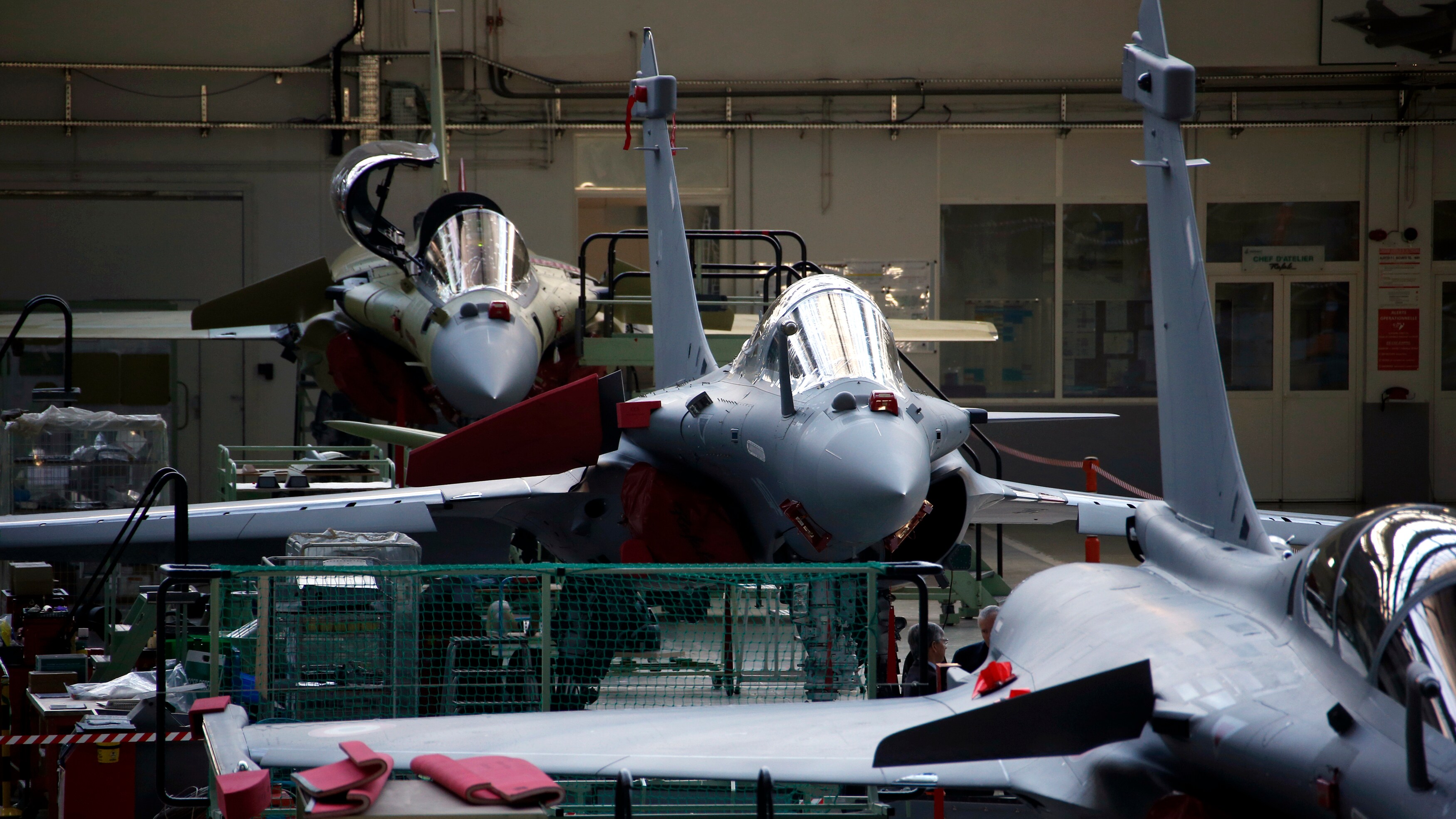
Hours after Congress President Rahul Gandhi accused the Narendra Modi government of “lying” to the nation on the Rafale fighter jet deal, France said it's bound by a pact not to reveal classified information.
The European nation had signed a security pact with India in 2008 which legally binds the two countries to protect classified information that could impact security and operational capabilities of the defence equipment, a French Foreign Ministry spokesperson said. He, however, did not clarify whether the provisions of the pact restrict the Indian government from disclosing the price of the fighter jets.
Talking about the deal, Gandhi described the prime minister as a “bhagidaar” (collaborator) in cases of alleged corruption, not a “chowkidaar” (guard). Addressing the Lok Sabha during the debate on the no-confidence motion against the NDA government, he said the French president had clearly conveyed to him during a meeting that there was no problem in sharing pricing details of the Rs 58,000-crore deal.
Alleging corruption in the deal, the Congress has been demanding details, including cost of equipment and weapons, but the government has refused to share them citing the secrecy pact with France.
In one of his sharpest attacks on the government on the issue of alleged graft, Gandhi also trained his guns on Modi. “I can see him smiling. There is a touch of nervousness. He is looking away, not looking into my eyes,” he said, intensifying protests from the treasury benches with opposition members members rising to their feet to counter them.
“The French president told me there is no such pact between the French and Indian governments,” he said. “This is the truth, and he told me that I have no objection to it (details of Rafale deal) being made public, you can tell it to entire India.”
The Congress president alleged that Defence Minister Nirmala Sitharaman was lying to the country under pressure from the prime minister. “Who is being helped, why is the help being given, Nirmala ji, the prime minister should tell the country.”
Vehemently rejecting the charges, Sitharaman said the secrecy agreement with France was signed in 2008 and the Rafale deal was covered under it. “As per article 10 of the Inter Governmental Agreement (IGA) between India and France, on purchase of Rafale aircraft, protection of classified information and materials exchanged under IGA shall be governed by provisions of security agreement signed on January 25, 2008,” she said.
Sitharaman said the pact was inked during the UPA regime when AK Antony was the defence minister. Parliamentary Affairs Minister Ananth Kumar also rejected the charges.
India signed an inter-governmental agreement with France in September 2016 for procurement of 36 Rafale fighter jets at a cost of around Rs 58,000 crore, nearly one-and-half years after Prime Minister Narendra Modi announced the proposal during a visit to Paris. The delivery of the jets is scheduled to begin from September 2019.
The Congress had raised several questions about the deal including the rates, and accused the government of compromising national interest and security while causing a loss to the public exchequer. The Congress has alleged that the deal negotiated under its rule was much cheaper than the contract signed by the Modi government.
The Congress also claimed that Qatar had purchased 12 Rafale fighter jets in November 2017 for $108.33 million per aircraft (Rs 694.80 crore), noting that per aircraft rate at which the Gulf nation is buying the jet is much lower than at which India will buy them.

-
We May Need Another Tukaram Mundhe To Fight Air Pollution | The Reason Why

Developers may install basic measures such as sprinklers and green nets, resume work, and continue violating rules when this equipment stops working.
-
Extracting Value From Battery Scrap Could Be Challenging For India | The Reason Why
A discarded lithium-ion battery still contains valuable materials such as lithium, nickel and cobalt. These can be recovered and reused. When such batteries are crushed and shredded, they produce a dark powder called black mass.
-
One El Nino, India Can Handle. Two Could Break The Granary
India's grain stocks can absorb one bad year, but a second El Nino could drain the buffer in two to three years, economists say.
-
India's Troika Of Good Luck | Joining The Dots
As Jensen Huang's exit drags Nvidia down, a cooling AI trade and resilient earnings have revived investor interest in India. A likely RBI rate hike looms.
-
Talking Points This Week: Leadership Shock At Nvidia, Earnings Strength, And The Fog Over Hormuz
The Anthropic IPO pricing and first trading day, Nvidia's upcoming earnings, and any fresh signals from Iran will set the tone for the following week.
-
Signature Play: The Classic Cocktail Is Dead. Or Is It?
Classic cocktails are disappearing from India's cocktail menus. But they're still being ordered, taught to bartenders and borrowed from. So, who's really having the last drink?
-
A New Samvat Wishlist: Inclusive Prosperity And Human Development
India has strengthened its economic foundations through infrastructure, digital access and enterprise. Its next growth chapter must deepen productivity, create better livelihoods and widen participation in prosperity.
-
Love, Sex Aur Dhokha: The Audacious Plot To Spy On Jensen Huang
A Taipei dinner, a Singapore chip buyer and a suspected Chinese asset: inside the alleged spy operation that got close to NVIDIA's Jensen Huang.
-
Ten Things I Learnt This Samvat
Patience can be a trap. Cheap stocks can stay cheap. Leverage can wipe you out. What did Samvat 2082 teach us? Niraj Shah writes on 10 lessons from the year gone by.
-
Talking Points This Week: Tech Nerves, FII Buying, And A Faraway Banking Shock
The global markets are not shining this Diwali. The exception in the large markets is, India.









