Pulwama Attack: Jaitley Calls Pakistan PM Imran Khan’s Demand For Proof A ‘Shallow Logic’
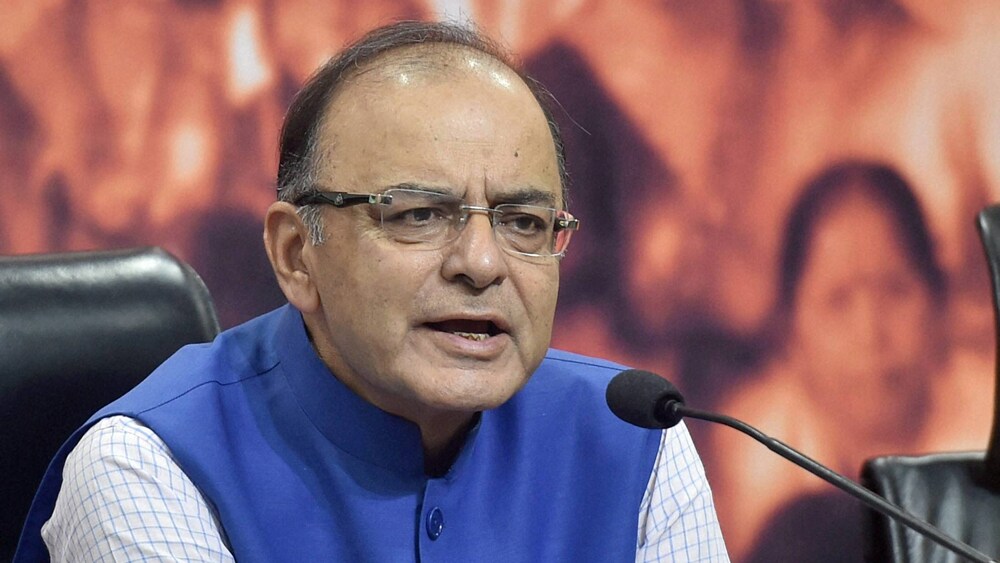
Finance Minister Arun Jaitley said Pakistan Prime Minister Imran Khan's statement to ask India for “evidence or actionable intelligence” that the Pulwama attack was perpetrated by the neighbouring country is a “shallow logic as though the origin of the crime is not known”.
“Here the perpetrators of crime have admitted to the crime. There is a confession by them. Though this confession may be in form on muscle flexing. And those perpetrators are admittedly located in the country of which Mr. Khan is the prime minister,” Jaitley told reporters after a meeting of the Cabinet Committee on Security.
Khan in a televised speech said his nation would retaliate only if India attacks, adding his country was being “blamed without any evidence”.
Tensions have been simmering between the historic arch-rivals since a militant car bombing, claimed by a Pakistani-based group Jaish-e-Mohammed, on Feb. 14 killed 40 personnel of India's Central Reserve Police Force in Kashmir. It was one of the deadliest strikes in the region in decades.
India's Ministry of External Affairs said it was “not surprised” that Khan refused to acknowledge the attack or condemn the killings. “Khan's demand to provide proof was a ‘lame excuse',” it said.
Here's Jaitley's full response on Khan's statement:
There has been a universal condemnation of this gruesome act of terrorism at Pulwama. Our security forces are extremely confident of dealing with the situation. The masterminds have been liquidated and our security forces will continue to keep the vigil. The global community has endorsed India's stand in a major way.
Regarding the Pakistan Prime Minister statement, three things are obvious:
- There is not even a pretext of an outright condemnation of the incident;
- Let alone sympathy for the bereaved families, not even a lip sympathy for them;
- A very shallow logic that “provide to us an actionable intelligence”—as though the origin of the crime is not known. Actionable intelligence can only provide some clues.
The perpetrators of crime have admitted to the crime. There is a confession by them. Though this confession maybe in the form of muscle flexing. And those perpetrators are admittedly located in the country of which Mr. Khan is the prime minister. Two persons liquidated yesterday in the aftermath of Pulwama are Pakistan nationals. What do you need? Some actionable or remote intelligence for this purpose. The handlers have admitted to the offence. And therefore, this claim that “provide us, and we will act”— the evidence is in their own home. And in past, in relation of 26/11, both evidence and intelligence had been given and we know the fate. This is a diversionary statement.

-
Gold Is Rs 22,000 Cheaper Than A Month Ago. Should You Buy Amid The Wedding Season?

Gold's potential slide to $3,500 could save around Rs 4,700 per 10 grams, but a soft inflation print could just as easily push prices back up. One way to split the risk is to buy in parts, some now and the rest after the Fed's Dec. 9 decision.
-
AI Agents Are Gaining Power. Who Governs Them?
Artificial intelligence agents promise to transform productivity by moving machines from assisting decisions to executing them. But as organisations delegate greater authority to these AI-agents, they must first establish who controls that authority and who remains accountable when things go wrong.
-
Why Swapping Your Old Gold Can Trigger A Rs 5 Lakh Tax Bill, And How You Can Avoid It Legally
Swapping old gold for new is taxed as a sale and a fresh purchase. Getting your own gold remade can cut most of that bill, though it has its own costs.
-
The AI Trade is Done. The Real Opportunity for Investors Starts in 2027 | Unhedged Position
As pureplay AI stocks plunge and circular, capex-led financing unwinds, 2027 is set to be a year of reckoning for AI companies. Yet the bust clears the way for a better opportunity for investors in 2027 -- shifting the spotlight from AI builders to the companies using AI.
-
Leadership As Mission: Why The Age Of AI Demands More Human Leadership
Debjani Ghosh examines how AI is changing leadership, arguing that its success must be measured by its impact on people and the accountability of those guiding its use.
-
We May Need Another Tukaram Mundhe To Fight Air Pollution | The Reason Why
Developers may install basic measures such as sprinklers and green nets, resume work, and continue violating rules when this equipment stops working.
-
Extracting Value From Battery Scrap Could Be Challenging For India | The Reason Why
A discarded lithium-ion battery still contains valuable materials such as lithium, nickel and cobalt. These can be recovered and reused. When such batteries are crushed and shredded, they produce a dark powder called black mass.
-
One El Nino, India Can Handle. Two Could Break The Granary
India's grain stocks can absorb one bad year, but a second El Nino could drain the buffer in two to three years, economists say.
-
India's Troika Of Good Luck | Joining The Dots
As Jensen Huang's exit drags Nvidia down, a cooling AI trade and resilient earnings have revived investor interest in India. A likely RBI rate hike looms.
-
Talking Points This Week: Leadership Shock At Nvidia, Earnings Strength, And The Fog Over Hormuz
The Anthropic IPO pricing and first trading day, Nvidia's upcoming earnings, and any fresh signals from Iran will set the tone for the following week.









