Pranab Was More Qualified To Become PM, Says Manmohan Singh
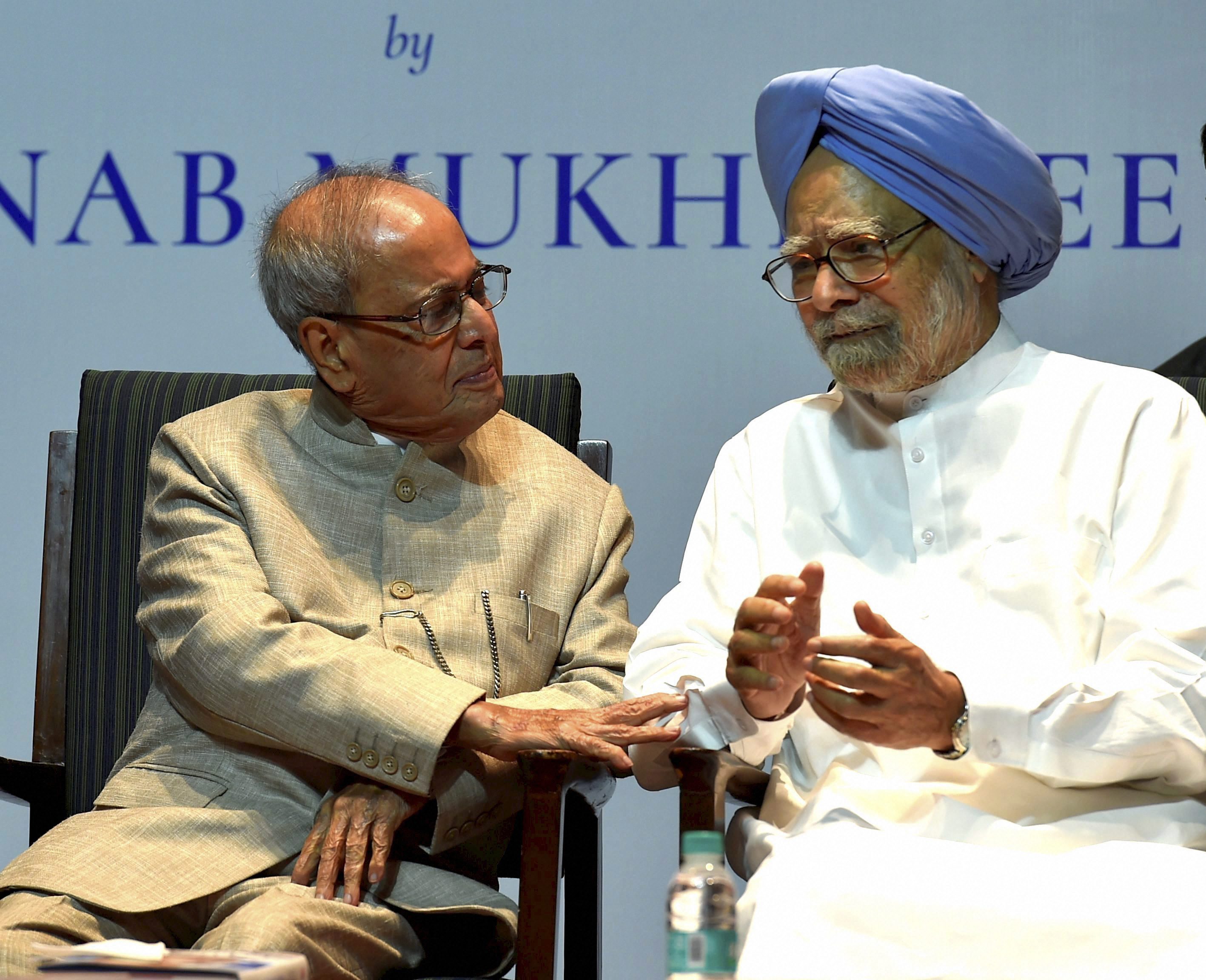
Former Prime Minister Manmohan Singh said Pranab Mukherjee had every reason for grievance at being ignored for prime ministership despite being more qualified but knew "I had no choice" in the matter, and that smoothened their relationship.
Singh's comments at the launch of the former President's book, The Coalition Years, in the presence of Congress president Sonia Gandhi and her deputy Rahul Gandhi left the audience in splits.
In 2004, when Soniaji chose me to become the prime minister, Pranabji was one of the most distinguished colleagues that I had.Manmohan Singh, Former Prime Minister
Mukherjee wrote in his book that after the 2004 election victory there was intense speculation in the party about who would be the prime minister, but the consensus within the Congress was that the incumbent should be a political leader with experience in party affairs and administration.
The prevalent expectation was that I would be the next choice for prime minister after Sonia Gandhi declined. This expectation was possibly based on the fact that I had extensive experience in government.Pranab Mukherjee, Former President
Mukherjee also said that when he declined to join the government headed by Manmohan Singh, Sonia insisted on his being a part of it as he would be "vital to its functioning and also be of support of Singh".
Mukherjee, in his speech at the book release function, decribed the Congress as a coalition in itself, as it brings all ideas on one platform. "It was difficult to have one coalition within and another outside. But that was done," he said.
Mukherjee said in the book he has described the coalition years and tried not to bring in any personal matters. He said running the coalition government seemed difficult but everything worked out smoothly.
In writing the book about the coalition years of 1996 to 2012, he did not claim the objectivity of a historian, which he is not, but put down things while viewing them as a political activist, he said.
Singh said with their relation smoothened, they ran the government as a cohesive team. He said history would record Mukherjee's great contribution to the management of Indian polity.
The former prime minister described Mukherjee as the "most distinguished living parliamentarian and Congressman", whom everyone in the party looked up to for discussing and resolving ticklish and difficult issues.
"He is a politician by choice. He is the greatest politician living in the country. I became a politician by accident when P V Narasimha Rao asked me to become the finance minister," he said.
Singh described Mukherjee and NCP chief Sharad Pawar as respected senior members of his government both of whom were of great calibre. He said if the UPA government ran smoothly, a large measure of credit would go to Pranab Mukherjee.
While Sonia Gandhi and Rahul did neither speak nor sit on the dais, a number of leaders including CPI-M General Secretary Sitaram Yechury, CPI Secretary Sudhakar Reddy, SP leader Akhilesh Yadav and DMK leader Kanimozhi spoke.
Akhilesh Yadav, in his brief speech, said Mukherjee's book would come in handy for young politicians like him when elections are due just like good notes ahead of exams. He also said people look forward to another coalition as elections draw closer.
Yechury said Pranab Mukherjee has an "elephant-like memory", remark that prompted Sonia Gandhi to quip he had the memory of "two elephants".

-
Signature Play: The Classic Cocktail Is Dead. Or Is It?

Classic cocktails are disappearing from India's cocktail menus. But they're still being ordered, taught to bartenders and borrowed from. So, who's really having the last drink?
-
A New Samvat Wishlist: Inclusive Prosperity And Human Development
India has strengthened its economic foundations through infrastructure, digital access and enterprise. Its next growth chapter must deepen productivity, create better livelihoods and widen participation in prosperity.
-
Love, Sex Aur Dhokha: The Audacious Plot To Spy On Jensen Huang
A Taipei dinner, a Singapore chip buyer and a suspected Chinese asset: inside the alleged spy operation that got close to NVIDIA's Jensen Huang.
-
Ten Things I Learnt This Samvat
Patience can be a trap. Cheap stocks can stay cheap. Leverage can wipe you out. What did Samvat 2082 teach us? Niraj Shah writes on 10 lessons from the year gone by.
-
Talking Points This Week: Tech Nerves, FII Buying, And A Faraway Banking Shock
The global markets are not shining this Diwali. The exception in the large markets is, India.
-
Midterm Rally Lasted A Day. The Hard Reality Of A Divided US May Last Two Years | Opinion
Between a contested AI boom, a debt ceiling that arrives in 2027 and a president with every incentive to act alone, the next two years may prove more volatile than the first day's rally suggests.
-
Blue Wave Will Derail the AI Trade but Won't Dismantle the AI Era | Unhedged Position
The Democrats' sweep of the US Congress will see politics collide with economic forces both over the long and short term.
-
It's Time To Take The GST Council's Bet On Trust Global
Payment records can prove India's services exports, and clear, proportionate rules can bring foreign digital sellers into the tax net.
-
Opinion | India at 38: From Innovation Overperformer to Innovation Powerhouse
India now has 453 VC-backed deep science startups, 18 of them late-stage, after 117 percent growth since 2020. Laurus Labs, at USD 9.3 billion, is the most valuable deep science company in any middle-income economy outside China.









