PM Modi Warns Oil Producers Over High Crude Prices Hurting Global Growth
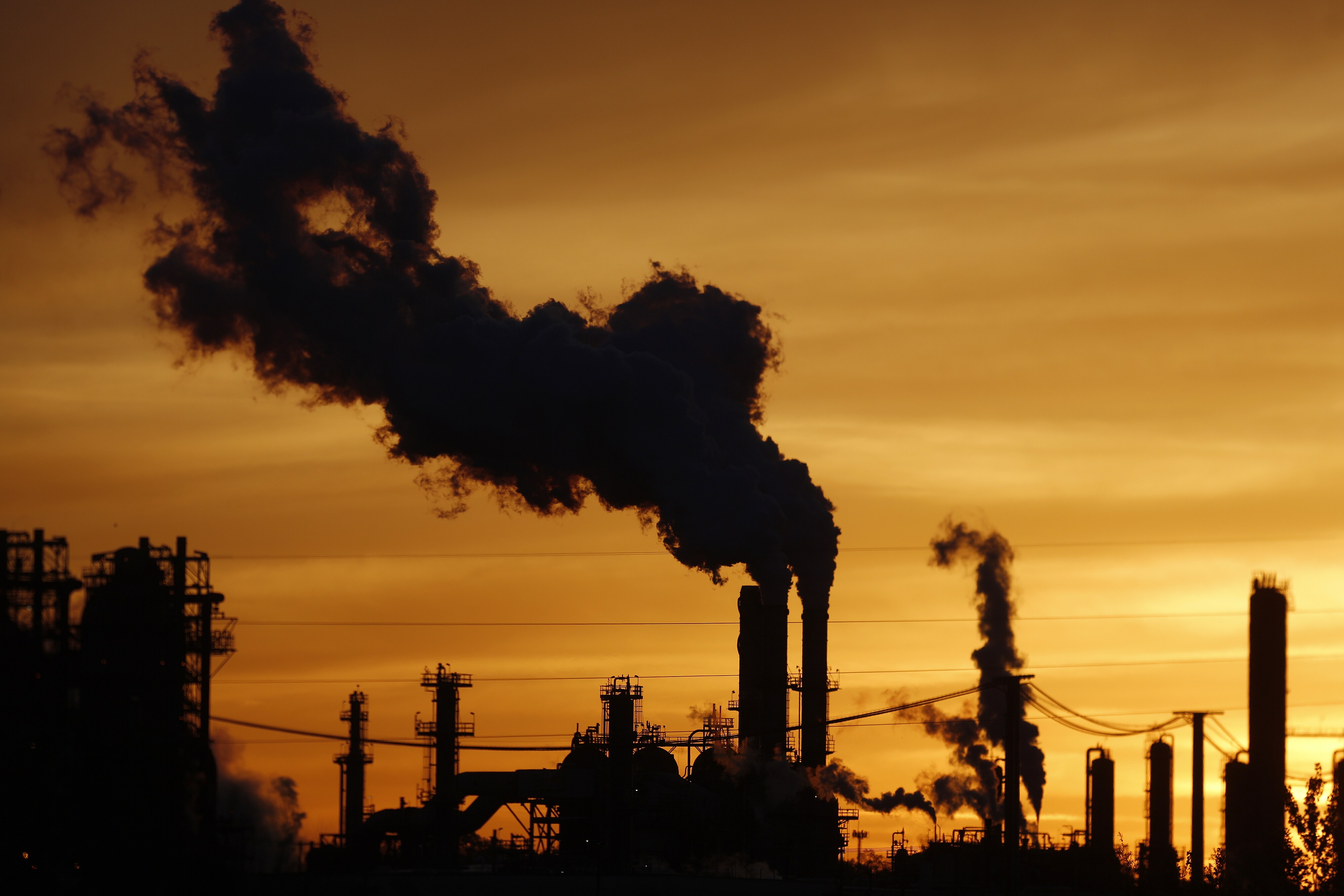
Prime Minister Narendra Modi today warned oil producers like Saudi Arabia that higher crude prices are hurting global economic growth and they should do more to bring down rates to reasonable levels.
At the third annual meeting with chief executives of top global and Indian oil and gas companies, the prime minister flagged concerns of consuming nations like India over high crude oil prices that have sent retail petrol, diesel and LPG rates to record highs, sources said.
The prime minister said crude oil prices, which are at a four-year high, was hurting global growth, causing inflation and upsetting budgets of developing countries like India.
Modi also asked chief executives why no new investments in oil and gas exploration and production are coming to the country despite the government implementing all the suggestions they made at the previous such meetings, sources said.
Later, while speaking at the the India Energy Forum, the Saudi Oil Minister Khalid A Al-Falih said, “We heard it today, loud and clear, from prime minister (about consumer pain).”
He, however, said the “pain” would have been “much louder” but the action by Saudi Arabia, the world's largest oil exporter, to invest in creating spare capacity was used to cushion price shocks.
“Prime minister cautioned producers like myself not to kill the hen that lays golden egg, he said referring to consumers are golden hens,” Al-Falih said.
The official statement said the prime minister made a strong case for a partnership between the producers and consumers to stabilise the global economy.
Modi “highlighted that the consuming countries, due to rising crude oil prices, face many other economic challenges, including serious resource crunch. The cooperation of the oil producing countries would be very critical to bridging this gap,” it said.
He also spoke of higher acreage under exploration and sought the cooperation of the developed countries both in terms of technology and extension of coverage. He also sought the role of private participation in the distribution of the gas sector.
The prime minister also spoke about the various policy initiatives and developmental measures undertaken by his government in the sector, including liberalisation in gas pricing and marketing, open acreage licensing policy, early monetisation of coal bed methane, incentives for discovery of small fields and seismic survey at a national level. Talking of ongoing commercial exploitation, he made a special mention of extension of production sharing contracts, the statement said.
Speaking at the same conference, Oil Minister Dharmendra Pradhan said India is “facing severe headwinds from rising oil prices” which have risen by 50 percent, in dollar terms, and 70 percent in rupee terms in the past year.
The meeting, which was also attended by Finance Minister Arun Jaitley, and NITI Aayog Vice-Chairman Rajiv Kumar, was called to discuss emerging energy scenario, particularly ripples from the U.S. sanctions on Iran and volatile oil prices threatening growth.
The third annual meeting also deliberated on ways to revive investment in oil and gas exploration and production, sources said. Modi's first meeting was on Jan. 5, 2016, where suggestions for reforming natural gas prices were made. More than a year later, the government allowed higher natural gas price for yet-to-be-produced fields in difficult areas like deep sea.
In the last edition in October 2017, suggestions were made for giving out equity to foreign and private companies in producing oil and gas fields of state-owned Oil & Natural Gas Corporation Ltd. and Oil India Ltd. But the plan could not go through in view of strong opposition from ONGC.
Sources said BP Chief Executive Bob Dudley, Total's head Patrick Fouyane, Reliance Industries Director PMS Prasad and Vedanta chief Anil Agarwal attended the meeting.
The government is looking at private investments to raise domestic oil and gas production, which has stagnated for the last few years. The fuel demand, too, has been rising by 5-6 percent annually. India is dependent on imports to meet its 83 percent of the demand and more than half of its natural gas requirements.

-
We May Need Another Tukaram Mundhe To Fight Air Pollution | The Reason Why

Developers may install basic measures such as sprinklers and green nets, resume work, and continue violating rules when this equipment stops working.
-
Extracting Value From Battery Scrap Could Be Challenging For India | The Reason Why
A discarded lithium-ion battery still contains valuable materials such as lithium, nickel and cobalt. These can be recovered and reused. When such batteries are crushed and shredded, they produce a dark powder called black mass.
-
One El Nino, India Can Handle. Two Could Break The Granary
India's grain stocks can absorb one bad year, but a second El Nino could drain the buffer in two to three years, economists say.
-
India's Troika Of Good Luck | Joining The Dots
As Jensen Huang's exit drags Nvidia down, a cooling AI trade and resilient earnings have revived investor interest in India. A likely RBI rate hike looms.
-
Talking Points This Week: Leadership Shock At Nvidia, Earnings Strength, And The Fog Over Hormuz
The Anthropic IPO pricing and first trading day, Nvidia's upcoming earnings, and any fresh signals from Iran will set the tone for the following week.
-
Signature Play: The Classic Cocktail Is Dead. Or Is It?
Classic cocktails are disappearing from India's cocktail menus. But they're still being ordered, taught to bartenders and borrowed from. So, who's really having the last drink?
-
A New Samvat Wishlist: Inclusive Prosperity And Human Development
India has strengthened its economic foundations through infrastructure, digital access and enterprise. Its next growth chapter must deepen productivity, create better livelihoods and widen participation in prosperity.
-
Love, Sex Aur Dhokha: The Audacious Plot To Spy On Jensen Huang
A Taipei dinner, a Singapore chip buyer and a suspected Chinese asset: inside the alleged spy operation that got close to NVIDIA's Jensen Huang.
-
Ten Things I Learnt This Samvat
Patience can be a trap. Cheap stocks can stay cheap. Leverage can wipe you out. What did Samvat 2082 teach us? Niraj Shah writes on 10 lessons from the year gone by.
-
Talking Points This Week: Tech Nerves, FII Buying, And A Faraway Banking Shock
The global markets are not shining this Diwali. The exception in the large markets is, India.









