Parliament Passes Bill To Raise Maternity Leave To 26 Weeks
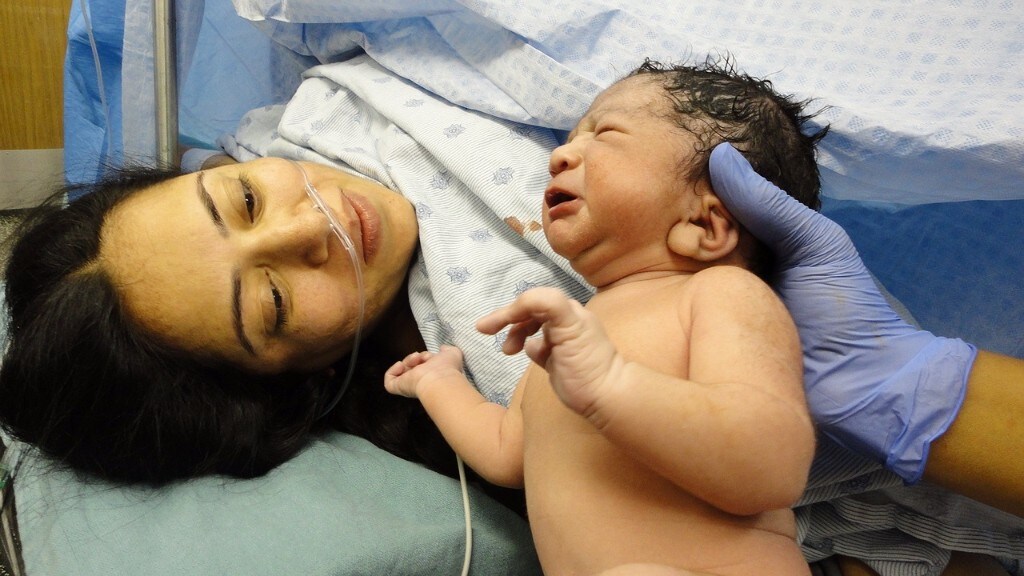
Women working in the organised sector will now be entitled to paid maternity leave of 26 weeks, up from 12 weeks, as Parliament on Thursday passed a Bill in this regard that will benefit about 18 lakh women.
The new law will apply to all establishments employing 10 or more people and the entitlement will be for only for the first two children. For the third child, the entitlement will extend only to the first 12 weeks.
The Maternity Benefit (Amendment) Bill, 2016 was passed by the Lok Sabha on Thursday, months after the Rajya Sabha approved the measure that takes India to the third position in terms of the number of weeks for maternity leave after Canada and Norway, where it is 50 and 44 weeks, respectively.
Piloting amendments to the old law, Labour Minister Bandaru Dattatreya said while framing the rules, he would try to ensure that maximum benefits reach the pregnant women.
"This is my humble gift to women, a day after the world celebrated the International Women's Day," he said after about 4-hour debate during which some members demanded paternity benefits too, arguing that these days most of the children are born in nuclear families where both parents have to take care of the child.
The Maternity Benefit Act, 1961 protects the employment of women during the period of maternity and entitles her full paid absence from work, to take care for her child. Among other things, the Bill provides for 12 weeks of maternity leave to a woman who legally adopts a child below three months of age and a commissioning mother (defined as a biological mother) who uses her egg to have a surrogate child. In such cases, the 12-week period of maternity leave will be calculated from the date the child is handed over to the adoptive or commissioning mother.
The Bill also requires every establishment with 50 or more employees to provide crèche facilities within a prescribed distance. The woman will be allowed four visits to the crèche in a day. This will include her interval for rest.
It has also made a provision under which an employer can permit a woman to work from home, if the nature of work assigned permits her to do so. This option can be availed after the period of maternity leave for a duration that is mutually decided by the employer and the woman. Observing that labour is in the Concurrent List of the Constitution, the minister appealed to state governments to play an active role to ensure that all benefits reach women.
He said the amendments were "progressive" in nature and would have "positive impact" on women participation and improve their "work life balance". It would be expected of the employer to inform women about the maternity benefits at the time of employment, Dattatreya said.
He appreciated the role of some states like Tamil Nadu which provide benefits over and above what is mandated in the central statutes. The amendments would ensure that full maternal care is provided during the full bloom period and will encourage more women to join the workforce in organised sector, the labour minister added.
The central government has already amended its service rules and is providing 26 weeks maternity leaves to its employees.
The minister also clarified women working in special economic zones (SEZs) would be entitled to all benefits of the legislation.
Responding to concerns expressed by members that benefits would be restricted to only 10 percent of women working in the organised sector, Dattatreya said the government has taken a host of steps for the welfare of unorganised workers as well. With these changes, India would rank high among the nations providing maternity benefit to women, he said.
Indian women will get more maternity leave than what is provided in developed countries like Japan, Germany, the United Kingdom and South Korea, the minister said.
Participating in the debate, Sushmita Dev (Congress) said since amendments raise the period of maternity leave to 26 weeks from the present 12 weeks, it could act as a deterrent for the private sector to employ women workforce.
"Since the employer has to pay the salary during the leave period, the amendment might turn out to be counter productive. Innovative thing to do would be to bring in paternity benefit," Dev said.
She said such a benefit could also be extended to single fathers who adopt a child.
She said only 18 lakh pregnant women will benefit from the amendments to the Bill as 90 percent of the women workforce is in the unorganised sector.
Pritam Munde of the Bharatiya Janata Party (BJP) said a father also has equal responsibility towards the child like a mother and paternity benefits would help a couple to raise their child together as majority are now nuclear families.
Ratna De Nag of Trinamool Congress (TMC) too made a case for paternity benefit and said her state government in West Bengal is already providing paternity leave for 30 days.
The Rajya Sabha had passed the bill in August last year.

-
We May Need Another Tukaram Mundhe To Fight Air Pollution | The Reason Why

Developers may install basic measures such as sprinklers and green nets, resume work, and continue violating rules when this equipment stops working.
-
Extracting Value From Battery Scrap Could Be Challenging For India | The Reason Why
A discarded lithium-ion battery still contains valuable materials such as lithium, nickel and cobalt. These can be recovered and reused. When such batteries are crushed and shredded, they produce a dark powder called black mass.
-
One El Nino, India Can Handle. Two Could Break The Granary
India's grain stocks can absorb one bad year, but a second El Nino could drain the buffer in two to three years, economists say.
-
India's Troika Of Good Luck | Joining The Dots
As Jensen Huang's exit drags Nvidia down, a cooling AI trade and resilient earnings have revived investor interest in India. A likely RBI rate hike looms.
-
Talking Points This Week: Leadership Shock At Nvidia, Earnings Strength, And The Fog Over Hormuz
The Anthropic IPO pricing and first trading day, Nvidia's upcoming earnings, and any fresh signals from Iran will set the tone for the following week.
-
Signature Play: The Classic Cocktail Is Dead. Or Is It?
Classic cocktails are disappearing from India's cocktail menus. But they're still being ordered, taught to bartenders and borrowed from. So, who's really having the last drink?
-
A New Samvat Wishlist: Inclusive Prosperity And Human Development
India has strengthened its economic foundations through infrastructure, digital access and enterprise. Its next growth chapter must deepen productivity, create better livelihoods and widen participation in prosperity.
-
Love, Sex Aur Dhokha: The Audacious Plot To Spy On Jensen Huang
A Taipei dinner, a Singapore chip buyer and a suspected Chinese asset: inside the alleged spy operation that got close to NVIDIA's Jensen Huang.
-
Ten Things I Learnt This Samvat
Patience can be a trap. Cheap stocks can stay cheap. Leverage can wipe you out. What did Samvat 2082 teach us? Niraj Shah writes on 10 lessons from the year gone by.
-
Talking Points This Week: Tech Nerves, FII Buying, And A Faraway Banking Shock
The global markets are not shining this Diwali. The exception in the large markets is, India.









