Pakistan Foreign Ministry Calls Modi a ‘Terrorist’, BJP Hits Back
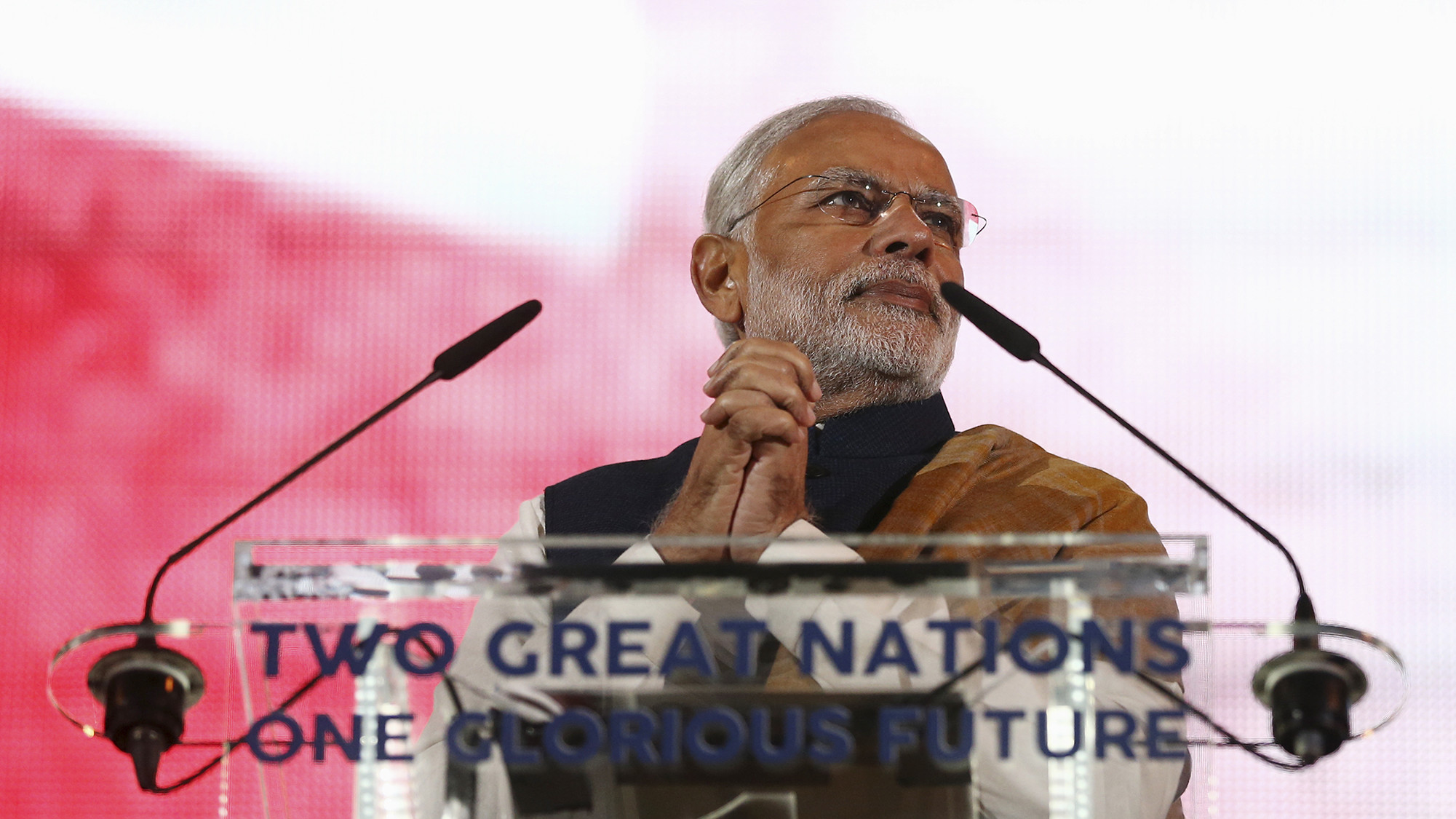
In a breach of diplomatic propriety, Pakistan's Foreign Minister Khawaja Asif has called Prime Minister Narendra Modi a "terrorist", and said the Indian government was being run by "a terrorist party".
Asif made the remarks in an appearance on Geo TV's “Capital Talk” show, in response to External Affairs Minister Sushma Swaraj's UN General Assembly (UNGA) speech in September, in which she had accused Pakistan of "producing and exporting terrorism".
BJP spokesperson GVL Narasimha Rao told PTI:
Pakistan foreign minister is a political pygmy in a powerless government kowtowing to the terror organisations.
Also Read: Seven Key Highlights from Sushma Swaraj's Speech at UNGA
These pusillanimous comments reflect Pakistan's frustration with Prime Minister Narendra Modi's successful diplomacy in exposing the terror face of Pakistan to the world. That Pakistan is getting desperate is evident from these patently foolish and irresponsible comments.GVL Narasimha Rao, BJP Spokesperson to PTI
Asif made the remarks while talking about Kashmiris who have been killed in Jammu and Kashmir and civilian casualties in cross-border firing along the Line of Control and the Working Boundary, the Dawn reported. The report quoted him as saying:
A terrorist is their (India's) prime minister at this time. One whose hands are stained with the blood of the Muslims of Gujarat. A terrorist party is ruling them (India) – the Rashtriya Swayamsewak Sangh (RSS) is ruling them. The Bharatiya Janata Party (BJP) is like its subsidiary organisation.
Hamid Mir, the show's host, reminded Asif, "But Narendra Modi is an elected 'terrorist'." To this the minister retorted, "The nation that elects a terrorist... what kind of nation is that?"
Also Read: Sushma at UNGA: “We're Fighting Poverty, Pak Is Fighting Us”
Explaining his stance, Asif said, "Look at the language the Indian prime minister is using, the way Muslims are being killed over cow-related issues. And just recently, on Dussehra, they burnt the effigies of Rohingya Muslims four times," he claimed.
"In Dussehra, they burn the effigies of villains... They declared Rohingya Muslims terrorists," he stressed, adding that although India was quick to call others terrorists, "the biggest terrorist (is Modi). Muslims were raped and murdered under his supervision when he was chief minister (of Gujarat)... The US had banned him," he said.
Also Read: Pakistan Using India as Excuse to Support Terrorists: US Official

-
The Economic Imperative: Analysing The Material Driving Force Behind India-Canada Strategic Reset

This economic complementarity is further reinforced by deep institutional investment ties and talent mobility, which form the bedrock of the bilateral framework.
-
Medicine Pricing: Where Must Profit Stop?
India must confront excessive margins, hidden incentives and regulatory gaps that threaten the integrity of medicine.
-
Why Amazon And Flipkart Are Struggling To Beat Meesho In India's Smaller Cities
With 274 million users and lowest-cost logistics, Meesho is defending its value commerce crown against giants like Amazon and Flipkart.
-
High US Salaries, No Green Card Certainty: The Financial Calculation Facing Indian H-1B Families
The suspension of PERM processing at eight technology employers does not cancel existing H-1B visas. What it does is force a question many Indian families have been avoiding: is the US salary worth tying your career and family plans to one employer?
-
Swiggy vs Eternal: Food Delivery's Two Rivals Are No Longer In The Same Race
Eternal is building a private AI assistant, dark.ai. Swiggy is still working out how to make Instamart pay, with an operating loss of Rs 895 crore in the July-September quarter while Blinkit stayed profitable.
-
Where You Live Shapes How You Get To Work | The Reason Why
Two-wheelers are the most popular way to get to work in India, accounting for nearly 43% of workplace commutes.
-
Unhedged Position: Can India See An Indonesia-Style Time Correction?
The Nifty is trading below levels it first clocked in 2024. Is there, then, as I have suggested in the headline, potential that the current time correction drags on painfully for the next three-five, even ten years?
-
Navigating Friction And Energy Realities: An Analysis Of Marco Rubio's October Visit To India
Occurring at a critical juncture marked by stalled trade negotiations and escalating geopolitical pressures over global energy supplies, the visit offers a profound window into modern US-India relations.
-
India Exports Capital. Why Not Export Trusteeship?
The big question, then, is whether India can build an institution that global borrowers, investors, banks, and lawyers can trust, even without an Indian connection.
-
France's Economy & Politics Are In Crisis | The Reason Why
Let's look at how the French economy and politics evolved under Nicolas Sarkozy, Franois Hollande and Emmanuel Macron.










