The Numbers That Helped Ram Nath Kovind Become the 14th President
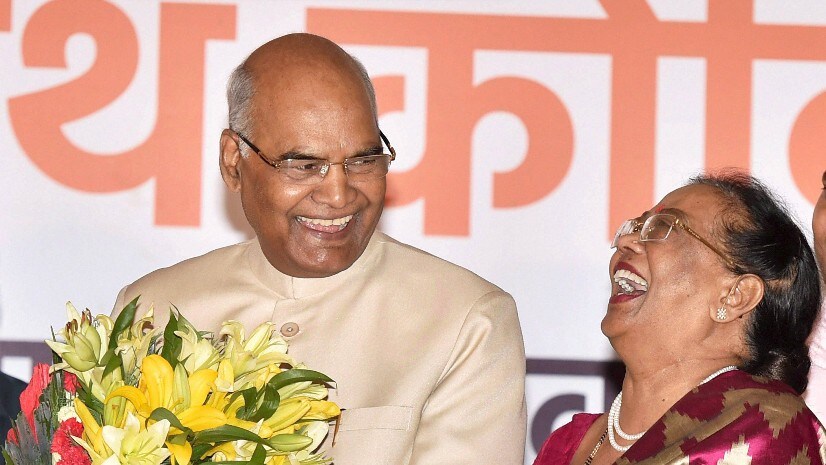
Ram Nath Kovind, the ruling NDA coalition's candidate, may have won the presidential election comfortably, but his vote share is the lowest since 1974, figures reveal.
Kovind received 2,930 votes with a value of 7,02,044, while his rival Meira Kumar, the joint opposition candidate, secured 1,844 votes with a value of 3,67,314.
Overall, Kovind led in 21 states, and also in both houses of Parliament, while Kumar gained a head-start in the remaining eight states.
The Dismal Numbers
Across states, Opposition's presidential nominee Meira Kumar did not get a single vote in Andhra Pradesh, while the victorious NDA candidate Ram Nath Kovind polled just one in Kerala. The Congress does not have presence in the Andhra Pradesh Assembly.
Kumar got one vote in Nagaland and three in Arunachal Pradesh. He also polled just one vote in Kerala and six in Delhi, where AAP has an overwhelming majority.
In Nagaland, Kovind received 56 votes as against one to Kumar. The result was lopsided in Kovind's favour in Sikkim, too. He garnered 28 votes vis-à-vis one of Kumar.
Kovind's BJP Bastions
In the BJP-led Uttar Pradesh, which has the highest value of votes for the election, Kovind received 335 votes (having value 69,680) against Kumar's 65 (valuing 13,520).
Kovind bagged all the 171 valid votes (of 27,189 value) polled in the TDP-BJP combine ruled Andhra Pradesh.
In Maharashtra, which carries second highest value of votes at 50,225, Kovind got 208 of the total 285 valid votes.
Prime Minister Narendra Modi's home state Gujarat also gave fillip to Kovind, who won 132 votes (valuing 19404), restricting Kumar at 49.
Bihar, where the ruling JD(U) supported Kovind by breaking ranks with its grand alliance partners, the RJD and the Congress during the election, also proffered the NDA nominee edge over Kumar.
Of the total 239 valid votes polled there, Kovind gained 130, whereas Kumar scored 109 votes.
While Kovind's poll-share amounted to a grand total of 65.65 percent, the victory margin is the lowest since the 1974 presidential poll.
According to Election Commission data, Kovind's immediate predecessor Pranab Mukherjee (2012) secured 69.31 percent votes, while Pratibha Patil (2007) got 65.82 percent of the total votes, marginally higher than the share secured by Kovind.
(With inputs from PTI and IANS)

-
Extracting Value From Battery Scrap Could Be Challenging For India | The Reason Why

A discarded lithium-ion battery still contains valuable materials such as lithium, nickel and cobalt. These can be recovered and reused. When such batteries are crushed and shredded, they produce a dark powder called black mass.
-
One El Nino, India Can Handle. Two Could Break The Granary
India's grain stocks can absorb one bad year, but a second El Nino could drain the buffer in two to three years, economists say.
-
India's Troika Of Good Luck | Joining The Dots
As Jensen Huang's exit drags Nvidia down, a cooling AI trade and resilient earnings have revived investor interest in India. A likely RBI rate hike looms.
-
Talking Points This Week: Leadership Shock At Nvidia, Earnings Strength, And The Fog Over Hormuz
The Anthropic IPO pricing and first trading day, Nvidia's upcoming earnings, and any fresh signals from Iran will set the tone for the following week.
-
Signature Play: The Classic Cocktail Is Dead. Or Is It?
Classic cocktails are disappearing from India's cocktail menus. But they're still being ordered, taught to bartenders and borrowed from. So, who's really having the last drink?
-
A New Samvat Wishlist: Inclusive Prosperity And Human Development
India has strengthened its economic foundations through infrastructure, digital access and enterprise. Its next growth chapter must deepen productivity, create better livelihoods and widen participation in prosperity.
-
Love, Sex Aur Dhokha: The Audacious Plot To Spy On Jensen Huang
A Taipei dinner, a Singapore chip buyer and a suspected Chinese asset: inside the alleged spy operation that got close to NVIDIA's Jensen Huang.
-
Ten Things I Learnt This Samvat
Patience can be a trap. Cheap stocks can stay cheap. Leverage can wipe you out. What did Samvat 2082 teach us? Niraj Shah writes on 10 lessons from the year gone by.
-
Talking Points This Week: Tech Nerves, FII Buying, And A Faraway Banking Shock
The global markets are not shining this Diwali. The exception in the large markets is, India.
-
Midterm Rally Lasted A Day. The Hard Reality Of A Divided US May Last Two Years | Opinion
Between a contested AI boom, a debt ceiling that arrives in 2027 and a president with every incentive to act alone, the next two years may prove more volatile than the first day's rally suggests.









