No Liberty Without Right To Privacy, Petitioners Argue Before Supreme Court
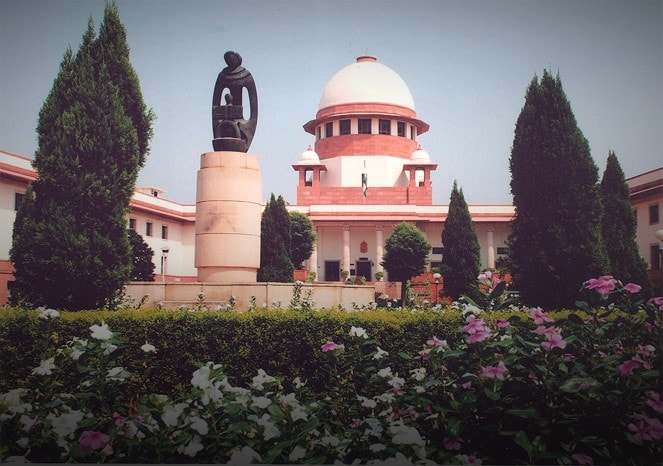
Privacy is not just a “common law right”, petitioners arguing for right to privacy said before a nine-judge bench of the Supreme Court on Wednesday. The bench is addressing the limited question of whether privacy as a right is enshrined in the Constitution of India.
Laws across the world recognise the right to liberty and privacy, said Senior Counsel Gopal Subramanium representing one of the petitioners, adding that both are essential conditions to exercise any fundamental right. The minority view in the 1962 Kharak Singh case is the correct view, Subramanium added.
Privacy and liberty is not a right in a grey area or a twilight zone, this is the heart and soul of the Constitution. It is not just a common law right.Gopal Subramanium, Senior Counsel
Senior Advocate Shyam Divan, representing another petitioner, said that for four decades, successive court judgments have recognised the right to privacy. “There are 14 judgments, one after another, which recognise the right to privacy,” he said.
The minority view in the 1962 Kharak Singh case, which held that right to privacy is enshrined in the Constitution, was later endorsed by the judgment in the Maneka Gandhi case. he added.
Senior Counsel Soli Sorabjee, standing for one of the petitioners, said it is necessary to demolish the theory that right to privacy is not explicitly mentioned in the Constitution and is, therefore, non-existent. “Privacy can be deduced from other Fundamental Rights mentioned in Part III of the Constitution,” he added.
Besides, Kharak Singh's case, which forms the basis of the government's argument against right to privacy, makes only a stray reference to the matter, Senior Counsel Arvind Datar argued for other petitioners in the matter. When the Constitution is read in its totality, it becomes clear that right to privacy is part of the Fundamental Rights enshrined in the Constitution, he added.
The bench will continue hearing the matter on Thursday.
A five-judge Constitution bench of the apex court that was hearing the validity of Aadhaar and certain aspects of privacy had referred the matter to a nine-judge bench on Tuesday. The nine-judge bench has to re-examine whether the two earlier rulings – 1954 judgment in MP Sharma's case and 1962 verdict in Kharak Singh's case – are the correct expressions of the Constitution. An eight-judge and a six-judge bench, in the two cases, respectively, had held that there's no fundamental right to privacy.
The nine-judge bench is being led by Chief Justice of India JS Khehar and includes Justices J Chelameswar, SA Bobde, RK Agrawal, Rohinton Fali Nariman, Abhay Manohar Sapre, DY Chandrachud, Sanjay Kishan Kaul and Abdul Nazeer.
During the hearing on Tuesday, the central government took the view that privacy is a common law right and the Constitution doesn't explicitly provide for it. The government argued that the founding fathers deliberately omitted the fundamental right to privacy from the Constitution.
Also Read: Are Your Biometrics Safe And Is Your Privacy Intact With Aadhaar?

-
Getting To Work Costs Women More | The Reason Why

It is not just about women paying more than men. It is about women paying much more in cities than in villages.
-
AI Bias In Investing Cannot Be Eliminated, But It Can Be Governed
Framing is a particularly important example as identical financial information presented in terms of gains rather than losses can lead an LLM to reach a different assessment.
-
Joining The Dots | Dark Skies, Steady Diya: Why Hope Holds This Diwali
With war, a weak rupee and foreign outflows weighing on sentiment, policymakers at the NDTV World Summit and market veterans at NDTV Profit Ignite: Diwali Edition offered the same advice: stay invested and filter out the noise.
-
The Curious Case of Equitas Small Finance Bank And A CEO Who Quit For Stock
PN Vasudevan believes persistent investor concerns over a perceived conflict of interest had become a governance overhang on Equitas Small Finance Bank's stock, even as the lender improved profitability and asset quality.
-
Talking Points This Week: AI Cash Burn, A Tiger Comeback And An India That Still Finds Its Own Path
India is not immune to higher oil or tighter global liquidity, yet its earnings base is broader, its domestic policy levers are still available.
-
Foreign Investors Own Half Of HDFC Bank and ICICI Bank. An LTCG Cut Could Matter Most Here
Foreign portfolio investors have US$115 billion parked in HDFC Bank, ICICI Bank. If the government cuts long-term capital gains tax, Jefferies says returning foreign money could land here first.
-
'Never Seen This Level Of Negativity': Sandeep Tandon Says The Next Rally May Be Closer Than You Think
Veteran investor Sandeep Tandon says foreign selling is easing, large-caps are due a comeback and mid-caps are crowded, while he turns positive on gold, power and pharma this Diwali.
-
Indians Stay With Family, Not In Hotels | The Reason Why
India still lacks enough clean, reliable and affordable hotels for budget-conscious travellers.
-
The Economic Imperative: Analysing The Material Driving Force Behind India-Canada Strategic Reset
This economic complementarity is further reinforced by deep institutional investment ties and talent mobility, which form the bedrock of the bilateral framework.
-
Medicine Pricing: Where Must Profit Stop?
India must confront excessive margins, hidden incentives and regulatory gaps that threaten the integrity of medicine.










