NDTV World Summit: There Is Trust Deficit On The Climate Highway, Say Environmental Activists
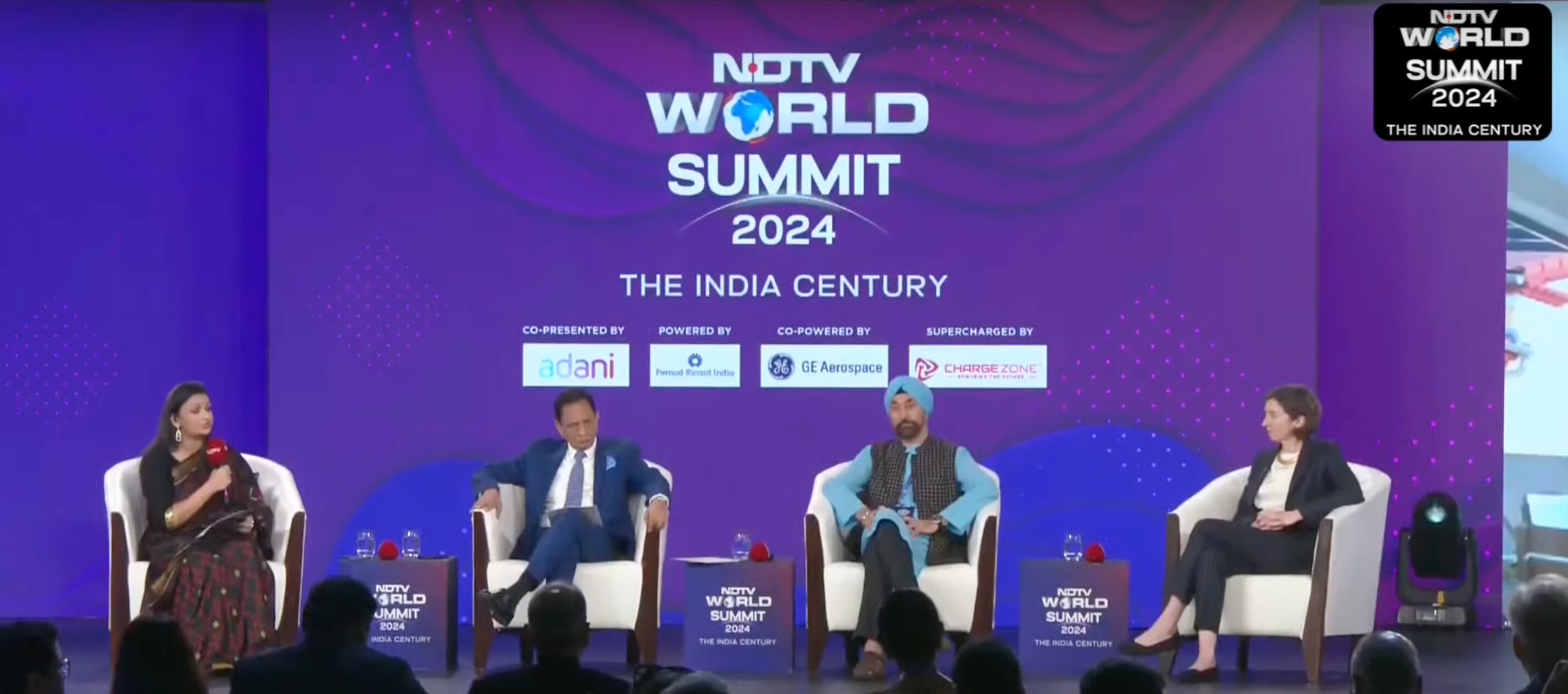
A significant trust deficit remains between developed and developing countries over climate change policies and funding, according to leaders in climate activism and policy.
Panelists at The Climate Agenda – Setting the Terms event, at the NDTV World Summit 2024, agreed there were disparities in the starting points of the climate action journey for the developed and the developing countries. There is also pressure on the latter to reach goals at the same pace. While developed countries are pushing for urgent global climate action, developing nations are seeking flexibility and more time to meet the same end line.
Developing countries are prepared to drive down the highway to zero emission. But we are going to do it at our speed. Do not tell us the speed in which we drive down that lane nor the number of pit stops we are allowed to take on the way. We will get there.Shishir Priyadarshi, President, Chintan Research Foundation
Erik Solheim, former minister of climate and the environment of Norway, noted the need to view climate action as an opportunity, particularly for countries like India. "For the first time in human history, it is possible to see climate action as an opportunity, not just a problem," he said, pointing to India's ambitious goal of 100 GW of renewable energy by 2030.
"With leadership from Prime Minister Modi, state governments, and major industrialists like Adani and Reliance, I'm confident India will reach this goal," Solheim said.
However, Harjeet Singh, director of the Fossil Fuel Treaty, spoke about a critical risk that rich countries might prioritise their own climate resilience over funding for developing nations.
"As developed countries get more affected by climate change, they are starting to look inward. This could lead to a reduced flow of funds to developing countries," Singh said, stressing that despite disasters hitting both developed and developing nations, the latter bear the brunt while having contributed far less to the crisis historically.
"The kind of disasters we see are spread globally, but it's undeniable that those historically less responsible for the climate crisis are the most affected," said Shishir Priyadarshi, president of the Chintan Research Foundation. For India, balancing reliable and affordable energy with its development goals is key. "We are committed to 2.5 trillion dollars in investment between 2030-50, but we need to be met halfway. We will get to zero emissions, but at our own speed, with the necessary pit stops along the way," he said.
Lindy Cameron, UK High Commissioner, pointed to her country's commitment to climate action, noting that the UK has shut down its last coal-fired power station, and is on track for carbon-free electricity by 2030. However, she acknowledged the need for developed countries such as hers to assist others. "It's vital that we ensure climate finance is available to help countries like India grow at their own pace, while achieving low-carbon electricity."
The panel stressed that the trust deficit stemmed from developed nations pressuring developing ones to cut fossil fuel use, while continuing their own expansions. "Countries like Australia, Canada, and the US are responsible for over 50% of fossil fuel expansion through 2050. This is why the trust deficit exists," Singh said, adding promises of financial and technological support from richer nations have fallen short.
Priyadarshi drew parallels with past economic negotiations, saying the trust deficit has historical roots. "When the trade deficit began, developing countries were promised gains for opening markets," he said. But developed nations have repeatedly dictated terms, fostering this mistrust, according to him.

-
Getting To Work Costs Women More | The Reason Why

It is not just about women paying more than men. It is about women paying much more in cities than in villages.
-
AI Bias In Investing Cannot Be Eliminated, But It Can Be Governed
Framing is a particularly important example as identical financial information presented in terms of gains rather than losses can lead an LLM to reach a different assessment.
-
Joining The Dots | Dark Skies, Steady Diya: Why Hope Holds This Diwali
With war, a weak rupee and foreign outflows weighing on sentiment, policymakers at the NDTV World Summit and market veterans at NDTV Profit Ignite: Diwali Edition offered the same advice: stay invested and filter out the noise.
-
The Curious Case of Equitas Small Finance Bank And A CEO Who Quit For Stock
PN Vasudevan believes persistent investor concerns over a perceived conflict of interest had become a governance overhang on Equitas Small Finance Bank's stock, even as the lender improved profitability and asset quality.
-
Talking Points This Week: AI Cash Burn, A Tiger Comeback And An India That Still Finds Its Own Path
India is not immune to higher oil or tighter global liquidity, yet its earnings base is broader, its domestic policy levers are still available.
-
Foreign Investors Own Half Of HDFC Bank and ICICI Bank. An LTCG Cut Could Matter Most Here
Foreign portfolio investors have US$115 billion parked in HDFC Bank, ICICI Bank. If the government cuts long-term capital gains tax, Jefferies says returning foreign money could land here first.
-
'Never Seen This Level Of Negativity': Sandeep Tandon Says The Next Rally May Be Closer Than You Think
Veteran investor Sandeep Tandon says foreign selling is easing, large-caps are due a comeback and mid-caps are crowded, while he turns positive on gold, power and pharma this Diwali.
-
Indians Stay With Family, Not In Hotels | The Reason Why
India still lacks enough clean, reliable and affordable hotels for budget-conscious travellers.
-
The Economic Imperative: Analysing The Material Driving Force Behind India-Canada Strategic Reset
This economic complementarity is further reinforced by deep institutional investment ties and talent mobility, which form the bedrock of the bilateral framework.
-
Medicine Pricing: Where Must Profit Stop?
India must confront excessive margins, hidden incentives and regulatory gaps that threaten the integrity of medicine.










