Multiple Train Derailments Raise Safety Concerns, But 'Kavach' Expansion Remains In Slow Gear
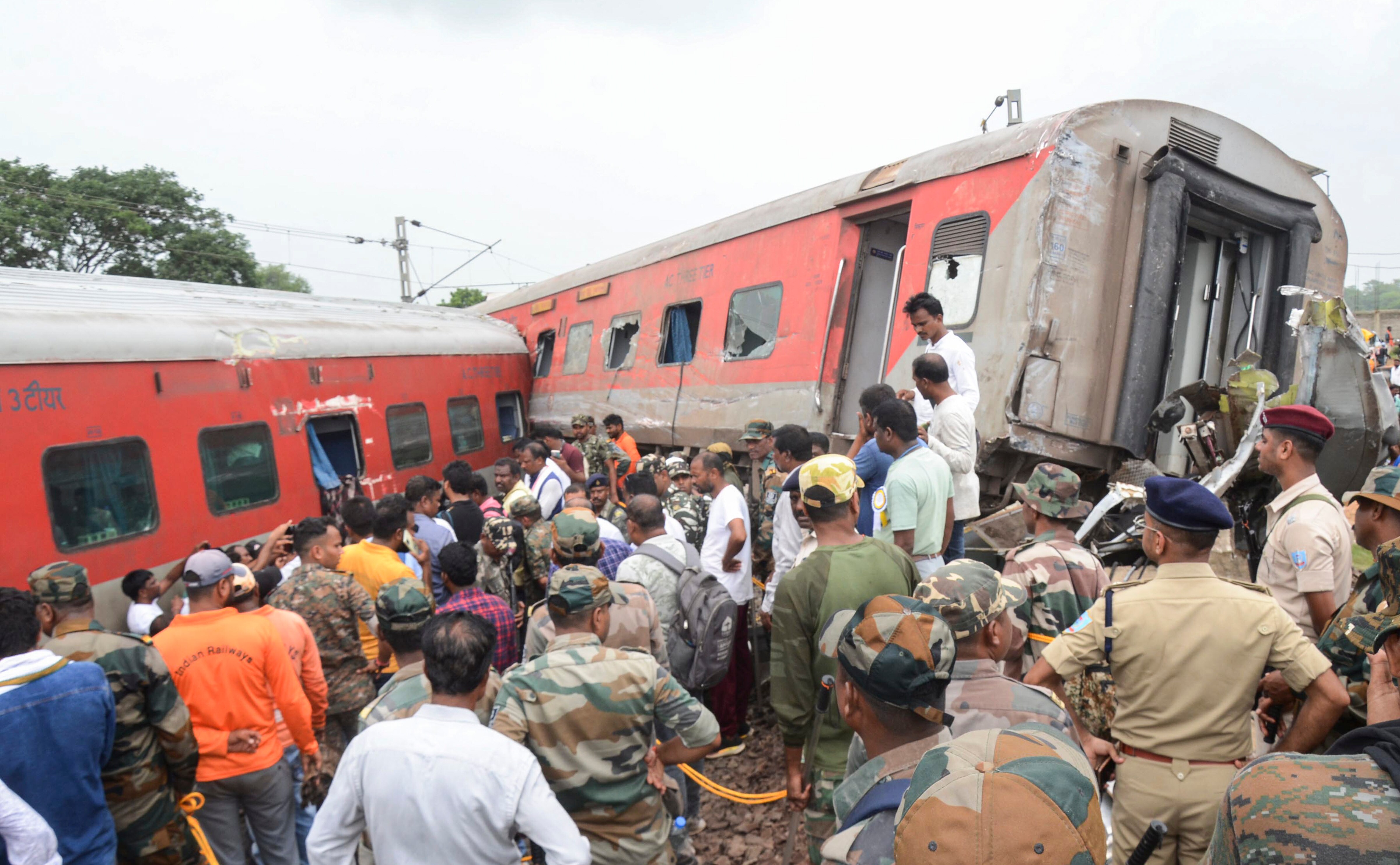
Two people were killed and 20 others injured after at least 18 coaches of the Howrah-Mumbai Mail derailed in Seraikela-Kharsawan district of Jharkhand earlier today. This incident has yet again put the spotlight on Indian Railways, a mode of transport that is used by lakhs of people around the country.
Over the past three months, India has witnessed multiple train derailments, including three specific passenger train accidents. Common factors in these accidents include signalling glitches and issues related to track safety.
As Railway Minister Ashwini Vaishnaw emphasises high-speed trains like the Vande Bharat Express, high-speed corridors, and the much-anticipated Bullet Train project, passengers on long-distance trains continue to struggle. Overcrowding, difficulty finding seats, and the use of reserved coaches have become common problems, with people often waiting days at railway stations.
Recent derailments highlight growing concerns for rail journey safety in India, raising questions about the prioritisation of high-speed projects over the immediate needs of daily passengers—including the Kavach protection system's slow expansion.
Here are some of the recent train derailment incidents in the last few months:
Uttar Pradesh Derailment
On July 18, eight coaches of the Chandigarh-Dibrugarh Express had derailed between Uttar Pradesh's Motiganj and Jhilahi railway stations, about 150 km from the state capital, on the Gonda-Gorakhpur section of the Northeast Railway. The accident led to the deaths of four people, while 31 people were injured in the incident.
Kanchanjunga Express Derailment
On June 17, nine people, including seven passengers and two railway staffers, died and 41 others were injured after three rear coaches of the stationary Sealdah-bound Kanchanjunga Express derailed as a goods train collided with it in West Bengal's Darjeeling district.
Mumbai Local train
On April 29, a coach of a local train on Mumbai's harbour line derailed at Chhatrapati Shivaji Maharaj Terminus. It disrupted local train services on the harbour line, and CSMT-bound trains were terminated at Masjid station. A trolley from one of the coaches of a CSMT-bound local train from Panvel derailed as it pulled into platform number 2 around 11.35 a.m.
Other Incidents
Apart from these major incidents, there were quite a few derailments and accidents over the last few months.
On July 29, two bogies of the Bihar Sampark Kranti Express detached from the other coaches in Samastipur district, even though the incident saw no casualties. On the same day, a goods train derailed in Odisha's Sambhalpur, though there were no casualties reported.
On July 27, five wagons of a goods train derailed in the yard of Western Railways' Boisar station, some 100 km from Mumbai.
On July 26, the engine of an empty passenger train derailed in Chhattisgarh's Kanker district after hitting a fallen tree. The driver was injured. The same day saw another goods train derailment near Bhubaneswar station, with no report of injury.
On July 21, three wagons of a goods train derailed in Alwar Yard in Rajasthan in the early hours of the morning.
On June 7, a fire broke out in the Daulatpur-Sabarmati Express train in Jaipur. There were no casualties reported.
On June 3, two loco pilots were injured as a stationary goods train hit another at Sirhind railway station in Punjab.
On May 28, an empty local train derailed at Liluah station in Howrah, which disrupted train movement.
Budget For 'Kavach'
This year, the Indian Railways has received a record allocation of Rs 2.52 lakh crore. On July 24, Railway Minister Ashwini Vaishnaw announced in a written reply in the Lok Sabha that Rs 1,112.57 crore has been allocated for the installation of Kavach for the financial year 2025.
Kavach is an indigenously developed automatic train protection system that is highly technology-intensive and requires safety certification of the highest order. It is an SOS feature to control trains in emergency situations. By automatically applying brakes when necessary, the system ensures better control over train speed and prevents potential accidents.
Currently, the Kavach system is operational on 1,445 km of the 69,000 km rail network and installed in 139 of the 14,800 locomotives. Efforts are underway to expand its coverage to 4,500 km in the upcoming fiscal.
Odisha Triple Train Accident
Last year, on June 3, one of the worst railway tragedies in India's history occurred in Odisha's Balasore district. The triple train accident involved the Bengaluru-Howrah Superfast Express, the Shalimar-Chennai Central Coromandel Express, and a goods train, resulting in the deaths of more than 230 people and injuries to approximately 900 others.
A petition urged the implementation of Kavach with immediate effect to ensure public safety.

-
Gold Is Rs 22,000 Cheaper Than A Month Ago. Should You Buy Amid The Wedding Season?

Gold's potential slide to $3,500 could save around Rs 4,700 per 10 grams, but a soft inflation print could just as easily push prices back up. One way to split the risk is to buy in parts, some now and the rest after the Fed's Dec. 9 decision.
-
AI Agents Are Gaining Power. Who Governs Them?
Artificial intelligence agents promise to transform productivity by moving machines from assisting decisions to executing them. But as organisations delegate greater authority to these AI-agents, they must first establish who controls that authority and who remains accountable when things go wrong.
-
Why Swapping Your Old Gold Can Trigger A Rs 5 Lakh Tax Bill, And How You Can Avoid It Legally
Swapping old gold for new is taxed as a sale and a fresh purchase. Getting your own gold remade can cut most of that bill, though it has its own costs.
-
The AI Trade is Done. The Real Opportunity for Investors Starts in 2027 | Unhedged Position
As pureplay AI stocks plunge and circular, capex-led financing unwinds, 2027 is set to be a year of reckoning for AI companies. Yet the bust clears the way for a better opportunity for investors in 2027 -- shifting the spotlight from AI builders to the companies using AI.
-
Leadership As Mission: Why The Age Of AI Demands More Human Leadership
Debjani Ghosh examines how AI is changing leadership, arguing that its success must be measured by its impact on people and the accountability of those guiding its use.
-
We May Need Another Tukaram Mundhe To Fight Air Pollution | The Reason Why
Developers may install basic measures such as sprinklers and green nets, resume work, and continue violating rules when this equipment stops working.
-
Extracting Value From Battery Scrap Could Be Challenging For India | The Reason Why
A discarded lithium-ion battery still contains valuable materials such as lithium, nickel and cobalt. These can be recovered and reused. When such batteries are crushed and shredded, they produce a dark powder called black mass.
-
One El Nino, India Can Handle. Two Could Break The Granary
India's grain stocks can absorb one bad year, but a second El Nino could drain the buffer in two to three years, economists say.
-
India's Troika Of Good Luck | Joining The Dots
As Jensen Huang's exit drags Nvidia down, a cooling AI trade and resilient earnings have revived investor interest in India. A likely RBI rate hike looms.
-
Talking Points This Week: Leadership Shock At Nvidia, Earnings Strength, And The Fog Over Hormuz
The Anthropic IPO pricing and first trading day, Nvidia's upcoming earnings, and any fresh signals from Iran will set the tone for the following week.









