Modernise Archaic Laws, Fill Judicial Vacancies To Ensure Speedy Justice, Says Narayana Murthy
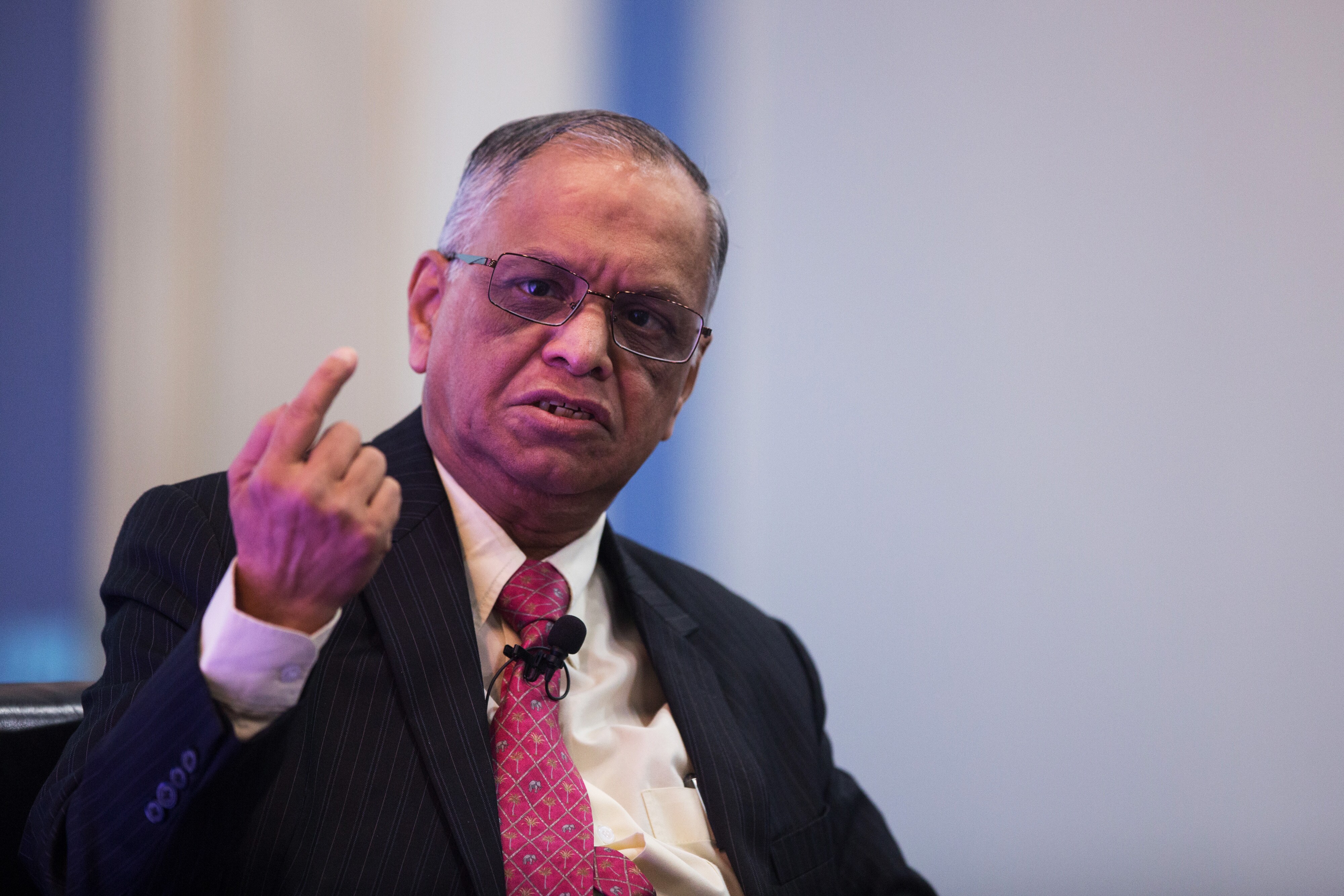
Infosys co-Founder NR Narayana Murthy said there is a pressing need to modernise the "archaic and vaguely drafted laws", train bureaucrats in drafting precise and unambiguous laws and increase number of judges to expedite the judicial delivery system in the country.
Delivering the third VR Venkatakrishnan Memorial lecture, Murthy highlighted the high number of vacancies across various courts and pending litigations and said it is important to also ensure productivity of judges for reducing delays.
We have to modernise our archaic and vaguely drafted laws, train our bureaucracy in drafting precise, concise, unambiguous and easily-understandable laws, train our law students, court associates of judges and entry-level judges better and introduce tools to improve the work productivity in courtsNR Narayana Murthy, Co-Founder, Infosys
He added that many of these laws were drafted during the British rule with the aim of curbing the freedom of the people.
Murthy cited a personal incident from 12 years ago, where a case was filed against him alleging that he had insulted the national anthem when the instrumental version was played at a function in Infosys.
"This went from the lowest level court to high court to Supreme Court over 18 months until the case was dismissed in my favour. I ended up spending Rs 48 lakh as lawyer's fees," he said adding that the cost of litigation in India is "unaffordable for the common man".
Murthy also flagged the "low quality" of judgments at lower courts.
"Many retired legal luminaries tell me that many judgments produced by lower level courts are vague, do not refer to the section of the law according to which the decision is made, and are full of opinions. Such decisions at lower courts are likely to result in a higher load on higher courts," he added.
The technocrat said one of the solutions to these issues is to ensure that lower level courts do not admit appeals filed in routine matters and those based on opinions.
"Second, re-appealing a case again at a higher court when an entity or a person has lost at lower court in a non-policy matter has to be discouraged. Alternate dispute resolution mechanisms like arbitration should be encouraged," he said.
Murthy suggested that it would be a good idea to send promising entry-level judges to courts in the U.S. or U.K. to spend time observing how judges in those countries use technology and modern practices to provide speedy justice.
"It may be a good idea to invite retired judges from the U.K. and the U.S. as visiting professors to our law schools for a year or two to teach modern court room practices, logical reasoning, and precise, concise and unambiguous communication," he added.
Murthy said such initiatives will essentially make Indian law students and entry-level judges become logical thinkers, communicators and users of modern technology and modern methods of managing court productivity.
Watch Narayana Murthy's VR Venkatakrishnan Memorial lecture here:

-
Getting To Work Costs Women More | The Reason Why

It is not just about women paying more than men. It is about women paying much more in cities than in villages.
-
AI Bias In Investing Cannot Be Eliminated, But It Can Be Governed
Framing is a particularly important example as identical financial information presented in terms of gains rather than losses can lead an LLM to reach a different assessment.
-
Joining The Dots | Dark Skies, Steady Diya: Why Hope Holds This Diwali
With war, a weak rupee and foreign outflows weighing on sentiment, policymakers at the NDTV World Summit and market veterans at NDTV Profit Ignite: Diwali Edition offered the same advice: stay invested and filter out the noise.
-
The Curious Case of Equitas Small Finance Bank And A CEO Who Quit For Stock
PN Vasudevan believes persistent investor concerns over a perceived conflict of interest had become a governance overhang on Equitas Small Finance Bank's stock, even as the lender improved profitability and asset quality.
-
Talking Points This Week: AI Cash Burn, A Tiger Comeback And An India That Still Finds Its Own Path
India is not immune to higher oil or tighter global liquidity, yet its earnings base is broader, its domestic policy levers are still available.
-
Foreign Investors Own Half Of HDFC Bank and ICICI Bank. An LTCG Cut Could Matter Most Here
Foreign portfolio investors have US$115 billion parked in HDFC Bank, ICICI Bank. If the government cuts long-term capital gains tax, Jefferies says returning foreign money could land here first.
-
'Never Seen This Level Of Negativity': Sandeep Tandon Says The Next Rally May Be Closer Than You Think
Veteran investor Sandeep Tandon says foreign selling is easing, large-caps are due a comeback and mid-caps are crowded, while he turns positive on gold, power and pharma this Diwali.
-
Indians Stay With Family, Not In Hotels | The Reason Why
India still lacks enough clean, reliable and affordable hotels for budget-conscious travellers.
-
The Economic Imperative: Analysing The Material Driving Force Behind India-Canada Strategic Reset
This economic complementarity is further reinforced by deep institutional investment ties and talent mobility, which form the bedrock of the bilateral framework.
-
Medicine Pricing: Where Must Profit Stop?
India must confront excessive margins, hidden incentives and regulatory gaps that threaten the integrity of medicine.










