Mob Lynchings: WhatsApp At Risk Of Being Labelled “Abettor”

India today expressed dissatisfaction over measures listed by WhatsApp for checking fake news that has in several cases led to mob violence, saying the company cannot escape its responsibility for such rampant abuse and needs to find the originators of provocative messages.
It is regretted that the enormity of the challenge and the rampant abuse happening in the country leading to repeated commissioning of crimes pursuant to rampant circulation of irresponsible messages in large volumes on their platform have not been addressed adequately by Whatsapp.IT Ministry Statement
In the second notice to the U.S.-based messaging service in three weeks, the government warned that in the absence of adequate checks, it will treat the messaging platform as 'abettor' of rumour propagation and legal consequences will follow.
Facebook-owned WhatsApp has been under fire from the Indian government over fake news and false information being circulated on its messaging platform.
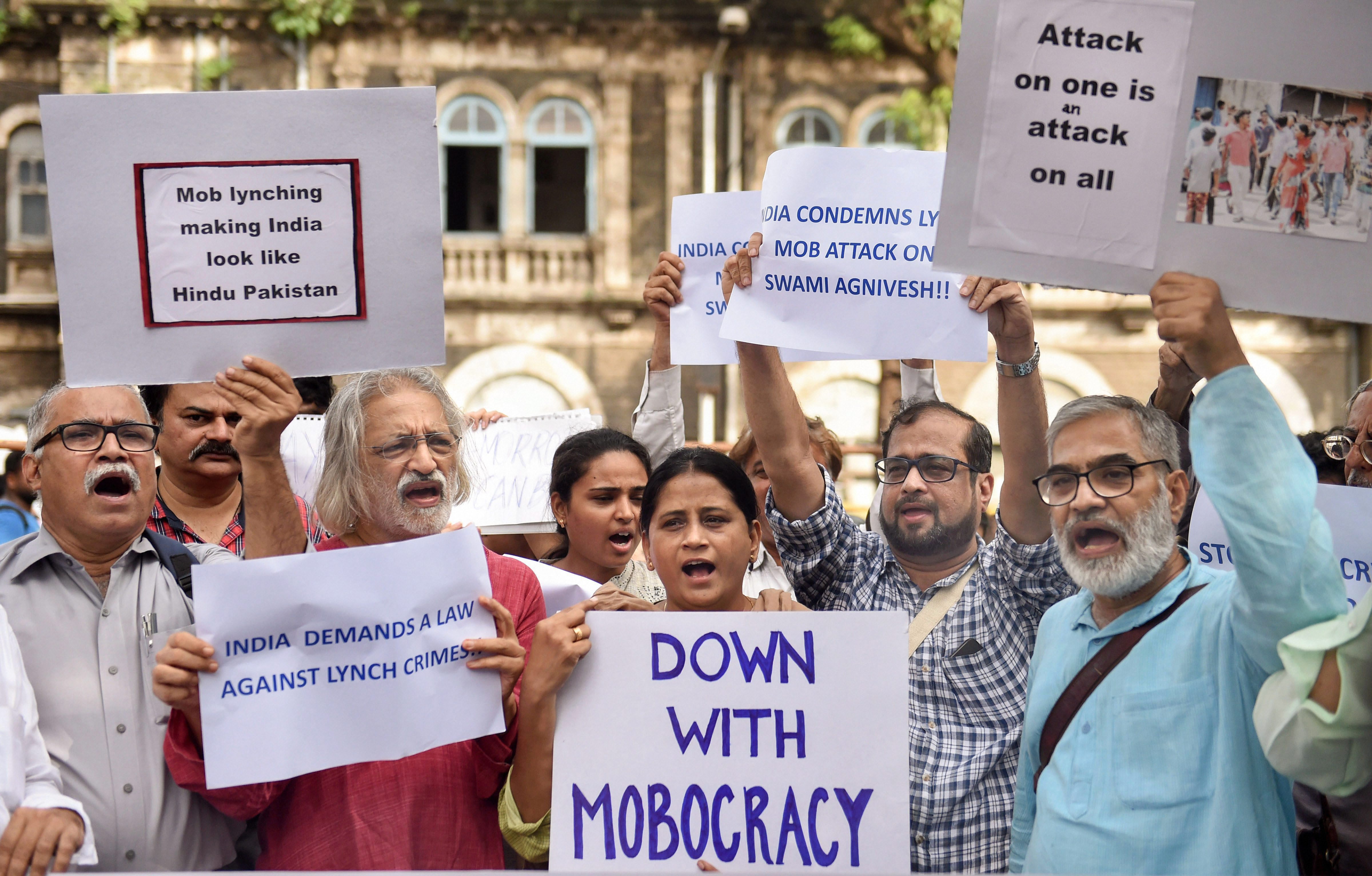
Such messages have incited mob-fury, triggering multiple cases of lynching across the country.
The government had in the past too issued a stern warning to the company to clamp down on hoax messages designed to "provoke" and "instigate" people.
In response, WhatsApp introduced a new feature to let its users identify the forwarded messages, and issued full-page ads giving "easy tips" to spot fake news.
"When rumours and fake news get propagated by mischief mongers, the medium used for such propagation cannot evade responsibility and accountability. If they remain mute spectators they are liable to be treated as abettors and thereafter face consequent legal action," the IT Ministry said in a statement today.
The ministry said it has approached WhatsApp to bring more effective solutions to the table, to ensure greater "accountability and facilitate enforcement of law" beyond the existing efforts towards labelling forwards and identifying fake news.
"It has been conveyed to them in unmistakable terms that it is a very serious issue which deserves a more sensitive response," it said.
Taking note of the recent incident in Bidar, where a 32-year-old software engineer was killed after messages about child lifters did the rounds on WhatsApp, the ministry rued that "rampant circulation of irresponsible messages in large volumes" on the platform has not been addressed adequately by the company.
Earlier today, Law and IT Minister Ravi Shankar Prasad informed the Rajya Sabha that he will hold discussion with stakeholders, including political parties, to evolve a policy to deal with the misuse of social media.
Prasad had earlier told WhatsApp that the platform "cannot evade accountability and responsibility".
In response, WhatsApp announced a new feature to let its users identify the messages that are forwarded.
At the same time, WhatsApp had informed the Centre that fake news, misinformation and hoaxes can be checked by the government, civil society and technology companies "working together".
Outlining steps it has taken to curb abuse of its platform, WhatsApp, in its response to the first notice sent by the IT Ministry, had said that it has the ability to prevent spam but since it cannot see the content of private messages, blocking can be done only based on user reports.
WhatsApp had also told the government that it is "horrified by these terrible acts of violence" and its strategy to deal with the situation involves giving people the controls and information they need to stay safe while working pro-actively to prevent misuse of the service.
Rumours on WhatsApp have sparked off a spate of incidents involving mob fury, including one where five men were lynched on the suspicion of being child lifters in Maharashtra's Rainpada village of Dhule district.
The Supreme Court, earlier this week, asked parliament to consider enacting a new law to effectively deal with incidents of mob lynching, saying "horrendous acts of mobocracy" cannot be allowed to become a new norm.

-
India's Troika Of Good Luck | Joining The Dots

A weaker Trump, a cooling AI trade and resilient earnings have put Indian markets back in favour. Rising inflation could spoil the party.
-
Talking Points This Week: Leadership Shock At Nvidia, Earnings Strength, And The Fog Over Hormuz
The Anthropic IPO pricing and first trading day, Nvidia's upcoming earnings, and any fresh signals from Iran will set the tone for the following week.
-
Signature Play: The Classic Cocktail Is Dead. Or Is It?
Classic cocktails are disappearing from India's cocktail menus. But they're still being ordered, taught to bartenders and borrowed from. So, who's really having the last drink?
-
A New Samvat Wishlist: Inclusive Prosperity And Human Development
India has strengthened its economic foundations through infrastructure, digital access and enterprise. Its next growth chapter must deepen productivity, create better livelihoods and widen participation in prosperity.
-
Love, Sex Aur Dhokha: The Audacious Plot To Spy On Jensen Huang
A Taipei dinner, a Singapore chip buyer and a suspected Chinese asset: inside the alleged spy operation that got close to NVIDIA's Jensen Huang.
-
Ten Things I Learnt This Samvat
Patience can be a trap. Cheap stocks can stay cheap. Leverage can wipe you out. What did Samvat 2082 teach us? Niraj Shah writes on 10 lessons from the year gone by.
-
Talking Points This Week: Tech Nerves, FII Buying, And A Faraway Banking Shock
The global markets are not shining this Diwali. The exception in the large markets is, India.
-
Midterm Rally Lasted A Day. The Hard Reality Of A Divided US May Last Two Years | Opinion
Between a contested AI boom, a debt ceiling that arrives in 2027 and a president with every incentive to act alone, the next two years may prove more volatile than the first day's rally suggests.
-
Blue Wave Will Derail the AI Trade but Won't Dismantle the AI Era | Unhedged Position
The Democrats' sweep of the US Congress will see politics collide with economic forces both over the long and short term.
-
It's Time To Take The GST Council's Bet On Trust Global
Payment records can prove India's services exports, and clear, proportionate rules can bring foreign digital sellers into the tax net.