Majority Of Indians Prefer Leaders From Own Caste, Religion, Tribe
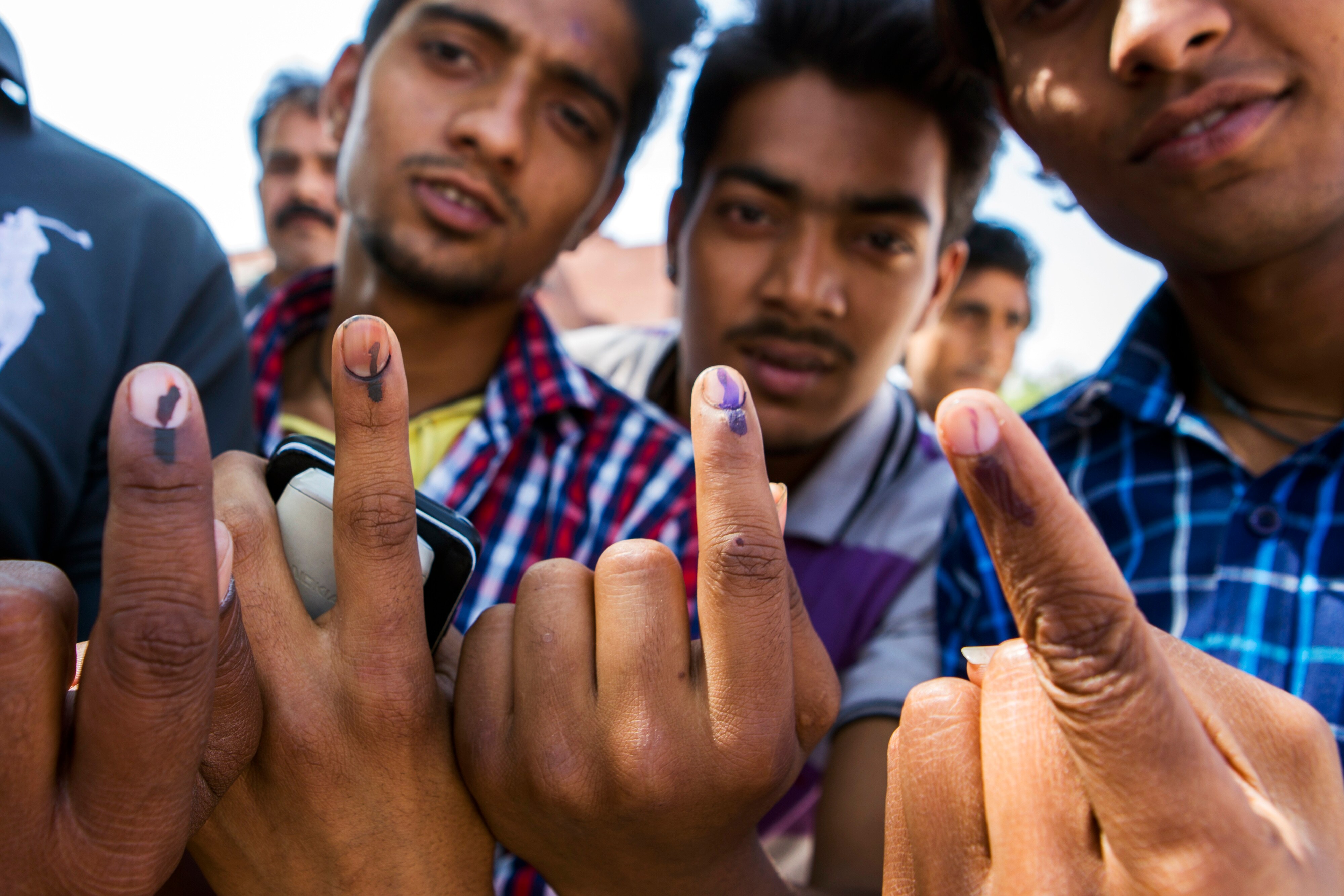
A majority of Indians prefer political leaders from their own caste, tribe or religion, according to a 2018 study, indicating how identity politics plays a significant role in state and general elections. This was especially so among non-literates across caste and religious groups.
Across eight states–Andhra Pradesh, Bihar, Madhya Pradesh, Maharashtra, Rajasthan, Jharkhand, Chhattisgarh and Telangana–55 percent of Indians would prefer a political leader from their own caste and religion, found the study, ‘Politics And Society Between Elections 2018', carried out by the Azim Premji University and Lokniti (Centre for the Study of Developing Societies) in 22 assembly constituencies with 16,680 respondents.
No more than 10 percent would actively choose a political leader from a different caste or religion (9 percent). A little more than a third of those surveyed said caste (35 percent) or religion (37 percent) of their political leader would not matter.
“There is a distrust of leaders from outside the community across all classes, and all caste-class intersections,” the study, accessed by IndiaSpend, said.
“The upper castes in general express the lowest trust in leaders from outside their own.”
Indians With Higher Education More Willing To Have Leaders Of Different Caste/Religion
Caste and religious identity of a political candidate were less likely to make a difference to college-educated persons (47 percent) compared to non-literates (63 percent) and those educated up to the school-level (56 percent), across social groups, according to the study.
For example, while upper castes in general expressed the “lowest trust in leaders from outside their own”, according to the study, this was more so among non-literates (68 percent) compared to those with schooling (56 percent) and with college-level education (46 percent).
Among those educated at the college-level, adivasis or scheduled tribes (as they are constitutionally called), displayed a higher preference for a leader from their own social group (60 percent). This is six percentage-points lower–lowest among all social groups–than the preference expressed by non-literate adivasis (66 percent).

While college-educated Hindus and Muslims were less likely–by 14 and 15 percentage points, respectively–to want a leader from their religion, this preference did not change for Christians: 56 percent wanted a Christian leader regardless of their education.
College-educated Christians were the least-likely (3 percent) among all religious groups to prefer a leader from a different religion.

Caste And Religion Bias For Political Leaders Highest In Madhya Pradesh, Lowest In Andhra Pradesh, Telangana
While 55 percent of all respondents expressed a bias for a political leader from the same caste and religion, these results varied between states.
More than two-thirds of those surveyed in Madhya Pradesh revealed a desire for a leader from the same caste (65 percent) and religion (64 percent)–highest among all states included in the study; states expressing the lowest such desire were Andhra Pradesh (43 percent for caste, 38 percent for religion), and Telangana (48 percent for caste, 46 percent for religion).
“This suggests some obvious homogeneity between these two contiguous states, only reinforced by the information that they constituted a single territorial entity till mid-2014,” the report said.
Jharkhand and Rajasthan had the most respondents (10 percent) who said they would actively choose a leader from a different caste or religion.
(Saldanha is an assistant editor with IndiaSpend.)
This article has been published in arrangement with IndiaSpend.

-
Indians Are Travelling, But Not Every Journey Is A Holiday | The Week In Whys

Pilgrims, patients and working women are the real travellers, and the system hasn't quite caught up with them.
-
Getting To Work Costs Women More | The Reason Why
It is not just about women paying more than men. It is about women paying much more in cities than in villages.
-
AI Bias In Investing Cannot Be Eliminated, But It Can Be Governed
Framing is a particularly important example as identical financial information presented in terms of gains rather than losses can lead an LLM to reach a different assessment.
-
Joining The Dots | Dark Skies, Steady Diya: Why Hope Holds This Diwali
With war, a weak rupee and foreign outflows weighing on sentiment, policymakers at the NDTV World Summit and market veterans at NDTV Profit Ignite: Diwali Edition offered the same advice: stay invested and filter out the noise.
-
The Curious Case of Equitas Small Finance Bank And A CEO Who Quit For Stock
PN Vasudevan believes persistent investor concerns over a perceived conflict of interest had become a governance overhang on Equitas Small Finance Bank's stock, even as the lender improved profitability and asset quality.
-
Talking Points This Week: AI Cash Burn, A Tiger Comeback And An India That Still Finds Its Own Path
India is not immune to higher oil or tighter global liquidity, yet its earnings base is broader, its domestic policy levers are still available.
-
Foreign Investors Own Half Of HDFC Bank and ICICI Bank. An LTCG Cut Could Matter Most Here
Foreign portfolio investors have US$115 billion parked in HDFC Bank, ICICI Bank. If the government cuts long-term capital gains tax, Jefferies says returning foreign money could land here first.
-
'Never Seen This Level Of Negativity': Sandeep Tandon Says The Next Rally May Be Closer Than You Think
Veteran investor Sandeep Tandon says foreign selling is easing, large-caps are due a comeback and mid-caps are crowded, while he turns positive on gold, power and pharma this Diwali.
-
Indians Stay With Family, Not In Hotels | The Reason Why
India still lacks enough clean, reliable and affordable hotels for budget-conscious travellers.
-
The Economic Imperative: Analysing The Material Driving Force Behind India-Canada Strategic Reset
This economic complementarity is further reinforced by deep institutional investment ties and talent mobility, which form the bedrock of the bilateral framework.










