Live-Streaming Of Supreme Court Cases: A Big Step For Transparency
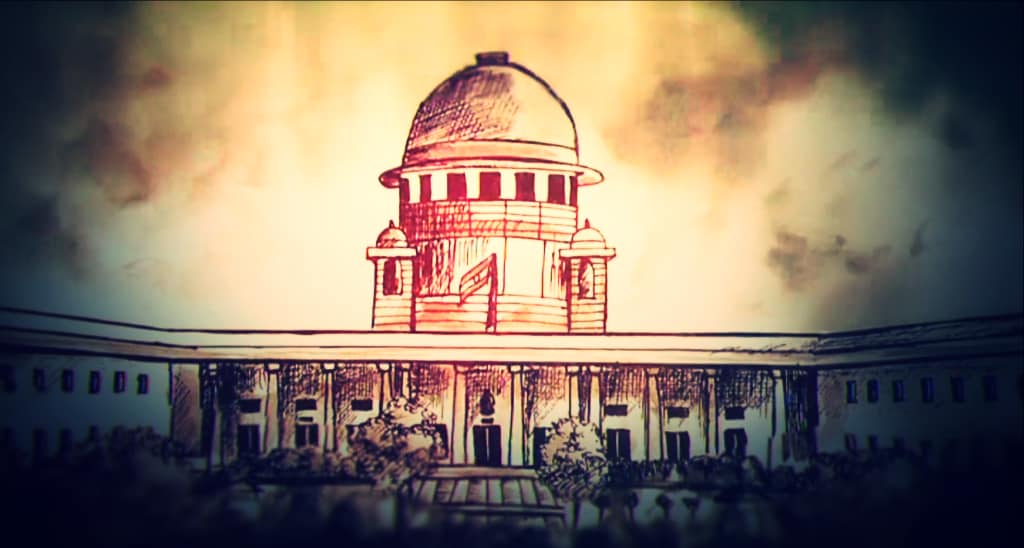
The petition for the live streaming of cases was listed for hearing on Aug. 24, 2018, in the case of Indira Jaising v. Secretary General & Ors. The Attorney General of India, KK Venugopal made his arguments on the same in the Chief Justice's court. Venugopal presented his recommended guidelines on the matter, saying that live-streaming should be tested out as a pilot project in cases heard by the Constitution Bench, and those in the Chief Justice's court.
Arguments By The Petitioner-In-Person
The petitioner, Senior Advocate Indira Jaising, had filed a writ petition on Jan. 18, 2018 to permit the live streaming of Supreme Court case proceedings of constitutional and national importance, having an impact to the public at large. The primary grounds for the request was based on the mandates under Article 19 and Article 21 of the Constitution of India, which upon a conjoint reading correspond to the right to receive information, and the access to justice through open courts.
The relevance of this matter was stressed due to the pressing difficulties faced by litigants or general stakeholders in the issues being heard, who found it hard to witness court proceedings and obtain first-hand information on matters of national importance heard in court. The barriers between courtrooms and the public at large are primarily constraints of a socio-economic nature, i.e. the mere difficulties faced in traveling, but also the intangible hierarchies and intimidation of the mere space of the courtroom.
Further, Jaising argued that the nature of justice is such that it should be delivered to the public at large in the most unadulterated manner as possible. Interactions between the judges and the counsels would be beneficial for realising that matters of pressing importance have several missed nuances that the press does not cover. The mere knowledge of the holding of a judgment creates a gap and misinformation in comprehending the reasoning of the same by the public.
For the development of a vibrant democracy, it was further been argued that live streaming assists the archiving of seminal cases that may be utilised later for students, young lawyers and reference points for several others in the future. The example of several jurisdictions such as the UK, Australia, and South Africa has been cited to realise that permitting live streaming strengthens the persuasiveness of the argument vouching for the accountability of the judiciary.
The caveat for the argument is that live streaming need not take place in the cases concerning criminal matters that require witness protection, or other confidential matters that necessitate privacy of the case.
Jaising argued that several lapsed cases like the Right to Privacy delivered in the case of Justice KS Puttaswamy, as well as pending cases like the challenge to Section 377, all have great investment of public curiosity, and they have a right to involve themselves in the same.
Progression In Supreme Court
A three-judge bench comprising of Chief Justice Dipak Misra, Justice AM Khanwilkar, and Justice DY Chandrachud, along with the current Attorney General of India, KK Venugopal — seemed to be largely in favour of live-streaming court proceedings in constitution bench cases.
Justice Chandrachud stated that live streaming is a mere extension of the principle of open courts and access to justice.
Venugopal argued that after successful implementation of the same in some important matters, the provision could be expanded further for other cases of different types.
In another day of positive arguments on the matter, the AG Venugopal initiated a further step in the process, i.e. the building of appropriate infrastructure to facilitate the audio/ video recording of court proceedings.
- He argued that the same should begin as a pilot project in Court Number 1 pertaining to constitutional bench references, to test whether the same is possible to be extended in other courtrooms.
- To accommodate interested members, i.e. lawyers, interns, litigators, and visitors, a separate media room should be constructed to decongest courts.
- To ensure complete accessibility, the room should be made in a manner such that disabled persons too may be accommodated.
- An additional activity is to upload the audiovisual content and transcriptions online.
Venugopal further suggested some safeguards needed to be in place to ease out the process.
- The Court must enjoy the power to limit or suspend the broadcasting upon its discretion if it felt that the same was hindering the process of administering justice through a fair trial.
- In order to determine what cases comprise “constitutional and national importance” identify a few well thought out criteria.
- There are certain cases in which broadcasting would be impermissible, i.e. matters that are matrimonial, national, concerning juveniles, confidential, or provocative in nature.
- The use of this footage needed to be supervised, i.e. its circulation could not be extended for commercial or entertainment ends. Additionally, any material could not be reproduced, transmitted, uploaded, posted, modified or published in the public domain without authorisation. Any transgressions to the same could be punishable under the Indian Copyright Act, 1957 and the Information Technology Act, 2000, with corresponding fines and penalties.
- There was a request for a more detailed understanding of the actual administration of the same in court. This includes the manner of filming, number of equipment, focusing cameras on judges rather than the papers of lawyers, and the provision of judges to mute proceedings inappropriate for public consumption.
- Finally, the provision of live streaming was considered as being simultaneous to the speedy disposal of cases, through the previous submission of written submissions by the lawyers.
Attorney General KK Venugopal's Guidelines On Live Streaming
Indira Jaising's Suggested Changes To Live-Streaming Guidelines Submitted By Attorney General
Jaising Pleads For A ‘Supreme Court Channel'
The AG's suggestions were simultaneously intervened by Jaising. She argued that there should be a video channel of the Supreme Court that conducts the process of streaming so as to ensure authenticity. In relation to the point raised on the space for conducting such screenings, Jaising responded that the same could be done at multiple screens, at multiple places. She requested for there to be a timeline on the pilot project. Last, she reiterated the points that were made on access, i.e. the availability of transcripts in the registry's archive.
Indira Jaising's Writ Petition In The Live-Streaming Case
This article was originally published in The Leaflet.

-
Indians Are Travelling, But Not Every Journey Is A Holiday | The Week In Whys

Pilgrims, patients and working women are the real travellers, and the system hasn't quite caught up with them.
-
Getting To Work Costs Women More | The Reason Why
It is not just about women paying more than men. It is about women paying much more in cities than in villages.
-
AI Bias In Investing Cannot Be Eliminated, But It Can Be Governed
Framing is a particularly important example as identical financial information presented in terms of gains rather than losses can lead an LLM to reach a different assessment.
-
Joining The Dots | Dark Skies, Steady Diya: Why Hope Holds This Diwali
With war, a weak rupee and foreign outflows weighing on sentiment, policymakers at the NDTV World Summit and market veterans at NDTV Profit Ignite: Diwali Edition offered the same advice: stay invested and filter out the noise.
-
The Curious Case of Equitas Small Finance Bank And A CEO Who Quit For Stock
PN Vasudevan believes persistent investor concerns over a perceived conflict of interest had become a governance overhang on Equitas Small Finance Bank's stock, even as the lender improved profitability and asset quality.
-
Talking Points This Week: AI Cash Burn, A Tiger Comeback And An India That Still Finds Its Own Path
India is not immune to higher oil or tighter global liquidity, yet its earnings base is broader, its domestic policy levers are still available.
-
Foreign Investors Own Half Of HDFC Bank and ICICI Bank. An LTCG Cut Could Matter Most Here
Foreign portfolio investors have US$115 billion parked in HDFC Bank, ICICI Bank. If the government cuts long-term capital gains tax, Jefferies says returning foreign money could land here first.
-
'Never Seen This Level Of Negativity': Sandeep Tandon Says The Next Rally May Be Closer Than You Think
Veteran investor Sandeep Tandon says foreign selling is easing, large-caps are due a comeback and mid-caps are crowded, while he turns positive on gold, power and pharma this Diwali.
-
Indians Stay With Family, Not In Hotels | The Reason Why
India still lacks enough clean, reliable and affordable hotels for budget-conscious travellers.
-
The Economic Imperative: Analysing The Material Driving Force Behind India-Canada Strategic Reset
This economic complementarity is further reinforced by deep institutional investment ties and talent mobility, which form the bedrock of the bilateral framework.










