Justice Gogoi’s Nomination To Rajya Sabha Hurts Judiciary’s Image, Say Former Judges
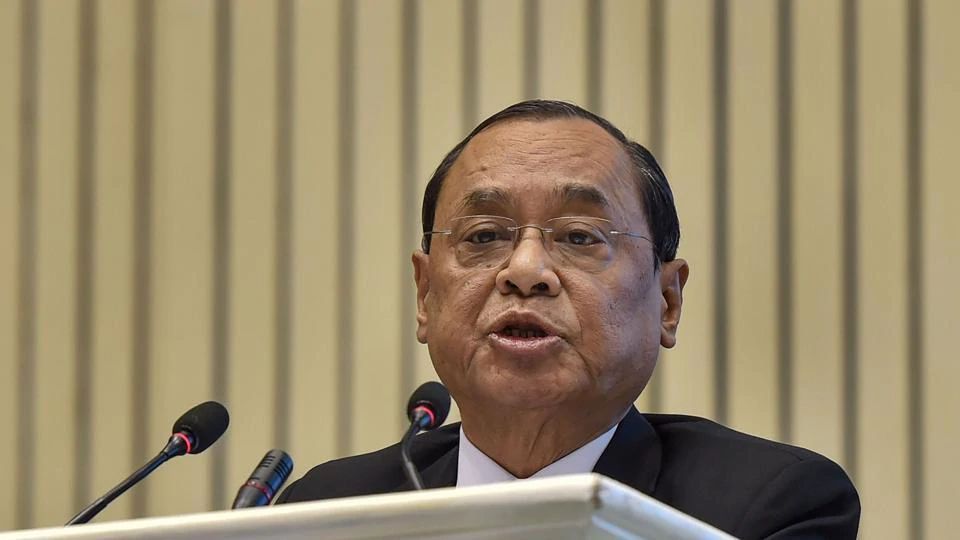
The Modi government's decision to nominate Justice Ranjan Gogoi, former Chief Justice of India, to the Rajya Sabha will shake people's faith in the judiciary, according to former judges of the top court.
“Justice Gogoi, through this decision, has compromised the principles of independence and impartiality of the judiciary,” Justice Kurian Joseph, a former Supreme Court judge, told BloombergQuint in a text message.
Justice Joseph was among the four judges who, along with Justice Gogoi, had addressed the landmark press conference in January 2018, highlighting the alleged interference and problems in the functioning of the top court.
“I came out in public in an unprecedented move along with Justice Chelameswar, Justice Ranjan Gogoi and Justice Madan B Lokur to tell the nation that there was a threat to this foundation and now I feel the threat is at large,” Justice Joseph said. “This was also the reason why I decided not to take up any posts after retirement. According to me, the acceptance of nomination as member of Rajya Sabha by a former Chief Justice of India has certainly shaken the confidence of the common man on the independence of judiciary, which is also one of the basic structures of the Constitution of India.”
President Ram Nath Kovind nominated Justice Gogoi to the upper house of Parliament under his powers to nominate 12 individuals for their contribution in their respective fields.
Justice Lokur, another former Supreme Court judge who was a member of the Collegium during Justice Gogoi's term and among the four judges who held the press conference, too commented on the impact on the integrity of the judiciary.
There was speculation over what honorific Justice Gogoi would get after his retirement but the fact that it came so soon even took him by surprise, The Indian Express newspaper quoted Justice Lokur as saying. “This redefines the independence, impartiality and integrity of the judiciary. Has the last bastion fallen?”
Justice Gogoi's nomination has also revived a debate on whether there must be a mandatory cooling-off period for judges for taking up government assignments after retiring.
Rakesh Dwivedi, senior advocate at the Supreme Court, said while he's completely against judges taking up assignments after retirement, he would still prefer a three-year cooling-off period instead of the current situation. Dwivedi told BloombergQuint that such situations definitely impact the perception of the independence of the judiciary as it gives rise to the question as to why a particular judge has been chosen by the government.
“If you find that in the last period of his functioning, they have delivered a considerable number of judgments that favoured the government, then the common perception will be that it's a reward for it,” he said. “Looking at various judgments and his [Justice Gogoi's] personal problems with an employee, all those events will aid the common perception that he has been biased and has not conducted in an independent manner.”
The Congress called the nomination “one of the most serious, unprecedented and unpardonable assaults on the basic structure of the Constitution”.
“It's important that the perception, which has been growing for some time that the judiciary isn't able to stand up with its usual vigour and fearlessness against the executive and legislative assault and onslaught, shouldn't be given a push by this government,” said Senior Advocate and Congress leader Abhishek Manu Singhvi.
Still, Justice Gogoi won't be the first judge of the apex court heading to the Rajya Sabha. Earlier, former Chief Justice of India Ranganath Mishra was appointed to the upper house six years after his retirement in 1998. Justice Baharul Islam was a member of the Rajya Sabha before he became a Supreme Court judge in 1980.

-
Signature Play: The Classic Cocktail Is Dead. Or Is It?

Classic cocktails are disappearing from India's cocktail menus. But they're still being ordered, taught to bartenders and borrowed from. So, who's really having the last drink?
-
A New Samvat Wishlist: Inclusive Prosperity And Human Development
India has strengthened its economic foundations through infrastructure, digital access and enterprise. Its next growth chapter must deepen productivity, create better livelihoods and widen participation in prosperity.
-
Love, Sex Aur Dhokha: The Audacious Plot To Spy On Jensen Huang
A Taipei dinner, a Singapore chip buyer and a suspected Chinese asset: inside the alleged spy operation that got close to NVIDIA's Jensen Huang.
-
Ten Things I Learnt This Samvat
Patience can be a trap. Cheap stocks can stay cheap. Leverage can wipe you out. What did Samvat 2082 teach us? Niraj Shah writes on 10 lessons from the year gone by.
-
Talking Points This Week: Tech Nerves, FII Buying, And A Faraway Banking Shock
The global markets are not shining this Diwali. The exception in the large markets is, India.
-
Midterm Rally Lasted A Day. The Hard Reality Of A Divided US May Last Two Years | Opinion
Between a contested AI boom, a debt ceiling that arrives in 2027 and a president with every incentive to act alone, the next two years may prove more volatile than the first day's rally suggests.
-
Blue Wave Will Derail the AI Trade but Won't Dismantle the AI Era | Unhedged Position
The Democrats' sweep of the US Congress will see politics collide with economic forces both over the long and short term.
-
It's Time To Take The GST Council's Bet On Trust Global
Payment records can prove India's services exports, and clear, proportionate rules can bring foreign digital sellers into the tax net.
-
Opinion | India at 38: From Innovation Overperformer to Innovation Powerhouse
India now has 453 VC-backed deep science startups, 18 of them late-stage, after 117 percent growth since 2020. Laurus Labs, at USD 9.3 billion, is the most valuable deep science company in any middle-income economy outside China.









