Justice Gautam Patel On Executive Authoritarianism And Resistance To Judicial Review
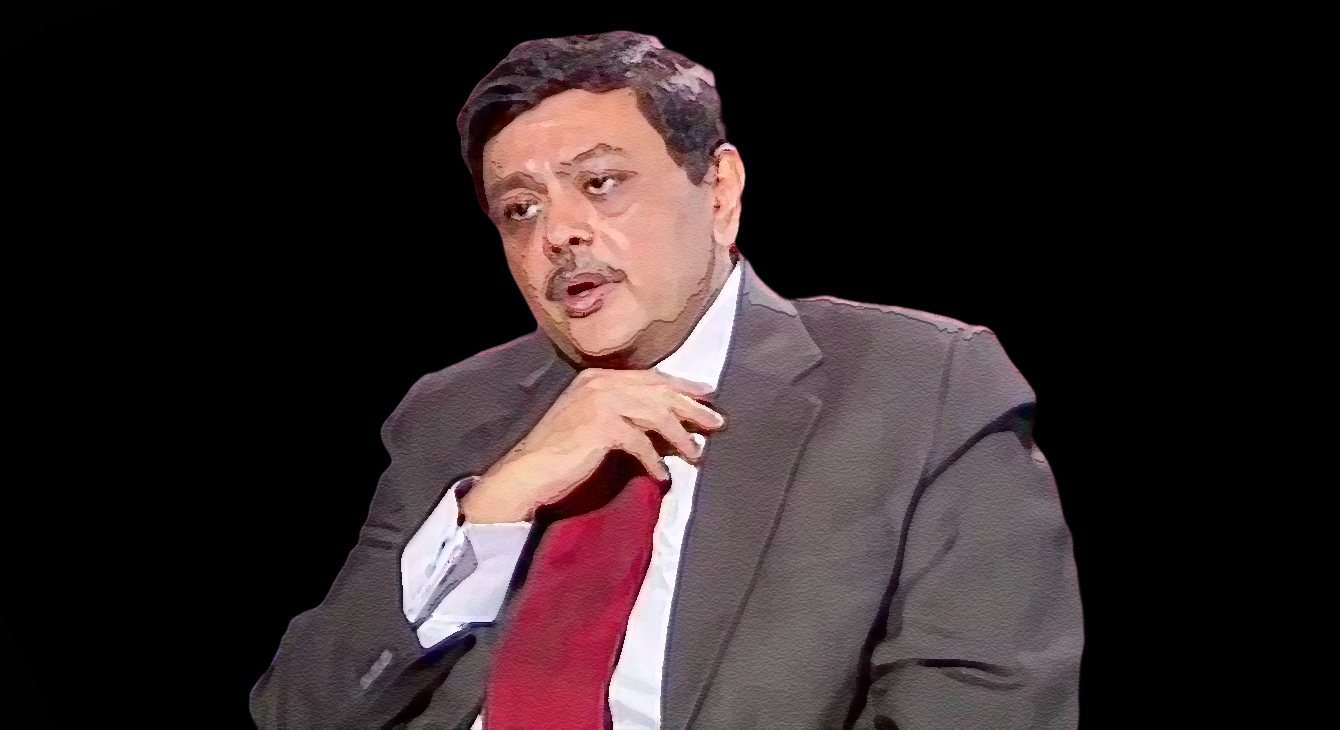
“Imagine a legislature to be the head of a body. On its own, it can do little. It can conceive of things to be done, or undone. But to translate that into effective action, the body needs its arms. These are civic administration and the judiciary.'
Justice Gautam Patel of the Bombay High Court spoke on certain aspects of these two arms, saying they've seen “a catastrophic fall from grace”. Justice Patel was speaking at the JB D'Souza Memorial Lecture in Mumbai.
Executive Authoritarianism
The greatest societal leveller is the law. Or at least it should be. As our lives have become more complex, so laws have proliferated, now invading the most intimate interstices of daily life: food, entertainment, education, health, travel, communication — all of it is in some sense regulated. Many of these laws are abominably drafted. They are anything but clear. That is the first failure. Bad laws make for bad governance, Justice Patel said.
“If we have so many laws, so very many regulations, how is it that so much is so utterly anarchic? “There is no enforcement,” we then say. “We are over-regulated but under-enforced.” What do we mean by this? Do we want even more law, and even more terrifying, invasive policing? Surely that cannot be our solution.”
In India, both in our cities — perhaps especially in our cities — and in our villages, we see the staggering failures of good government. There are many who have been working through various non-profits to address these governmental failings on everything from agrarian indebtedness to primary health care, affordable housing, potable water, basic nutrition, soil, environment, information, basic education and more.Justice Gautam Patel, Bombay High Court
These are the tasks of good government, not primarily the duties of concerned individuals or groups; and it is no part of good government to devise new ways to shut down these endeavours. Yet that is all that government after government seems to be doing, he said.
Jurisdictional Ouster
Justice Patel said executive authoritarianism is also marked by its resistance to judicial review. This is the one vital check on administrative excess.
“The persistent endeavour, again by the executive through legislation, is to limit the space occupied by judicial review. The thinking is simple. If you narrowly define the boundaries of judicial review, you are set at liberty beyond those limits. There is no check on you.”
This is attempted in two ways. First, by setting up specialised tribunals ostensibly for greater efficiency, so far an experiment notable only for its spectacular lack of success. Since these tribunals do not enjoy what is called original jurisdiction, and do not have the jurisdictional power to issue high prerogative remedies such as writs of mandamus or certiorari, their powers of oversight are automatically constrained.
The second string is to enact a legislation that ousts the jurisdiction of courts altogether. Our courts have, over the years, played right into this, forgetting that the underlying democratic pre-requisite to jurisdictional ouster is that good government exists, Justice Patel said.
How Do We Rid Ourselves Of This Oppression?
How do we, in short, get ourselves good government, a return to the rule of law? Justice Patel asked.
We may, for one thing, consider an adaptation of a principle firmly entrenched in environmental law, the doctrine of public trust. This is not a strictly fiduciary relationship, in the sense of involving money, but it says that our governors are custodians who hold in trust for we, the people, things of common ownership — the commons, we call them — our air and water and rivers and seas and forests and lakes.
Instrumental transparency forces public service integrity. Instrumental transparency is a way of exercising civic power, and, I would add, public participation in civic governance.
“No governor ever faces any real risk of losing his job. One of the most implacable enemies of good government is guaranteed government job security. Bad government is without adverse consequence. The only consequence built into the system is one of rewards and promotions. This, too, must change.”
There must be a real prospect of losing a job, and all that goes with it, a certainty of doom. This must be delinked from corruption and tied to performance. If a civic official entrusted with the task cannot ensure pothole-free roads, uncluttered sidewalks, prevent flooding, or lawful building permission, he must know he faces the risk of removal, not the assurance of promotion.
Not having this tangible consequence allows an administrator to act in the one way that always invites judicial censure: arbitrarily; that is to say, inconsistently, contrary to the rule of law, and against the ethos of a democratic republic.
Watch Justice Patel's full speech here:

-
We May Need Another Tukaram Mundhe To Fight Air Pollution | The Reason Why

Developers may install basic measures such as sprinklers and green nets, resume work, and continue violating rules when this equipment stops working.
-
Extracting Value From Battery Scrap Could Be Challenging For India | The Reason Why
A discarded lithium-ion battery still contains valuable materials such as lithium, nickel and cobalt. These can be recovered and reused. When such batteries are crushed and shredded, they produce a dark powder called black mass.
-
One El Nino, India Can Handle. Two Could Break The Granary
India's grain stocks can absorb one bad year, but a second El Nino could drain the buffer in two to three years, economists say.
-
India's Troika Of Good Luck | Joining The Dots
As Jensen Huang's exit drags Nvidia down, a cooling AI trade and resilient earnings have revived investor interest in India. A likely RBI rate hike looms.
-
Talking Points This Week: Leadership Shock At Nvidia, Earnings Strength, And The Fog Over Hormuz
The Anthropic IPO pricing and first trading day, Nvidia's upcoming earnings, and any fresh signals from Iran will set the tone for the following week.
-
Signature Play: The Classic Cocktail Is Dead. Or Is It?
Classic cocktails are disappearing from India's cocktail menus. But they're still being ordered, taught to bartenders and borrowed from. So, who's really having the last drink?
-
A New Samvat Wishlist: Inclusive Prosperity And Human Development
India has strengthened its economic foundations through infrastructure, digital access and enterprise. Its next growth chapter must deepen productivity, create better livelihoods and widen participation in prosperity.
-
Love, Sex Aur Dhokha: The Audacious Plot To Spy On Jensen Huang
A Taipei dinner, a Singapore chip buyer and a suspected Chinese asset: inside the alleged spy operation that got close to NVIDIA's Jensen Huang.
-
Ten Things I Learnt This Samvat
Patience can be a trap. Cheap stocks can stay cheap. Leverage can wipe you out. What did Samvat 2082 teach us? Niraj Shah writes on 10 lessons from the year gone by.
-
Talking Points This Week: Tech Nerves, FII Buying, And A Faraway Banking Shock
The global markets are not shining this Diwali. The exception in the large markets is, India.









