Justice Arun Mishra Won’t Recuse From Hearing Land Acquisition Case
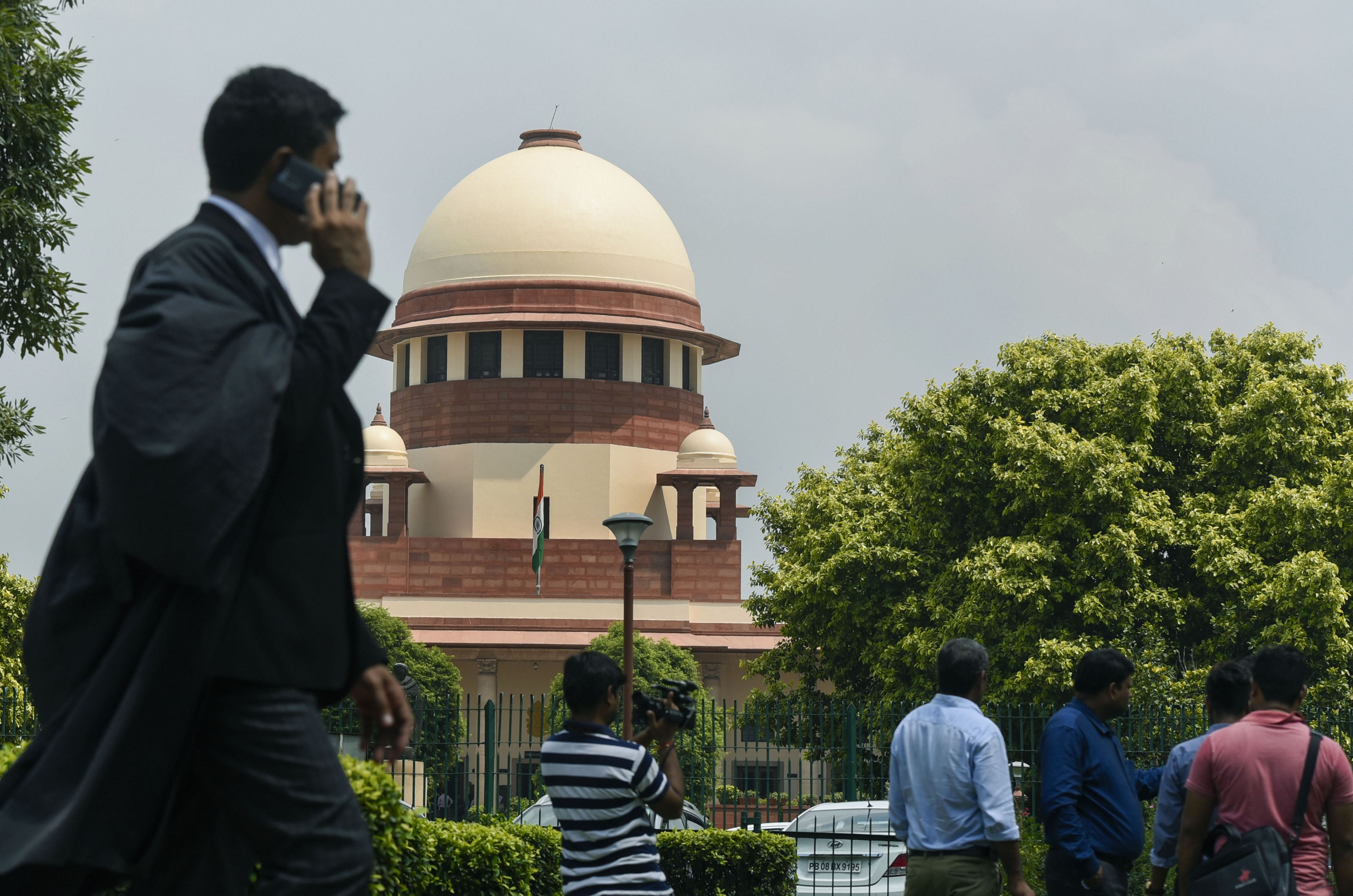
Justice Arun Mishra of the Supreme Court of India won't recuse himself from hearing a case related to land acquisition despite contradictions in two previous judgments, one of which he had passed.
A five-judge constitution bench is hearing petitions on interpretation of Section 24 of the Land Acquisition Act. Justice Mishra, who's heading the bench, had earlier declined the request for recusal and asked the parties to prove as to why he should not hear the matter.
Before the hearing on recusal started, Bloomberg Quint had reached out to senior advocate Arvind Datar, Sanjay Hegde and Rakesh Dwivedi of the Supreme Court who said Justice Mishra shouldn't have been included in the five-judge bench.
This stems from a case related to a law passed in 2013 when Parliament passed the Right to Fair Compensation and Transparency in Land Acquisition, Rehabilitation and Resettlement Act. Section 24(2) of the act dealt with ongoing cases where the compensation orders were passed more than five years ago but either the physical possession of the land hadn't taken place, or the compensation amount wasn't paid to the landowners. The new act held such acquisitions to be invalid and mandated a fresh process. The terms of compensation were to be governed by the 2013 act.
Soon after the 2013 law was passed, litigation commenced in the Supreme Court on the interpretation of the term “compensation has not been paid” for the purposes of Section 24(2). This question arose for situations where an acquirer had paid the money to the relevant government authority, but the landowner disputed the amount or where the payment wasn't possible for no fault of the acquirer. In such situations, the law prescribed that the government authority must deposit the compensation amount in the relevant court which will then hear the dispute.
Based on this provision, in 2014, a three-judge bench headed by Justice RM Lodha held that compensation would be considered to be paid as long as the amount was deposited with the court.
After four years of this being the law, another three-judge bench of the Supreme Court headed by Justice Arun Mishra held this judgment to be bad in law and declared it per incuriam. When a judgement is declared per incuriam, it is considered to have ignored points of law and is treated as never been delivered. The bench held that proceedings under the old land acquisition law won't lapse as long as the compensation amount was paid to the government authority.
It's judicial practice that if a Supreme Court ruling is being overturned later by a different bench, then it should include a higher number of judges than in the bench which delivered the earlier judgement. This, however, was not the case here.
Justice Mishra's order was brought to the notice of Justice Madan Lokur who was part of the 2014 bench. Justice Lokur then passed an order asking courts all over India to not decide on cases pertaining to Section 24(2) of the Land Acquisition Act until the conflict between the two judgments was settled.
Soon after, Justice Mishra's bench requested the Chief Justice to set up a Constitution bench to resolve this issue. On Oct. 12, the Chief Justice set up a five-judge bench comprising Justices Arun Mishra, Indira Banerjee, Vineet Saran, MR Shah and S Ravindra Bhat to decide this question of law.
The case will now proceed and be heard by this five-judge constitution bench.

-
Signature Play: The Classic Cocktail Is Dead. Or Is It?

Classic cocktails are disappearing from India's cocktail menus. But they're still being ordered, taught to bartenders and borrowed from. So, who's really having the last drink?
-
A New Samvat Wishlist: Inclusive Prosperity And Human Development
India has strengthened its economic foundations through infrastructure, digital access and enterprise. Its next growth chapter must deepen productivity, create better livelihoods and widen participation in prosperity.
-
Love, Sex Aur Dhokha: The Audacious Plot To Spy On Jensen Huang
A Taipei dinner, a Singapore chip buyer and a suspected Chinese asset: inside the alleged spy operation that got close to NVIDIA's Jensen Huang.
-
Ten Things I Learnt This Samvat
Patience can be a trap. Cheap stocks can stay cheap. Leverage can wipe you out. What did Samvat 2082 teach us? Niraj Shah writes on 10 lessons from the year gone by.
-
Talking Points This Week: Tech Nerves, FII Buying, And A Faraway Banking Shock
The global markets are not shining this Diwali. The exception in the large markets is, India.
-
Midterm Rally Lasted A Day. The Hard Reality Of A Divided US May Last Two Years | Opinion
Between a contested AI boom, a debt ceiling that arrives in 2027 and a president with every incentive to act alone, the next two years may prove more volatile than the first day's rally suggests.
-
Blue Wave Will Derail the AI Trade but Won't Dismantle the AI Era | Unhedged Position
The Democrats' sweep of the US Congress will see politics collide with economic forces both over the long and short term.
-
It's Time To Take The GST Council's Bet On Trust Global
Payment records can prove India's services exports, and clear, proportionate rules can bring foreign digital sellers into the tax net.
-
Opinion | India at 38: From Innovation Overperformer to Innovation Powerhouse
India now has 453 VC-backed deep science startups, 18 of them late-stage, after 117 percent growth since 2020. Laurus Labs, at USD 9.3 billion, is the most valuable deep science company in any middle-income economy outside China.









