Jingoism on Balochistan is Not in India’s Interest: Manish Tewari
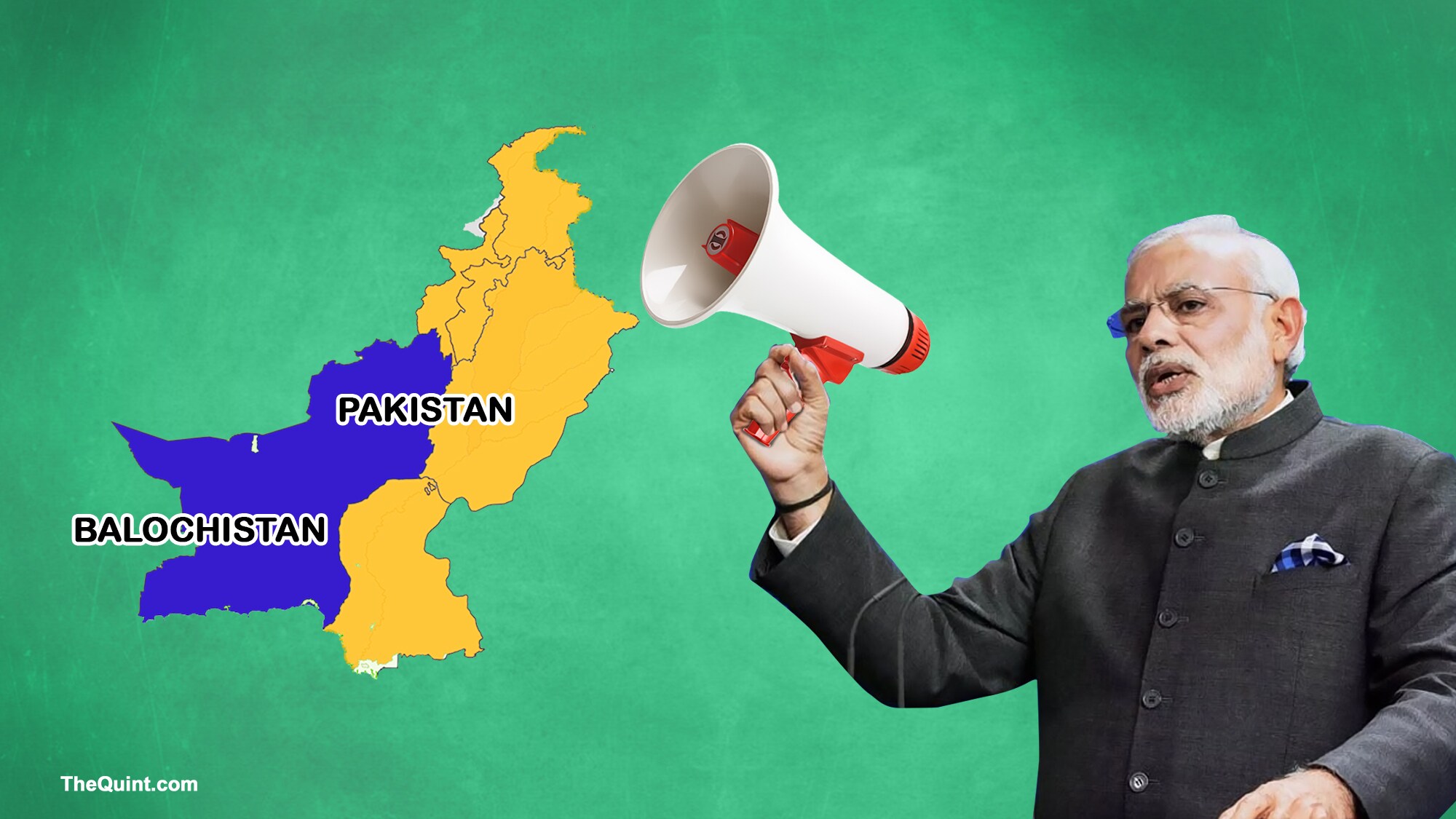
The Prime Minister's reference to Pakistan Occupied Kashmir (PoK), the Shia Muslim-dominated areas of Gilgit and Baltistan and the troubled province ofBalochistan in his independence day address from the ramparts of the Red Fortwas perhaps the most explicit admission that his Pakistan policy or the lack ofit lies in absolute tatters.
Inthe last twenty-six months, the NDA/BJP government's approach towards Pakistanhas swung from the sublime to the ridiculous. It would be worthwhile recappingthe trajectory of this non-strategy. In the flush of victory the Prime Ministerinvited the heads of SAARC nations and beyond for his coronation on 26 May 2014. Barely had the invite reached Islamabad that the Indian consulate inHerat, Afghanistan was attacked by ISI sponsored Lashkar-e-Toiba militants on 23 May, a fact confirmed by none other than the then AfghanPresident Hamid Karzai. Rather than withdrawing the invite, the Indian PrimeMinister designate and his acolytes pulled out every stop to ensure NawazSharif's presence at the crowning of the freshly minted Tsar of South Asia.
Modi's Flawed Pakistan Policy
Aftera round of jhappi-pappis (hugs and kisses) the Modi government decided to tryout their brand of muscular diplomacy. Just before the scheduled ForeignSecretary-level talks in August 2014 in New Delhi, the Indian establishment drewa line in the sand declaring that the Pakistani High Commissioner cannot invitethe Hurriyat leadership to tea at his residence during the talks, a practicethat every prime minister from Narasimha Rao onwards had wisely ignored.
Unprecedented firing succeeded thecancellation of the talks across the international border and the line of control, something not witnessed in the previous ten years.
Whilethe official boycott of Pakistan was still on, Narendra Bhai Damodardas Modi ostensibly met Nawaz Sharif surreptitiously on the sidelines of the SAARCsummit in Kathmandu in November 2014, a meeting allegedly brokered by asteel oligarch. What transpired at the meeting no one knows but the stalemate continuedfor another six months.
Suddenly on the sidelines of another multilateral meeting in Ufa in Russia in July 2015, Modi and Nawaz Sharif had a highly visible photo-op and issued a joint statement that they would talk about terror. For the Pakistanis this was a major coup because for ten long years the BJP had kept parroting that terror and talks couldn't go hand in hand. In a complete reversal of that position now they signed a joint proclamation that they would talk about terror.
Oncethe Pakistanis got what they wanted, they promptly went back on the jointstatement and even before the ink had dried, tossed it into the dustbin ofhistory. What followed was an ugly match of cross-border verbal kabbadi betweenthe Indian foreign minister and her Pakistani counterpart Sartaj Aziz. Pakistansupplemented the verbal assault with a terror attack in Gurdaspur in Punjab, astate that had been free from the scourge of terrorism for over two decadessince 1995.
Flip-Flops Continue
Anotherclandestine meeting in Bangkok in November 2015 between the Indian NSA AjitDoval and his newly minted counterpart in Pakistan, General Janjua succeeded thedisastrous Ufa summit. No details of this interaction were ever made public,unprecedented in a functional democracy like India.
On 25 December 2015 news broke at noon that Prime Minister Modi had decided to visit Lahore on his way back from Afghanistan. Given the tumultuous relationship between Afghanistan and Pakistan, this was a diplomatic blunder that is strictly avoidable. It is like going to Bejing from Tokyo given the history between the two Asian neighbours, a mistake that Pranab Mukherjee made way back in 2006 as defence minister.
Whydid Prime Minister Modi decide to go to Lahore? Was it for confabulations,attend Nawaz Sharif's granddaughter's wedding festivities or to sample the farein Anarkali Bazar no one knows. No details were ever madepublic of what transpired.
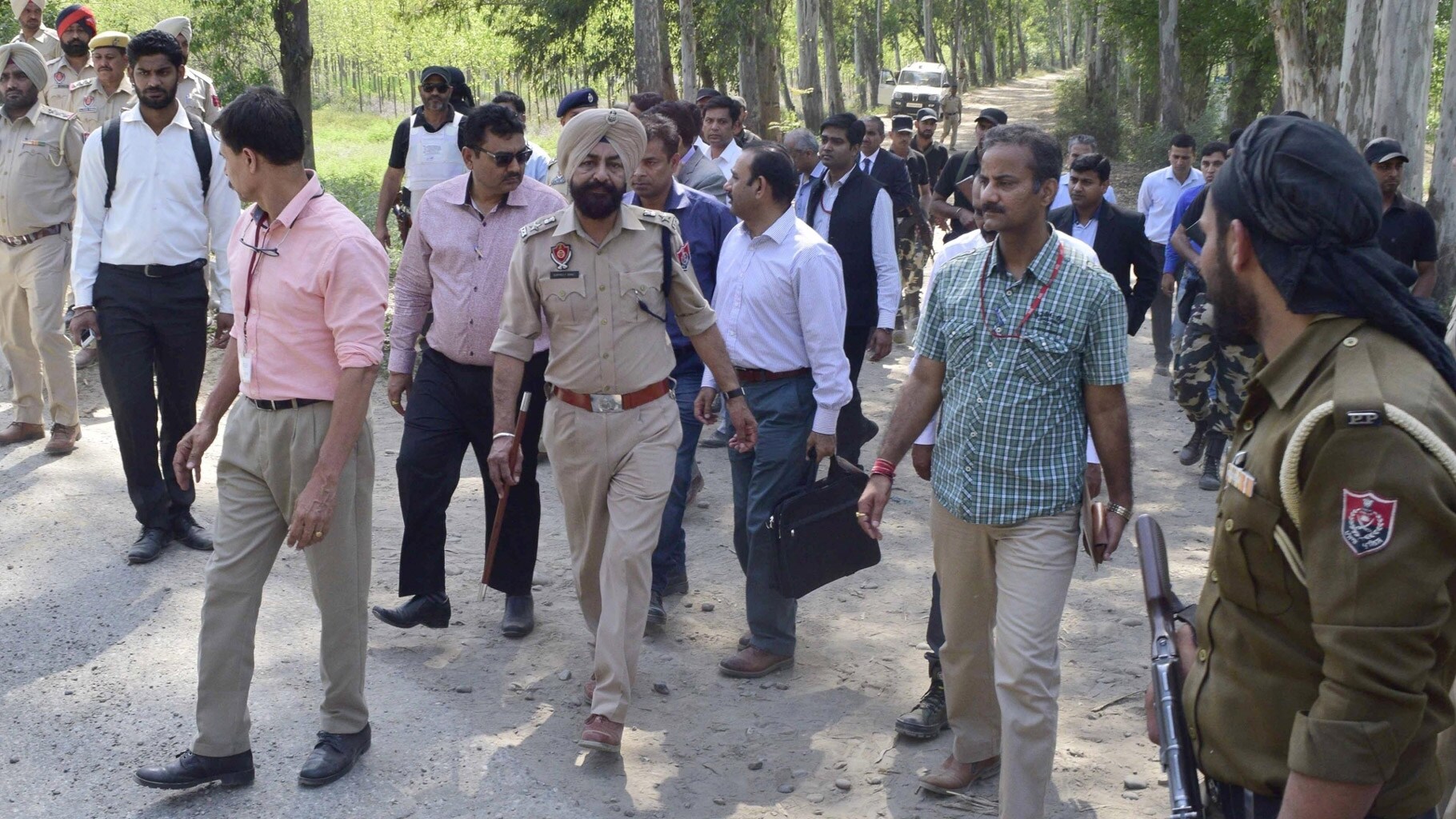
Thedeep state in Pakistan reciprocated the visit by launching another attack atthe Pathankot airbase in Punjab. After much hand-wringing by India, in anothertactical folly they permitted a Pakistani investigation team to visit Pathankotto see the evidence that the attackers were Pakistanis. The Pakistani joint investigation team that had officers from the rogue ISI on it promptly wentback and rubbished the Pathankot terror attack as an attempt by the Indians totar Pakistan with a black brush. The Pakistanis did not allow a reciprocalvisit by the Indian investigation agencies to conclusively nail the credentialsof the Pakistani terrorists neutralised in the attack.
Being Manipulated by Pakistan
Inthe midst of all this, the foreign minister travelled to Islamabad for the Heartof Asia Conference, the home minister went to Pakistan for the SAARC ministerialmeetings but on no substantive issue did the needle of dialogue between the twocountries move even a millimetre.
Whatbecame increasingly clear to the evil ogre called the Pakistani establishmentwas that they were dealing with a bunch of amateurs in South Block and they could run in circles around them at will.
Thisfrustration at being played by the Pakistanis for a song finally foundarticulation in the prime minister's Independence Day articulation. ThePakistani generals and their civilian factotums have been past masters at thisgame. They have made a monkey out of the Americans and their allies by takingtheir billions yet sheltering the likes of Osama bin Laden. They haveskilfully manipulated the Chinese to the extent of getting them to provide illicit nuclear andmissile technology in the 90s and now persuading them to underwrite the costof developing Pakistan's infrastructure in the form of $46 billion China-Pakistan Economic Corridor (CPEC).
However, it is worth examining as to how tenable prime minister's jingoism is? Isthe dismemberment of Pakistan in India's interest? The answer is no.
Let us presume that Pakistan riven by its internal contradictions and the centrifugal tendencies at play disintegrates on its own without even an iota of encouragement from India and a million Muslim refugees land up at Wagah. What will India do, given that the scars of partition are still deeply etched in the psyche of Indian Punjab?
Stable Pakistan in India's Interest
Youdo not have to look further than Afghanistan to discern as to what strife inthat country has done to Pakistan. Consider for that matter the West's stupidity in trying to re-openthe status quo of the Sykes-Picot agreement post the dismemberment of theOttoman empire and its impact on Europe. Therefore, howsoever unpalatable it may soundand un-pulp-patriotic it may be it is in India's interests to have astable, integrated Pakistan.
Given the fact that Prime Minister Modi may not agree with this proposition and may want to play hard ball with Pakistan, is the return of Pakistani Occupied Kashmir, the Northern areas of Gilgit and Baltistan or even the independence of Balochistan feasible without an internal upsurge in the foreseeable future?
Drawing Parallels between PoK and Balochistan
It is true that both the Northern Areas and PoK were a part of erstwhile state of J&K acceded to India in entirety by Maharaja Hari Singh on 26 October 1947. However, it is equally factual that even in 1947-48, Gilgit was the only part of the erstwhile princely state that was not contested for recapture by the Indian surface forces.
The much-quoted 1994 resolution of the Indian parliament that the only unfinished business of partition is the return of PoK also has a context to it. The US point person on South Asia at that time Robin Raphel and by extension her then boss President Bill Clinton were questioning the accession of J&K to India and giving us much grief at international fora including the United Nations Human Rights Commission. It was in those circumstances the resolution was adopted and please remember it was before the 1998 nuclear tests that froze the power balance in South Asia into perpetuity.
Similarly the tragedy of Balochistan is a continuing one since 1947 when the erstwhile state of Kalat (much of modern Balochistan) was forcibly annexed by the Pakistani armed forces. The battle for liberation has been raging unremittingly in that province for decades now. The atrocities of the Pakistani Army, their kill and dump squads have been documented not only by Baloch nationalists but by the international community as well.
Modi is not Vajpayee
In2009, at Sharm-el-Sheikh, when a reference to Balochistan albeit at Pakistan'sinstance was included in the joint statement that would have given India anopportunity to expose the perfidy of Pakistan, the BJP screamed blue murderalleging that Dr Manmohan Singh had acquiesced to the Pakistani insinuationthat India interferes in its internal affairs. The UPA governmentunfortunately also balked and did not precipitate matters, which the Balochstruggle deserved.
However, in the last two years did Prime Minister Modi, hisNSA or his myriad ministers ever raise this issue with their Pakistani interlocutors?The answer is ‘No'. If they were so chary about interference into the internalaffairs of other nations then how does the prime minister's bombast square withthat. Is India now going to extend moral, material or tactical support to theBaloch struggle? Have the Afghan and Iranian concerns been factored into thisequation?
Drawingparallels between the liberation of Bangladesh and Balochistan is completelyasinine. The independence of Bangladesh was a brilliantly executed politico-military strategy by a leadership of a completely different caliber. Indiadespite the 1962 Chinese debacle and the 1965 stalemate with Pakistan enjoyed superiorityin conventional terms in 1971 and the Mukti Bahini had played its own role too.
Vajpayee was not unpatriotic when he went to Minar-e -Pakistan at Lahore in 1998 and recognised the existence of Pakistan. He realised that the nuclear equation had transformed the region. Dr Manmohan Singh was equally committed to India. Yet, he tried to explore with President Pervez Musharraf as to how to make borders between the two nations irrelevant in 2007.
Dr Farooq Abdullah is more Indianthan most, yet he has consistently maintained that the geographical de-factobetween the two countries must be turned into a de jure. That is the onlysolution.
Needa Substantive Pakistan Policy
- Anunstable Pakistan, with a spate of insurgencies can be problematic for India asthe fallout would be beyond Delhi's control.
- WhileUPA had acknowledged the Baloch problem way back in 2009, it's surprising thatBJP is raking up the issue now when it's in power.
- Notfair to compare Balochsitan's insurgency with the freedom struggle forBangladesh, the latter being result of a well-executed politico-military plan.
- Modigovernment instead of whipping up jingoism for a target audience should insteaddevise a substantial Pakistan policy.
- Itseems that the South Block is being controlled by a set of amateurs who aregiving Pakistan a leeway on crucial bilateral issues.
Whipping Up Jingoism
Prime Minister Modi either does not want to see reality or all this chest thumping is for mere domestic consumption. He wants to use the Pakistani card to both raise chauvinistic fervour and also to polarise on religious grounds by insinuating and yet not saying that Muslims whether on this side or that side are unreliable.
It is high time he and his government realises that they are dealing with a bunch of extremely malevolent characters across the border who may want to test him on his rhetoric through their proxies and non-state actors again and yet again for they have detected not a chink but a hole in the armour.
In the meanwhile, what happens to the relationship between the two countries. The best-case scenario is no war but no peace. This is the price India continues to unfortunately pay for living in a bad neighbourhood. Can this change? Can a punitive cost be imposed on Pakistan for exporting terror? The answer is yes but for that you require the calibrated use of a range of diplomatic and deniable options. Breast-beating xenophobia is no fix.
(The writer is a lawyer and a former Union Minister in the government of India. Views are personal. He can be reached at @ManishTewari)
Also read:
Modi's Balochistan Barb Highlights Pakistan's Apathy of Decades
What's the Cost of Changing the Narrative on Balochistan?
Indian Intervention May Make or Break Baloch Nationalist Movement

-
Signature Play: The Classic Cocktail Is Dead. Or Is It?

Classic cocktails are disappearing from India's cocktail menus. But they're still being ordered, taught to bartenders and borrowed from. So, who's really having the last drink?
-
A New Samvat Wishlist: Inclusive Prosperity And Human Development
India has strengthened its economic foundations through infrastructure, digital access and enterprise. Its next growth chapter must deepen productivity, create better livelihoods and widen participation in prosperity.
-
Love, Sex Aur Dhokha: The Audacious Plot To Spy On Jensen Huang
A Taipei dinner, a Singapore chip buyer and a suspected Chinese asset: inside the alleged spy operation that got close to NVIDIA's Jensen Huang.
-
Ten Things I Learnt This Samvat
Patience can be a trap. Cheap stocks can stay cheap. Leverage can wipe you out. What did Samvat 2082 teach us? Niraj Shah writes on 10 lessons from the year gone by.
-
Talking Points This Week: Tech Nerves, FII Buying, And A Faraway Banking Shock
The global markets are not shining this Diwali. The exception in the large markets is, India.
-
Midterm Rally Lasted A Day. The Hard Reality Of A Divided US May Last Two Years | Opinion
Between a contested AI boom, a debt ceiling that arrives in 2027 and a president with every incentive to act alone, the next two years may prove more volatile than the first day's rally suggests.
-
Blue Wave Will Derail the AI Trade but Won't Dismantle the AI Era | Unhedged Position
The Democrats' sweep of the US Congress will see politics collide with economic forces both over the long and short term.
-
It's Time To Take The GST Council's Bet On Trust Global
Payment records can prove India's services exports, and clear, proportionate rules can bring foreign digital sellers into the tax net.
-
Opinion | India at 38: From Innovation Overperformer to Innovation Powerhouse
India now has 453 VC-backed deep science startups, 18 of them late-stage, after 117 percent growth since 2020. Laurus Labs, at USD 9.3 billion, is the most valuable deep science company in any middle-income economy outside China.









