Jet Airways Insolvency: NCLT Denies Workers Unions’ Plea
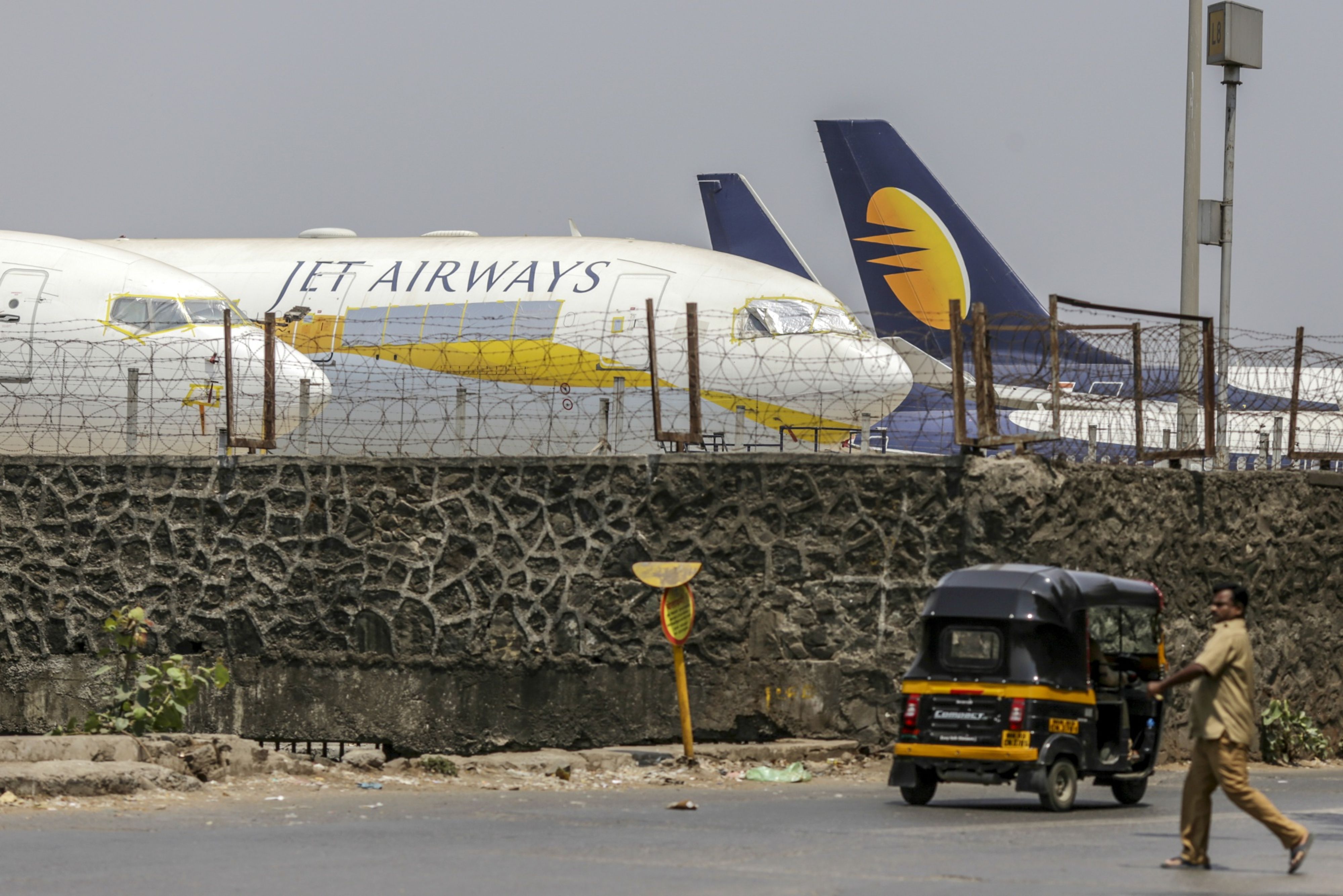
The National Company Law Tribunal has rejected applications of Jet Airways (India) Ltd.'s workers unions seeking a copy of the resolution plan submitted by a consortium led by Dubai-based entrepreneur Murari Lal Jalan and Kalrock Capital.
A bench comprising Janab Mohammed Ajmal and V Nallasenapathy, who heard the case through video conferencing, observed that a resolution plan can only be presented to the creditors' committee or the adjudicating authority for its approval. Insolvency code doesn't contemplate sharing of the plan with any other entity, the tribunal said while dismissing the plea.
This order comes after three unions — the National Aviators' Guild, representing more than 1,000 pilots, Jet Aircraft Maintenance Engineers Welfare Association and the Jet Airways Cabin Crew Association, together representing 70% of the airline's ground staff — moved the NCLT seeking a stay on any final order until their plea was decided by the tribunal.
Jet Airways was once India's largest national carrier by market value. A consortium of 26 lenders led by State Bank of India had initiated insolvency proceedings against the airline after it defaulted on its loan obligations. The plea was admitted by the NCLT in June 2019 and Ashish Chawchharia was appointed as its resolution professional. A resolution plan submitted by the Jalan-Kalrock consortium was approved in October last year.
Also Read: How Jet Airways Killed Five Birds With One Stone
Workers Being Affected Parties Must Get A Copy Of The Plan, Unions Argued
The three unions requested the NCLT to pass an order directing the resolution professional to share the full copy of the resolution plan, along with valuation and other reports prepared by Alvarez and Marsal. Further, they also sought an approval to participate in the proceedings before the tribunal.
They argued that:
- Jet Airways' resolution professional refused the unions' plea for a copy of the resolution plan citing confidentiality. Employees of the airlines were interested in its resolution and remained on payroll despite financial hardships.
- As the approval or rejection of the plan may adversely affect the employees, they must be made aware of the plan.
- And lastly, the insolvency code requires dissemination of the resolution plan to the applicants.
Gaurav Joshi, senior advocate representing the resolution professional, argued that the IBC requires the resolution professional to ensure confidentiality of a plan. It doesn't state that all creditors deserve to be heard during its approval. And lastly, the applications are an attempt to derail the insolvency resolution process of the company.
Citing judgments of the apex court, the tribunal dismissed the unions' argument and noted that some of them were operational creditors. Being so, their role was very limited in the resolution process and hence, they are not eligible to intervene in the insolvency process.

-
Indians Are Travelling, But Not Every Journey Is A Holiday | The Week In Whys

Pilgrims, patients and working women are the real travellers, and the system hasn't quite caught up with them.
-
Getting To Work Costs Women More | The Reason Why
It is not just about women paying more than men. It is about women paying much more in cities than in villages.
-
AI Bias In Investing Cannot Be Eliminated, But It Can Be Governed
Framing is a particularly important example as identical financial information presented in terms of gains rather than losses can lead an LLM to reach a different assessment.
-
Joining The Dots | Dark Skies, Steady Diya: Why Hope Holds This Diwali
With war, a weak rupee and foreign outflows weighing on sentiment, policymakers at the NDTV World Summit and market veterans at NDTV Profit Ignite: Diwali Edition offered the same advice: stay invested and filter out the noise.
-
The Curious Case of Equitas Small Finance Bank And A CEO Who Quit For Stock
PN Vasudevan believes persistent investor concerns over a perceived conflict of interest had become a governance overhang on Equitas Small Finance Bank's stock, even as the lender improved profitability and asset quality.
-
Talking Points This Week: AI Cash Burn, A Tiger Comeback And An India That Still Finds Its Own Path
India is not immune to higher oil or tighter global liquidity, yet its earnings base is broader, its domestic policy levers are still available.
-
Foreign Investors Own Half Of HDFC Bank and ICICI Bank. An LTCG Cut Could Matter Most Here
Foreign portfolio investors have US$115 billion parked in HDFC Bank, ICICI Bank. If the government cuts long-term capital gains tax, Jefferies says returning foreign money could land here first.
-
'Never Seen This Level Of Negativity': Sandeep Tandon Says The Next Rally May Be Closer Than You Think
Veteran investor Sandeep Tandon says foreign selling is easing, large-caps are due a comeback and mid-caps are crowded, while he turns positive on gold, power and pharma this Diwali.
-
Indians Stay With Family, Not In Hotels | The Reason Why
India still lacks enough clean, reliable and affordable hotels for budget-conscious travellers.
-
The Economic Imperative: Analysing The Material Driving Force Behind India-Canada Strategic Reset
This economic complementarity is further reinforced by deep institutional investment ties and talent mobility, which form the bedrock of the bilateral framework.










