India’s Under-5 Mortality Now Matches Global Average, But Bangladesh, Nepal Do Better
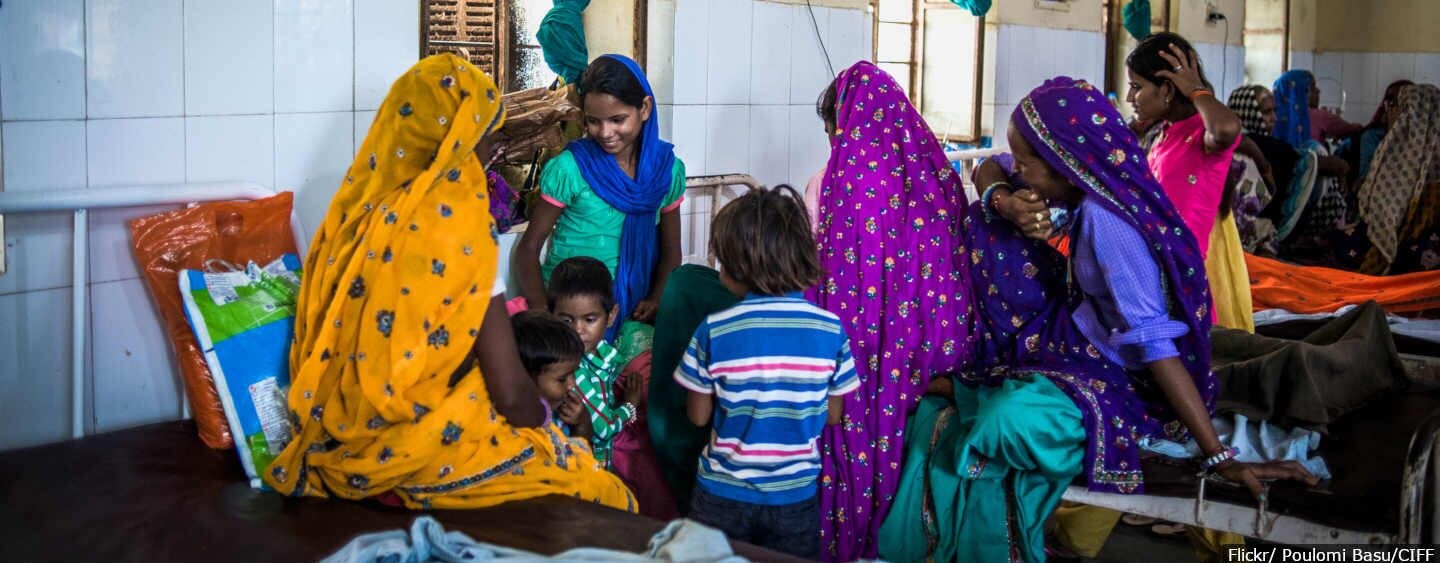
India's under-five mortality rate now matches the global average (39 deaths per 1,000 live births), but the number of infant and neonatal deaths--and the performance of India's poorer neighbours--indicate that tackling newborn health remains a formidable challenge, according to a new report.
The number of children under-five dying has fallen by 30% since 2012, from 1.4 million to 989,000. Over the same period, infant deaths (dying before reaching their first birthday) fell by 26% (1.09 million to 802,000) and neonatal deaths (dying in the first 28 days) by 22% (779,000 to 605,000).
These data indicate a continuing high mortality risk in the first year of life for Indian children.
These are the findings of a report released on September 18, 2018, by the The United Nations Inter-Agency Group for Child Mortality Estimation. The United Nations Children's Fund, World Health Organization and World Bank were some of the parties involved in generating country-specific estimates of child mortality.
By addressing the most common risk factors for child mortality with prevention methods such as access to diarrhea and pneumonia treatment, measles and tetanus vaccinations and increasing hospital births, the number of child deaths have been able to decline, according to this 2017 paper, published in The Lancet, a global journal.
India's infant mortality rate in 2017 was 32 deaths per 1,000 live births, compared to the global average of 12. Neonatal mortality rates show a similar gap--24 per 1,000 live births for India, compared with the global average of 18.
The gender gap between under-five mortality rates has also narrowed, with female mortality rates now just 2.5% higher than males (39 deaths per 1,000 live births for males and 40 for females). This is a 7.5-percentage-point decrease from 2012 when the gap was 10% (54 deaths per 1,000 live births for males and 59 for females).
However, within India, large disparities between states on health indicators such as infant mortality show high levels of inequality in access to healthcare and sanitation levels.
While some wealthy states such as Goa and Kerala have infant mortality rates similar to European countries, low-income states such as Madhya Pradesh and Odisha mirror rates found in war and disaster-affected Afghanistan and Haiti, IndiaSpend reported in July 2018.
Child mortality rates are often used as an overall measure of population health, as well as to determine levels of social and economic development. The number young children dying can indicate the ability of communities to access basic healthcare, adequate nutrition and clean water and sanitation.
India And Its Neighbours
Though India may now match the global average for under-five mortality rates at 39 deaths per 1,000 live births, three countries within South Asia already have rates lower than this figure, outperforming India on this key development indicator.
The mortality rates of Bangladesh and Nepal, both countries with a lower per capita income than India's $1,939 ($1,546 and $835, respectively) are 32 and 34, compared to 39 for India. Sri Lanka, which tops the South-Asian rankings with a rate of 9, also has the highest per capita income in the region: $3,790.
Bangladesh and Nepal had higher under-five mortality rates in 1990 than India (144 and 140 respectively vs 126 in India) but pulled ahead around a decade later in 2000. India's under-five mortality rate was 88 deaths per 1,000 live births in 2000, whereas Bangladesh recorded 84 deaths per 1,000 and Nepal 83.
The same three countries also have the lowest infant mortality rates (IMR). However, India has shown the biggest improvement, with the largest reduction (27%) of IMR among South Asian countries since 2012.
Over a five-year period, India's IMR has fallen 27% from 44 deaths per 1,000 live births in 2012 to 32 in 2017. Afghanistan follows with a 26% reduction, then Bangladesh (18%), Nepal (17%) and Pakistan (11%). Sri Lanka's IMR has not changed from an already low rate of 8 in 2012.
Similarly, Sri Lanka has maintained an exceptionally low neonatal mortality rate at 6 deaths per 1,000 live births, significantly under the global average of 18 and far ahead of any other country in South Asia.
India's neonatal rate, while decreased by 22% since 2012 (the second highest reduction after Bangladesh with a 25% decrease), remains higher than the global average at 24.
Health And Sanitation Challenges
“Children are dying because of who they are and the environments into which they were born,” said the report, citing studies that indicate children in the poorest households are nearly twice as likely to die before the age of five as those from the richest, as well as those whose mothers lack any secondary or higher education.
In India, high rates of anemia (affecting 50% of pregnant women nationally), low nutrition levels (23% of mothers are underweight) and over-burdened government and private health facilities are part of the challenge in delivering healthy children.
As part of the Sustainable Development Goals set out by the UN, India has committed to reaching an under-five mortality rate of 25 deaths per 1,000 live births by 2030. India's own National Health Profile has set an aim of 23 by 2025.
Tackling the diseases and conditions associated with the quality of care around the time of childbirth will help tackle newborn deaths, the report said. This will depend on strengthening health services and ensuring more births take place in hospitals and are attended to by trained staff.
(Sanghera is a writer and researcher with IndiaSpend.)
This copy has been published in arrangement with IndiaSpend.

-
The Curious Case of Equitas Small Finance Bank And A CEO Who Quit For Stock

PN Vasudevan believes persistent investor concerns over a perceived conflict of interest had become a governance overhang on Equitas Small Finance Bank's stock, even as the lender improved profitability and asset quality.
-
Talking Points This Week: AI Cash Burn, A Tiger Comeback And An India That Still Finds Its Own Path
India is not immune to higher oil or tighter global liquidity, yet its earnings base is broader, its domestic policy levers are still available.
-
Foreign Investors Own Half Of HDFC Bank and ICICI Bank. An LTCG Cut Could Matter Most Here
Foreign portfolio investors have US$115 billion parked in HDFC Bank, ICICI Bank. If the government cuts long-term capital gains tax, Jefferies says returning foreign money could land here first.
-
'Never Seen This Level Of Negativity': Sandeep Tandon Says The Next Rally May Be Closer Than You Think
Veteran investor Sandeep Tandon says foreign selling is easing, large-caps are due a comeback and mid-caps are crowded, while he turns positive on gold, power and pharma this Diwali.
-
Indians Stay With Family, Not In Hotels | The Reason Why
India still lacks enough clean, reliable and affordable hotels for budget-conscious travellers.
-
The Economic Imperative: Analysing The Material Driving Force Behind India-Canada Strategic Reset
This economic complementarity is further reinforced by deep institutional investment ties and talent mobility, which form the bedrock of the bilateral framework.
-
Medicine Pricing: Where Must Profit Stop?
India must confront excessive margins, hidden incentives and regulatory gaps that threaten the integrity of medicine.
-
Why Amazon And Flipkart Are Struggling To Beat Meesho In India's Smaller Cities
With 274 million users and lowest-cost logistics, Meesho is defending its value commerce crown against giants like Amazon and Flipkart.
-
High US Salaries, No Green Card Certainty: The Financial Calculation Facing Indian H-1B Families
The suspension of PERM processing at eight technology employers does not cancel existing H-1B visas. What it does is force a question many Indian families have been avoiding: is the US salary worth tying your career and family plans to one employer?
-
Swiggy vs Eternal: Food Delivery's Two Rivals Are No Longer In The Same Race
Eternal is building a private AI assistant, dark.ai. Swiggy is still working out how to make Instamart pay, with an operating loss of Rs 895 crore in the July-September quarter while Blinkit stayed profitable.










