India Considers Allowing Private Firms to Develop Nuclear Plants
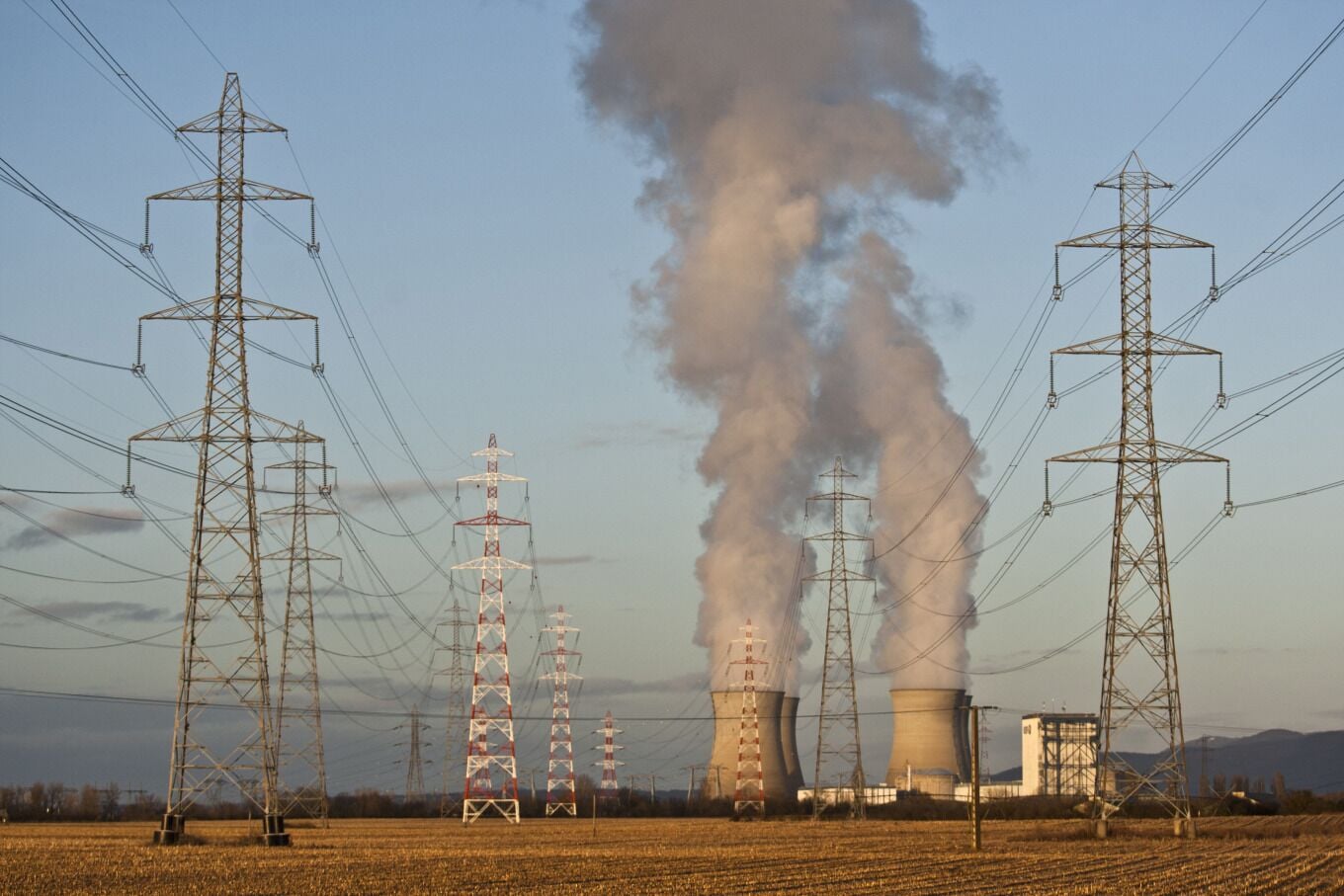
(Bloomberg) -- India's state-controlled nuclear power industry is considering allowing greater participation of private firms, with an aim to developing small modular reactors to help decarbonize industry.
The country is reviewing its six-decade-old atomic energy law to allow more involvement from non-state companies, federal atomic energy minister Jitendra Singh said Wednesday in a written reply to questions in parliament. India currently allows private technology and construction in nuclear plants, but operations and fuel management are controlled by federal government companies.
Discussion about modular reactors, or SMRs, has gained momentum in recent months, as the world's third-biggest emitter of greenhouse gases seeks clean sources of power to reduce its dependence on coal, which currently produces about 70% of India's electricity. The nation has committed to have half its power generation capacity run on clean sources by the end of this decade, a key milestone in its goal to become net zero by 2070.
Detailed technical talks are underway to assess the feasibility of the SMR technology, and the government is exploring collaboration with other countries for jointly developing such reactors, Singh said.
State-run NTPC Ltd., the country's largest power producer, has emerged as a nuclear champion, betting big on SMRs as they're quicker to build and easier to adjust to grid requirements. They can also serve as an off-grid power solution in remote locations.
Still, the technology is at a nascent stage. There were two reactors operating at a floating nuclear project in Russia and two others in China as of last year, according to the International Atomic Energy Agency.
India currently has about 7.5 gigawatts of atomic power capacity, all operated by state-run Nuclear Power Corp. of India Ltd. The nation aims to expand it to almost 22.5 gigawatts by 2031, Singh said. The increase will primarily happen through large-sized plants, Singh said.
More stories like this are available on bloomberg.com
©2023 Bloomberg L.P.

-
Signature Play: The Classic Cocktail Is Dead. Or Is It?

Classic cocktails are disappearing from India's cocktail menus. But they're still being ordered, taught to bartenders and borrowed from. So, who's really having the last drink?
-
A New Samvat Wishlist: Inclusive Prosperity And Human Development
India has strengthened its economic foundations through infrastructure, digital access and enterprise. Its next growth chapter must deepen productivity, create better livelihoods and widen participation in prosperity.
-
Love, Sex Aur Dhokha: The Audacious Plot To Spy On Jensen Huang
A Taipei dinner, a Singapore chip buyer and a suspected Chinese asset: inside the alleged spy operation that got close to NVIDIA's Jensen Huang.
-
Ten Things I Learnt This Samvat
Patience can be a trap. Cheap stocks can stay cheap. Leverage can wipe you out. What did Samvat 2082 teach us? Niraj Shah writes on 10 lessons from the year gone by.
-
Talking Points This Week: Tech Nerves, FII Buying, And A Faraway Banking Shock
The global markets are not shining this Diwali. The exception in the large markets is, India.
-
Midterm Rally Lasted A Day. The Hard Reality Of A Divided US May Last Two Years | Opinion
Between a contested AI boom, a debt ceiling that arrives in 2027 and a president with every incentive to act alone, the next two years may prove more volatile than the first day's rally suggests.
-
Blue Wave Will Derail the AI Trade but Won't Dismantle the AI Era | Unhedged Position
The Democrats' sweep of the US Congress will see politics collide with economic forces both over the long and short term.
-
It's Time To Take The GST Council's Bet On Trust Global
Payment records can prove India's services exports, and clear, proportionate rules can bring foreign digital sellers into the tax net.
-
Opinion | India at 38: From Innovation Overperformer to Innovation Powerhouse
India now has 453 VC-backed deep science startups, 18 of them late-stage, after 117 percent growth since 2020. Laurus Labs, at USD 9.3 billion, is the most valuable deep science company in any middle-income economy outside China.









