In Charts: Key Issues The New Chhattisgarh Government Will Have To Tackle
India's fourth-newest state Chhattisgarh is going to vote on Monday, marking the start of a series of state elections that will set the tone for the Lok Sabha polls in 2019.
The state, which was carved out of Madhya Pradesh in 2000, has in the last 15 years never seen a change in government with the Bharatiya Janata Party and Chief Minister Raman Singh firmly anchored in power. But opinion polls suggest a close fight, with C-Voter even predicting a win for Congress.
Chhattisgarh is also one of India's fastest growing states, averaging 9.88 percent annually over the last six years. That's mainly because of a low base that aids faster growth and the country's mineral-rich mines.
Minerals have been the bedrock of Chhattisgarh, contributing a tenth to the state's GDP and revenue from mineral mining in 2017-18 stood at Rs 4,911 crore, according to the Ministry of Mines.
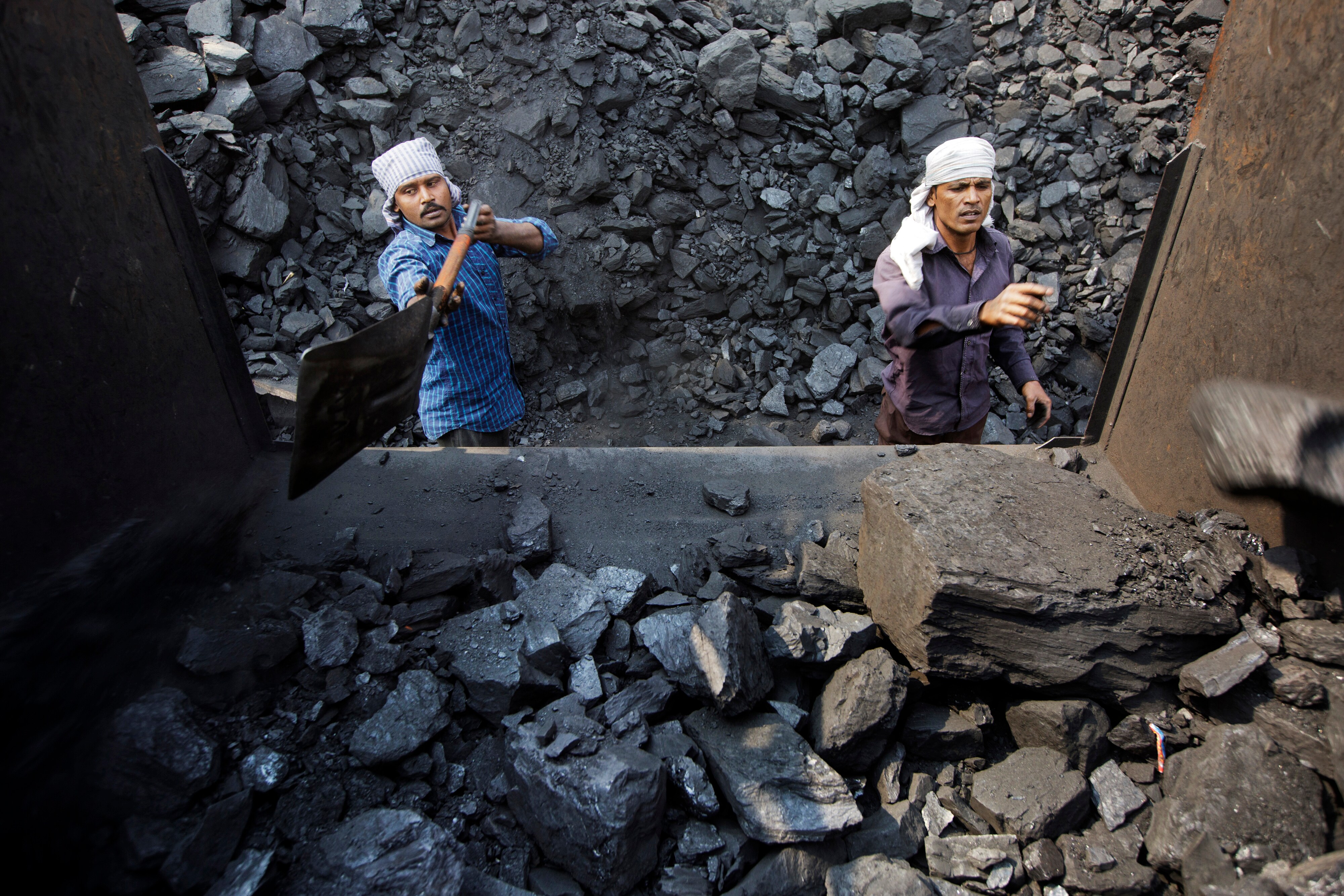
The state is one of India's largest producer of coal, iron ore, tin and has significant reserves of dolomite, limestone, bauxite and diamonds. The abundance of coal has also made it on India's very few states where power is available in surplus.
Despite its meteoric rise, Chhattisgarh has major issues ranging from left-wing extremism, low enrollment in higher education, unemployment and lack of human development to the poor output of its agriculture sector.
Naxalism
Chhattisgarh is the most affected state by left-wing extremism and is the hub of India's red corridor—the belt of states that witness the most Naxalite or Maoist insurgency.
The presence of extremism in the state has also hurt growth and is the reason why living standards remain so widely disparate from one district to another.
Even as greater presence and increased capacity of security forces in the area has led to a 5.6 percent decline in violent incidents, according to the Home Ministry, Chhattisgarh remains highly affected with Naxalism-related violence.
Farm Sector Underperformance
According to the state's own estimates, for nearly 80 percent of its population the main source of livelihood is agriculture. Yet, agriculture contributes merely 18 percent to the state's gross domestic product and has been the slowest growing sector for at least the past five years.
The problem: majority of farmers still use traditional farming methods and rely on monsoons, resulting in low growth and crop productivity.
The prevalence of rice cultivation in Chhattisgarh is such that—81 percent of the sown area is under the foodgrain—it's known as the "rice bowl of India". But yields remain dismal and trail the country's average.
That's also because only 23 percent of the cultivated area is irrigated while the rest depends on rainfall, subject to the vagaries of the rain.
The Indian Council of Agricultural Research said that the red and yellow soils, mostly found across Chhattisgarh, are already deficient in nitrogen, phosphorus, zinc and boron. On top of that, productivity of crops is also hurt by low usage of high-yielding varieties of crops, drought, infestation of gall midge and bacterial leaf blight.
These are interventions the state needs to make and supply farmers with appropriate fertilisers and and high-yielding, drought-tolerant and infestation resistant crop varieties.
The ICAR has suggested introduction of double-cropping of land—rice during kharif season and vegetables during rabi season. Since most of Chhattisgarh practices mono-cropping, diversification is needed, according to the Economic Survey 2017-18. “A diversified cropping pattern will help in mitigating the risks faced by farmers in terms of price shocks and production harvest losses,” it had said.
Human Development
Chhattisgarh may have shown tremendous growth economically, but that hasn't translated in well-being for its people. When it comes to human development—what United Nations calls advancing human well-being—Chhattisgarh is the sixth worst state.
Its Human Development score, which is a combination of income, life expectancy, health and education, has also seen the least improvement among Indian states since 2001.
Higher Education
Chhattisgarh has a strong case for improving its educational infrastructure. The state government has on numerous occasions said that one of the best ways to curb Naxalism is by educating the youth and improving infrastructure in the economically backward districts that are prone to extremism.
Yet, the number of colleges it has for every one lakh population is lower than the national average. In fact, it's also lower than in economically weaker states like Nagaland and Uttarakhand.
The gross enrollment ratio in higher education—that determines the number of students enrolled at a particular grade level—is nearly 10 percentage points lower than the national average.
Unemployment
Joblessness is one of the key campaign issues before any election, not just in states but also on a country-wide basis.
Employment generation is also key to Chhattisgarh's Naxalism problem as it can help pacify extremism. But despite the government's efforts, the state's unemployment rate is the sixth highest in the country, as of Oct. 2018, according to the Centre for Monitoring Indian Economy's employment tracker.

-
Indians Are Travelling, But Not Every Journey Is A Holiday | The Week In Whys

Pilgrims, patients and working women are the real travellers, and the system hasn't quite caught up with them.
-
Getting To Work Costs Women More | The Reason Why
It is not just about women paying more than men. It is about women paying much more in cities than in villages.
-
AI Bias In Investing Cannot Be Eliminated, But It Can Be Governed
Framing is a particularly important example as identical financial information presented in terms of gains rather than losses can lead an LLM to reach a different assessment.
-
Joining The Dots | Dark Skies, Steady Diya: Why Hope Holds This Diwali
With war, a weak rupee and foreign outflows weighing on sentiment, policymakers at the NDTV World Summit and market veterans at NDTV Profit Ignite: Diwali Edition offered the same advice: stay invested and filter out the noise.
-
The Curious Case of Equitas Small Finance Bank And A CEO Who Quit For Stock
PN Vasudevan believes persistent investor concerns over a perceived conflict of interest had become a governance overhang on Equitas Small Finance Bank's stock, even as the lender improved profitability and asset quality.
-
Talking Points This Week: AI Cash Burn, A Tiger Comeback And An India That Still Finds Its Own Path
India is not immune to higher oil or tighter global liquidity, yet its earnings base is broader, its domestic policy levers are still available.
-
Foreign Investors Own Half Of HDFC Bank and ICICI Bank. An LTCG Cut Could Matter Most Here
Foreign portfolio investors have US$115 billion parked in HDFC Bank, ICICI Bank. If the government cuts long-term capital gains tax, Jefferies says returning foreign money could land here first.
-
'Never Seen This Level Of Negativity': Sandeep Tandon Says The Next Rally May Be Closer Than You Think
Veteran investor Sandeep Tandon says foreign selling is easing, large-caps are due a comeback and mid-caps are crowded, while he turns positive on gold, power and pharma this Diwali.
-
Indians Stay With Family, Not In Hotels | The Reason Why
India still lacks enough clean, reliable and affordable hotels for budget-conscious travellers.
-
The Economic Imperative: Analysing The Material Driving Force Behind India-Canada Strategic Reset
This economic complementarity is further reinforced by deep institutional investment ties and talent mobility, which form the bedrock of the bilateral framework.










