In Charts: Karnataka’s Economy Vs Peers
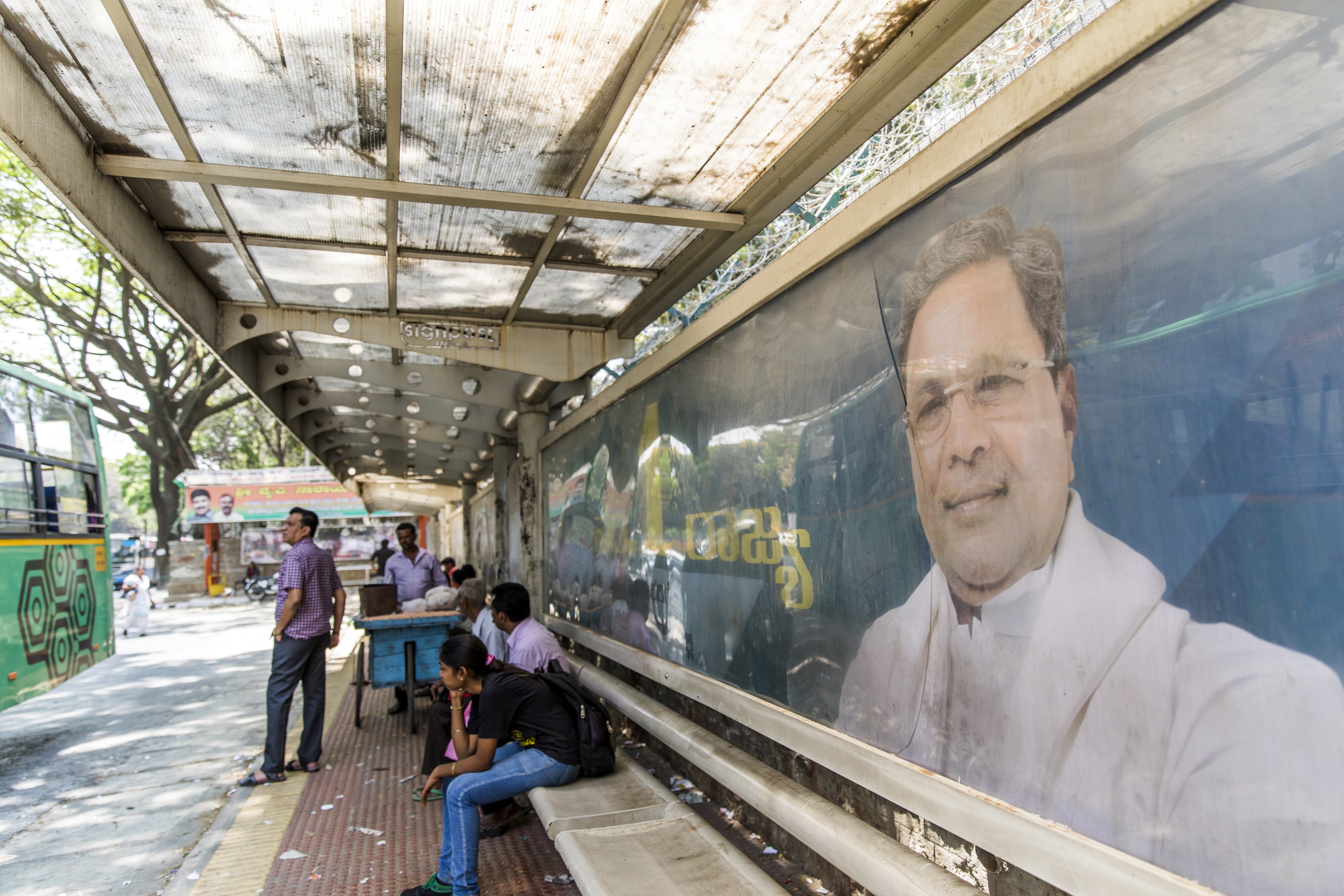
Karnataka has for long taken pride in being home to the Silicon Valley of India. The state's economy has become as big as oil-rich Qatar, riding on the growth of software services. At 10 percent, it's the third-highest contributor to India's gross domestic product of $2.3 trillion after Maharashtra and Gujarat.
The southern state, one of the last remaining bastions for the Indian National Congress, goes to polls on May 12. While the rest of the country has been slowly swept away by the saffron wave, Karnataka also remains important for Prime Minister Narendra Modi's Bharatiya Janata Party. The results will be an early indicator of the people's sentiment ahead of the general election next year.
The Congress has been busy flaunting the ‘Karnataka Model' of governance as an alternative to Modi's ‘Gujarat Model' to woo voters. The BJP focused on corruption that it claims is prevalent widely in the state.
So where does Karnataka's economy stand? BloombergQuint compares its economic indicators with that of other large states—Gujarat, Maharashtra and Tamil Nadu.
Here is Karnataka's economy in charts:
Karnataka's economic growth fell sharply after the previous legislative assembly elections and remained stagnant over the next couple of years. It picked up during the previous financial year while the other three states slowed down.
Karnataka's indebtedness contracted in 2012 and has since remained comfortably lower than the other three states. It has the second lowest level of outstanding debt as a percent of the GSDP in India after Chhattisgarh. Gujarat's is among the highest.
The rise in Karnataka's gross fiscal deficit, the gap between its revenue and expenses, has also remained low compared to Maharashtra and Tamil Nadu. Much like Gujarat, it managed to reign in its fiscal deficit.
Karnataka, Maharashtra and Tamil Nadu allocate largely similar proportion of their aggregate expenses towards revenue expenditure that include more immediate short-term requirements of the state government. Gujarat spends a much higher percentage on capital expenditure to acquire or generate long-term assets.
In absolute terms though, the aggregate spending of Karnataka and Gujarat is significantly lower than that of Maharashtra and Tamil Nadu.
Karnataka's economic expansion resulted in higher consumer prices. The average retail inflation in the state between 2012-13 and 2016-17 was the highest in India, according to Crisil. This is despite the CPI inflation in Karnataka falling more than the decline in India's headline inflation during the four years. Maharashtra and Gujarat were the two states where inflation declined the least in the same period.
Karnataka witnessed relatively lower expansion in its labour-intensive sectors. Growth is even lower than the national average of 7.1 percent. According to Crisil, a state which sustains high growth in labour-intensive sectors “is likely to be more successful in creating jobs”. In that aspect, Gujarat is the best in the country.
Among the four states, Karnataka has the second lowest rate of active labour force participation in rural areas. It's well above the national average though. In urban areas, Karnataka's labour force participation is better than Maharashtra and Gujarat but lower than Tamil Nadu.
Two-thirds of Karnataka's economic output comes from the services sector. That's mainly due to the presence of India's largest information technology hub in Bengaluru. In contrast, Gujarat relies more on its manufacturing and construction sector for growth.
Foreign direct investments in India are largely concentrated in Maharashtra and Delhi-NCR. The two regions together accounted for nearly half of all the FDI inflows between 2000 and 2016. Karnataka stands fourth on the list.
Exports from Karnataka form over 12 percent of India's total outbound shipments. That's largely due to the high level of software services provided overseas by Indian companies.
Karnataka contributes nearly a tenth of India's economic output even as it accounts for just 5 percent of its population. That makes it an economically important state.
Karnataka has steadily improved its ease of doing business ranking by implementing the government's business action reform plan. It has displaced Maharashtra in the latest ranking available on the Department of Industrial Policy and Promotion. Gujarat slipped from top of the list in 2015 to the eighth spot in 2017.

-
Getting To Work Costs Women More | The Reason Why

It is not just about women paying more than men. It is about women paying much more in cities than in villages.
-
AI Bias In Investing Cannot Be Eliminated, But It Can Be Governed
Framing is a particularly important example as identical financial information presented in terms of gains rather than losses can lead an LLM to reach a different assessment.
-
Joining The Dots | Dark Skies, Steady Diya: Why Hope Holds This Diwali
With war, a weak rupee and foreign outflows weighing on sentiment, policymakers at the NDTV World Summit and market veterans at NDTV Profit Ignite: Diwali Edition offered the same advice: stay invested and filter out the noise.
-
The Curious Case of Equitas Small Finance Bank And A CEO Who Quit For Stock
PN Vasudevan believes persistent investor concerns over a perceived conflict of interest had become a governance overhang on Equitas Small Finance Bank's stock, even as the lender improved profitability and asset quality.
-
Talking Points This Week: AI Cash Burn, A Tiger Comeback And An India That Still Finds Its Own Path
India is not immune to higher oil or tighter global liquidity, yet its earnings base is broader, its domestic policy levers are still available.
-
Foreign Investors Own Half Of HDFC Bank and ICICI Bank. An LTCG Cut Could Matter Most Here
Foreign portfolio investors have US$115 billion parked in HDFC Bank, ICICI Bank. If the government cuts long-term capital gains tax, Jefferies says returning foreign money could land here first.
-
'Never Seen This Level Of Negativity': Sandeep Tandon Says The Next Rally May Be Closer Than You Think
Veteran investor Sandeep Tandon says foreign selling is easing, large-caps are due a comeback and mid-caps are crowded, while he turns positive on gold, power and pharma this Diwali.
-
Indians Stay With Family, Not In Hotels | The Reason Why
India still lacks enough clean, reliable and affordable hotels for budget-conscious travellers.
-
The Economic Imperative: Analysing The Material Driving Force Behind India-Canada Strategic Reset
This economic complementarity is further reinforced by deep institutional investment ties and talent mobility, which form the bedrock of the bilateral framework.
-
Medicine Pricing: Where Must Profit Stop?
India must confront excessive margins, hidden incentives and regulatory gaps that threaten the integrity of medicine.










