Imran Khan Faces Isolation As Defectors Form New Political Party
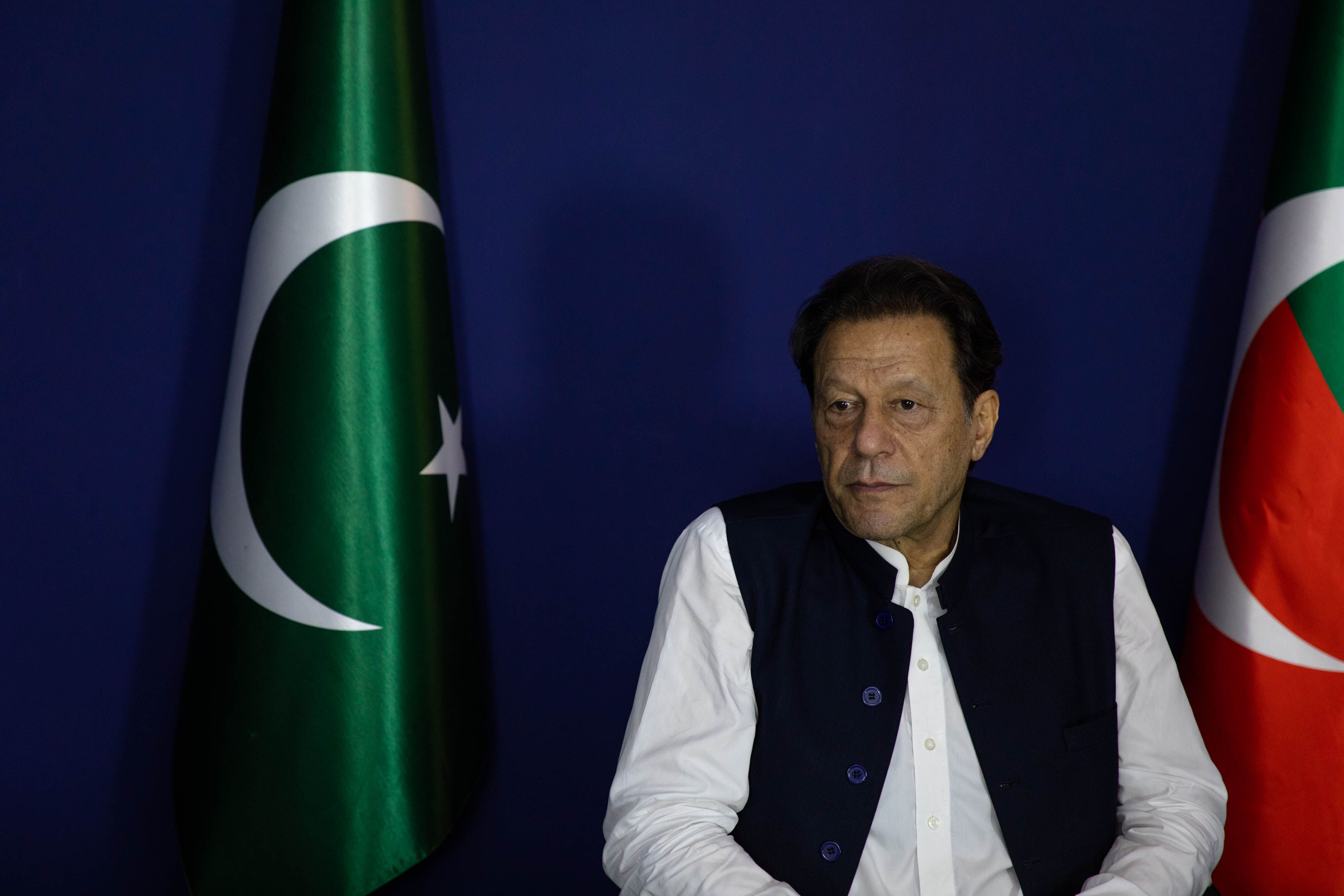
(Bloomberg) -- Imran Khan's former allies announced the formation of a new political party, the latest setback for the embattled former premier as he clashes with Pakistan's powerful army and the government.
Jahangir Khan Tareen, one of Khan's closest aides, will lead the Istehkam-e-Pakistan Party, he announced at a news conference on Thursday. More than a dozen top leaders of Khan's party joined the new group.
“We have to take Pakistan out of the prevailing chaos, which is destroying the country,” Tareen said. “Pakistan today needs leadership which can end political and social divisions and promote unity and harmony.” The name of Tareen's new group is Stability Party in Urdu. Khan's Pakistan Tehreek-e-Insaf means Movement for Justice.
The latest twist in Pakistan's political crisis comes as the nation grapples with the worst economic distress in decades, faced with low foreign reserves, record inflation and interest rates. Later Friday, the South Asian nation will lay out its annual budget that will attempt a balancing act between boosting stuttering economic growth with the tough conditions imposed by the International Monetary Fund to revive a stalled bailout program.
“Call fresh, free and fair elections. Let the people of Pakistan choose their representatives,” Khan's PTI said in a Twitter post soon after Tareen's announcement.
Khan, who is far ahead of Prime Minister Shehbaz Sharif in popularity polls, told Bloomberg News in a recent interview that the military is looking to “crush” his political party to prevent him from leading it to victory in elections that must be held by October this year.
The government, backed by the army, has cracked down on the former cricket star and his supporters over the last month, shortly after protests against his brief arrest over corruption allegations turned violent and some military buildings were attacked and damaged.
The military has warned of stern action against protesters who attacked its properties and the army and the government have vowed to try those responsible under military law.
Several lawmakers were detained and many close supporters quit the party soon after. Former human rights minister Shireen Mazari even exited politics entirely.
Though the army was seen as instrumental in bringing Khan to power in 2018, relations soured in late 2021 when the former prime minister tried to influence promotions in the powerful institution. He was ousted in a no-confidence vote in April 2022 and blamed the military of being part of a plan to remove him from power. He also named a senior officer of plotting to assassinate him after he was injured in a shooting attack in November. The generals have denied all allegations.
(Updates with details throughout.)
More stories like this are available on bloomberg.com
©2023 Bloomberg L.P.

-
Getting To Work Costs Women More | The Reason Why

It is not just about women paying more than men. It is about women paying much more in cities than in villages.
-
AI Bias In Investing Cannot Be Eliminated, But It Can Be Governed
Framing is a particularly important example as identical financial information presented in terms of gains rather than losses can lead an LLM to reach a different assessment.
-
Joining The Dots | Dark Skies, Steady Diya: Why Hope Holds This Diwali
With war, a weak rupee and foreign outflows weighing on sentiment, policymakers at the NDTV World Summit and market veterans at NDTV Profit Ignite: Diwali Edition offered the same advice: stay invested and filter out the noise.
-
The Curious Case of Equitas Small Finance Bank And A CEO Who Quit For Stock
PN Vasudevan believes persistent investor concerns over a perceived conflict of interest had become a governance overhang on Equitas Small Finance Bank's stock, even as the lender improved profitability and asset quality.
-
Talking Points This Week: AI Cash Burn, A Tiger Comeback And An India That Still Finds Its Own Path
India is not immune to higher oil or tighter global liquidity, yet its earnings base is broader, its domestic policy levers are still available.
-
Foreign Investors Own Half Of HDFC Bank and ICICI Bank. An LTCG Cut Could Matter Most Here
Foreign portfolio investors have US$115 billion parked in HDFC Bank, ICICI Bank. If the government cuts long-term capital gains tax, Jefferies says returning foreign money could land here first.
-
'Never Seen This Level Of Negativity': Sandeep Tandon Says The Next Rally May Be Closer Than You Think
Veteran investor Sandeep Tandon says foreign selling is easing, large-caps are due a comeback and mid-caps are crowded, while he turns positive on gold, power and pharma this Diwali.
-
Indians Stay With Family, Not In Hotels | The Reason Why
India still lacks enough clean, reliable and affordable hotels for budget-conscious travellers.
-
The Economic Imperative: Analysing The Material Driving Force Behind India-Canada Strategic Reset
This economic complementarity is further reinforced by deep institutional investment ties and talent mobility, which form the bedrock of the bilateral framework.
-
Medicine Pricing: Where Must Profit Stop?
India must confront excessive margins, hidden incentives and regulatory gaps that threaten the integrity of medicine.










