IL&FS Financial Services Diluted Policies To Continue Lending To Group Companies, SFIO Says
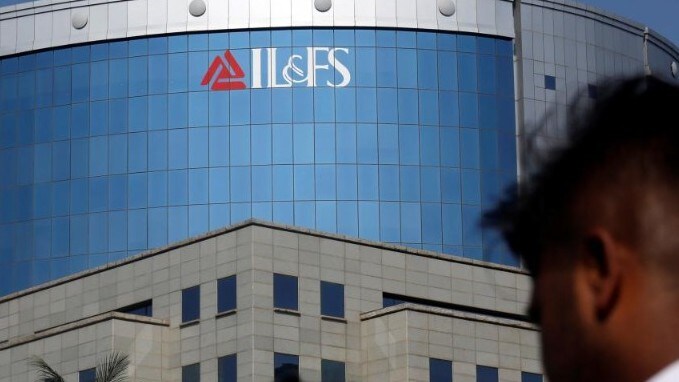
The non-bank lending arm of Infrastructure Leasing & Financial Services Ltd. repeatedly diluted its policy on related-party transactions to continue lending to group companies and obtain favourable reports from independent valuers, SFIO said.
IL&FS Financial Services Ltd. had a board-approved related-party policy for lending to group or associate companies as per the central bank's guidelines on exposure norms and the Companies Act, 2013. But, according to the Serious Fraud Investigation Office, it made several changes between 2015 and 2017 to dilute that. BloombergQuint has reviewed a copy of the SFIO report.
Dilutions To RPT Policy
Related-party transactions which were in the ordinary course of business and on an arm's length basis qualified as exempt RPTs, according to IL&FS Financial Services' (IFIN) policy. Such transactions required approval only from a committee of directors, unlike non-exempt RPTs which had to be reviewed by the audit committee and required board and/or shareholder approval depending on their materiality.
In May 2015, the SFIO report said, the definition of ‘Exempt RPTs' was expanded to say that there could be deviations in exempt RPTs with group companies under the following circumstances:
- Economic reasons, including corporate debt restructuring, financial conditions and other extra-ordinary circumstances.
- Obligations of IL&FS as a promoter or joint venture partner of a project and a consortium member.
- Regulatory enactments or obligations, if any.
The dilution, the SFIO report said, allowed IFIN to exclude some of the existing RPTs—where it had already lent funds—from the ambit of RPT.
Two years later, exempt RPTs was expanded to also include "lending transactions where the tenure of transaction has been extended up to six months from the date of original tenor and where the other terms and conditions remain unchanged".
Similarly, to determine the arm's length pricing, one of the criteria was valuation by "independent valuers". In 2015, this was amended to say "independent valuation by an empaneled set of independent valuers".
“By diluting the definition of Independent Valuers to Empaneled Valuers, IFIN was able to get favourable reports for the transactions' underlying values,” the report said.
To be sure, the Reserve Bank of India allows systemically important NBFCs like IFIN to determine their RPT Policy and only requires them to disclose it. The other legislation that governs RPTs is section 188 of Companies Act, 2013 which prohibits certain transactions with related parties unless it is pursuant to a board approval or where certain “thresholds” are crossed, the shareholders of the company have approved it.
In defining and diluting exempt RPTs as it did, IFIN's transactions with related parties didn't require board or shareholder approval, the SFIO's report has suggested.
“The effect of these policy changes resulted in increased exposures to group companies, which were facing liquidity, profitability and implementation issues and resulted in a liquidity crunch for IFIN itself.”
Free Hand To RPTs
In 2014, the Audit Committee had suggested that the statutory auditors must review IFIN's RPT Policy. But in September 2014, it was decided that the internal auditor could review it. The review by the internal auditor wasn't completed until February 2016 and until then all RPT proposals were accepted by the Audit Committee without any deliberations. The deficiencies pointed by the internal auditor in February 2016 were ignored and deferred for further deliberation, the SFIO has said.
Amendments in the definition of Exempt RPTs and arm's length criteria were approved in the RPT policy which was against the intent of the legislature, to place checks and balances on related party transactions.SFIO Report
The SFIO has filed a criminal complaint against 30 entities in the IL&FS case after its nine-month long investigation. It has stated that the members of the ‘coterie'—Ravi Parthasarathy, Hari Sankaran, Arun Saha, Vibhav Kapoor, K Ramchand, Ramesh Bawa, Milind Patel and Rajesh Kotian—had abused their position at IFIN, flouted regulatory stipulations for an NBFC while lending to external parties and group companies. They also presented false, deceptive and misleading financial statements to obtain credit facilities. And so, their conduct amounts to fraud under company law and criminal conspiracy under the Indian Penal Code, the SFIO has stated.
Statutory auditors—Deloitte Haskins and Sells from 2012-2017, BSR and Associates in 2017-2018—colluded with the management of IFIN and fraudulently falsified the books of accounts and the financial statements between 2013-2018, the SFIO has concluded. The members of the audit committee—SS Kohli, Subhalakshmi Panse, Shahzaad Dalal, Manu Kochhar, Renu Challu, Uday Ved and Neera Saggi—connived with the coterie and overlooked the violations resulting in loss to the company, as per the SFIO.
The Ministry of Corporate Affairs has directed the SFIO to file a criminal prosecution complaint against the members of the coterie, the independent directors and the statutory auditors.

-
Talking Points This Week: Leadership Shock At Nvidia, Earnings Strength, And The Fog Over Hormuz

The Anthropic IPO pricing and first trading day, Nvidia's upcoming earnings, and any fresh signals from Iran will set the tone for the following week.
-
Signature Play: The Classic Cocktail Is Dead. Or Is It?
Classic cocktails are disappearing from India's cocktail menus. But they're still being ordered, taught to bartenders and borrowed from. So, who's really having the last drink?
-
A New Samvat Wishlist: Inclusive Prosperity And Human Development
India has strengthened its economic foundations through infrastructure, digital access and enterprise. Its next growth chapter must deepen productivity, create better livelihoods and widen participation in prosperity.
-
Love, Sex Aur Dhokha: The Audacious Plot To Spy On Jensen Huang
A Taipei dinner, a Singapore chip buyer and a suspected Chinese asset: inside the alleged spy operation that got close to NVIDIA's Jensen Huang.
-
Ten Things I Learnt This Samvat
Patience can be a trap. Cheap stocks can stay cheap. Leverage can wipe you out. What did Samvat 2082 teach us? Niraj Shah writes on 10 lessons from the year gone by.
-
Talking Points This Week: Tech Nerves, FII Buying, And A Faraway Banking Shock
The global markets are not shining this Diwali. The exception in the large markets is, India.
-
Midterm Rally Lasted A Day. The Hard Reality Of A Divided US May Last Two Years | Opinion
Between a contested AI boom, a debt ceiling that arrives in 2027 and a president with every incentive to act alone, the next two years may prove more volatile than the first day's rally suggests.
-
Blue Wave Will Derail the AI Trade but Won't Dismantle the AI Era | Unhedged Position
The Democrats' sweep of the US Congress will see politics collide with economic forces both over the long and short term.
-
It's Time To Take The GST Council's Bet On Trust Global
Payment records can prove India's services exports, and clear, proportionate rules can bring foreign digital sellers into the tax net.
-
Opinion | India at 38: From Innovation Overperformer to Innovation Powerhouse
India now has 453 VC-backed deep science startups, 18 of them late-stage, after 117 percent growth since 2020. Laurus Labs, at USD 9.3 billion, is the most valuable deep science company in any middle-income economy outside China.









