If J&K Comes Under Governor Rule, It Will Be For The Eighth Time In Four Decades
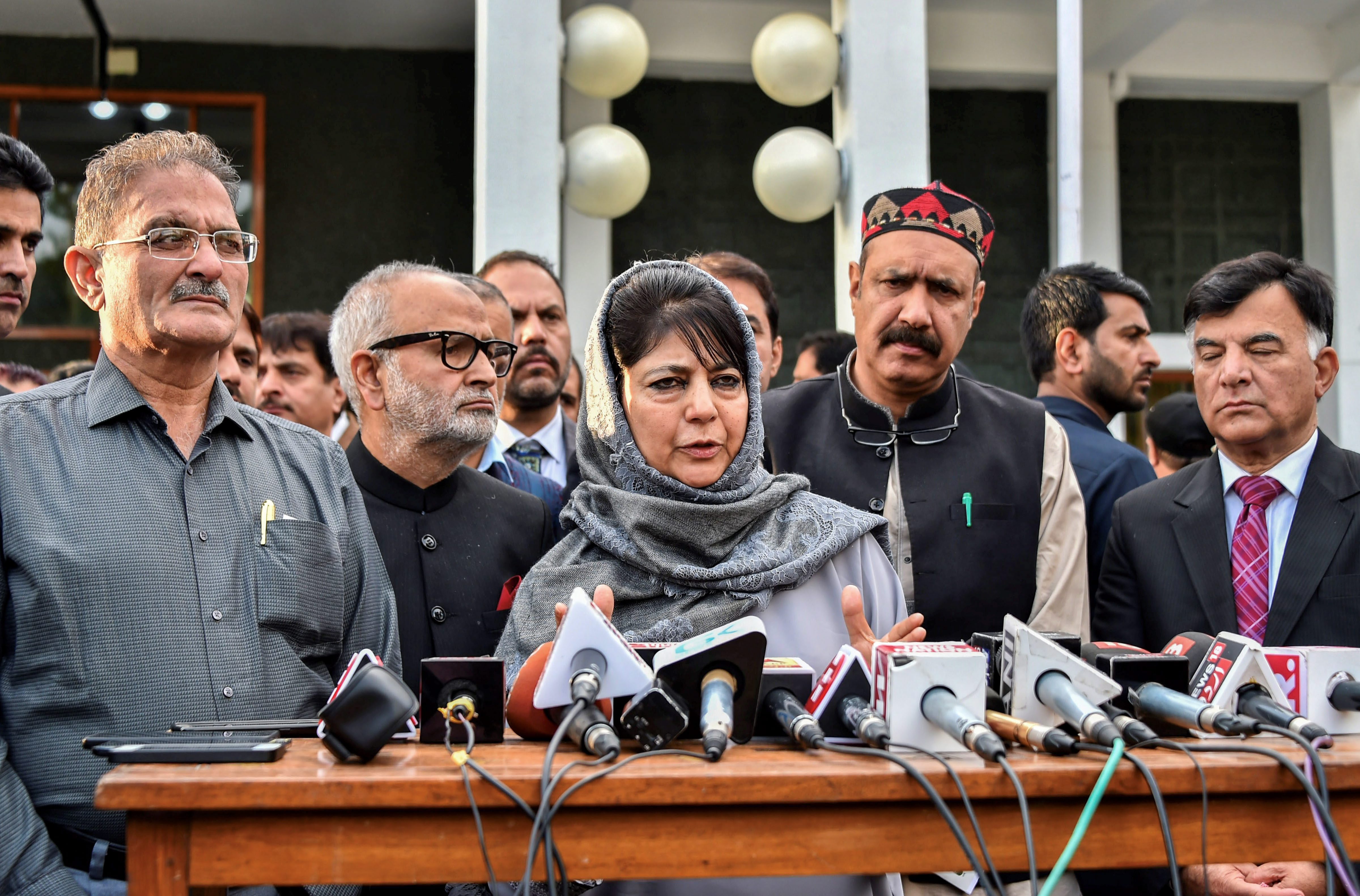
Jammu & Kashmir has come under the governor's rule on seven occasions before in the last four decades and an eighth spell looks imminent with the collapse of the alliance between the People's Democratic Party and the Bharatiya Janata Party today.
Also, if such a scenario emerges with prospects of a new government unlikely, it will be for the fourth time that the state will be placed under the central rule during NN Vohra's tenure as governor. Vohra, a former civil servant, became the governor on June 25, 2008.
The BJP pulled out of its alliance with the PDP, saying it has become impossible to continue in the government in view of the growing radicalism and terrorism in the state.
Ironically, late PDP chief Mufti Mohammad Sayeed, father of incumbent Chief Minister Mehbooba Mufti and her predecessor, was an important player in the political developments of the state that led to the imposition of central rule on the previous seven occasions.
Mufti Sayeed's death was the cause for the last promulgation of the governor's rule on Jan. 8, 2016 after allies—PDP and BJP—deferred the government formation process till the end of the four-day mourning period.
Invoking Section 92 of the Constitution on Jammu and Kashmir, Vohra promulgated the governor's rule after approval by President Pranab Mukherjee. It was the seventh time the governor's rule was promulgated in the state since Independence, the first being in March 1977. The central rule came to an end after Mehbooba Mufti was sworn in as chief minister on April 4, 2016.
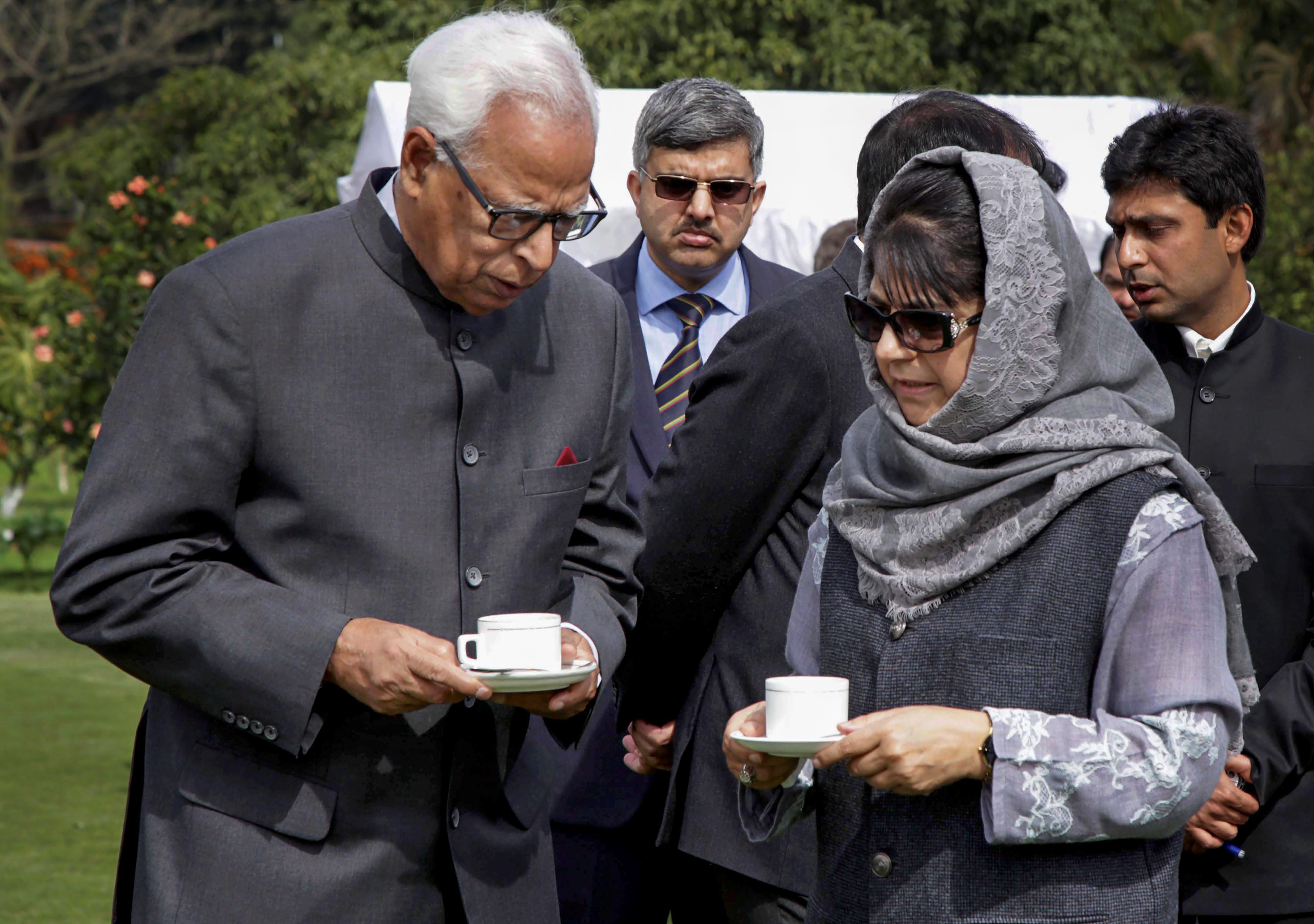
The governor's rule was imposed for the first time on March 26, 1977, during the tenure of governor LK Jha after state Congress—then headed by Sayeed—withdrew support to the minority government of Sheikh Mohammad Abdullah of National Conference. Sheikh had come to power following an accord with then Prime Minister Indira Gandhi in 1975.
The governor's rule lasted for 105 days and ended as the National Conference founder returned to power in the assembly polls.
The governor's rule was imposed for the second time in March 1986 after state Congress, again headed by Sayeed, withdrew support to the minority government of Ghulam Mohammad Shah.
Shah became the chief minister after he led a rebellion with National Conference against his brother-in-law and then incumbent Chief Minister Farooq Abdullah in 1984.
This 246-day spell ended after Farooq Abdullah entered into an accord of his own with the then Prime Minister Rajiv Gandhi. The third time the governor's rule was imposed was in January 1990 when Farooq Abdullah resigned as chief minister over the appointment of Jagmohan as the governor following eruption of militancy in the state.
Sayeed was the Union home minister at that time and had brushed aside Farooq Abdullah's opposition to Jagmohan's appointment. This was the longest spell of a governor's rule, six years and 264 days, which ended in October 1996 after the National Conference returned to power in assembly elections held after a gap of nine-and-a-half years.
Six years later, the governor's rule had to be imposed in the state for the fourth time in October 2002 after caretaker Chief Minister Farooq Abdullah refused to continue in the office in the wake of his party's defeat in the assembly elections that year. The 2002 assembly polls threw up a hung assembly with no party in a position to form a government on its own.
Sayeed, whose regional PDP had won 16 seats, negotiated an alliance with the Congress and dozen-odd independents to form the government, ending the 15-day direct central rule on March 1, when Sayeed was sworn in as the chief minister.
It was the shortest spell of a governor's rule, 15 days, as the PDP and the Congress with support of 12 independents formed a government on Nov. 2.
The governor's rule was imposed in the state for the fifth time for 174 days after the PDP withdrew support to Ghulam Nabi Azad-led Congress-PDP coalition government in 2008.
The PDP withdrew support to the government on June 28, 2008 following widespread protests during the Amarnath land row agitation that pitted Hindu-dominated Jammu region against the Muslim-majority Kashmir valley.
Azad was to seek a vote of confidence in the legislative assembly on July 7 but chose to resign instead. The central rule came to an end on Jan. 5, 2009 after NC leader Omar Abdullah was sworn in as the youngest chief minister of the state. It was for the first time that the governor's rule was imposed during the tenure of Vohra.
The governor's rule was imposed in the state for the sixth time after the assembly election results on Dec. 23, 2014 threw up a hung assembly with no party or combination of parties able to stake claim for government formation and Omar Abdullah, the caretaker chief minister, asking to be relieved from the duties with immediate effect on Jan. 7.
The central rule ended after the PDP and the BJP stitched an alliance paving the way for the return of Mufti Sayeed as chief minister on March 1, 2015.
When the governor's rule was imposed for the seventh time in 2016 and the third during Vohra's tenure, Omar Abdullah had said imposition of the governor's rule during Vohra's tenure “must be a record in itself”.

-
Getting To Work Costs Women More | The Reason Why

It is not just about women paying more than men. It is about women paying much more in cities than in villages.
-
AI Bias In Investing Cannot Be Eliminated, But It Can Be Governed
Framing is a particularly important example as identical financial information presented in terms of gains rather than losses can lead an LLM to reach a different assessment.
-
Joining The Dots | Dark Skies, Steady Diya: Why Hope Holds This Diwali
With war, a weak rupee and foreign outflows weighing on sentiment, policymakers at the NDTV World Summit and market veterans at NDTV Profit Ignite: Diwali Edition offered the same advice: stay invested and filter out the noise.
-
The Curious Case of Equitas Small Finance Bank And A CEO Who Quit For Stock
PN Vasudevan believes persistent investor concerns over a perceived conflict of interest had become a governance overhang on Equitas Small Finance Bank's stock, even as the lender improved profitability and asset quality.
-
Talking Points This Week: AI Cash Burn, A Tiger Comeback And An India That Still Finds Its Own Path
India is not immune to higher oil or tighter global liquidity, yet its earnings base is broader, its domestic policy levers are still available.
-
Foreign Investors Own Half Of HDFC Bank and ICICI Bank. An LTCG Cut Could Matter Most Here
Foreign portfolio investors have US$115 billion parked in HDFC Bank, ICICI Bank. If the government cuts long-term capital gains tax, Jefferies says returning foreign money could land here first.
-
'Never Seen This Level Of Negativity': Sandeep Tandon Says The Next Rally May Be Closer Than You Think
Veteran investor Sandeep Tandon says foreign selling is easing, large-caps are due a comeback and mid-caps are crowded, while he turns positive on gold, power and pharma this Diwali.
-
Indians Stay With Family, Not In Hotels | The Reason Why
India still lacks enough clean, reliable and affordable hotels for budget-conscious travellers.
-
The Economic Imperative: Analysing The Material Driving Force Behind India-Canada Strategic Reset
This economic complementarity is further reinforced by deep institutional investment ties and talent mobility, which form the bedrock of the bilateral framework.
-
Medicine Pricing: Where Must Profit Stop?
India must confront excessive margins, hidden incentives and regulatory gaps that threaten the integrity of medicine.










