If India’s 2014-2018 State Elections Were The General Elections...
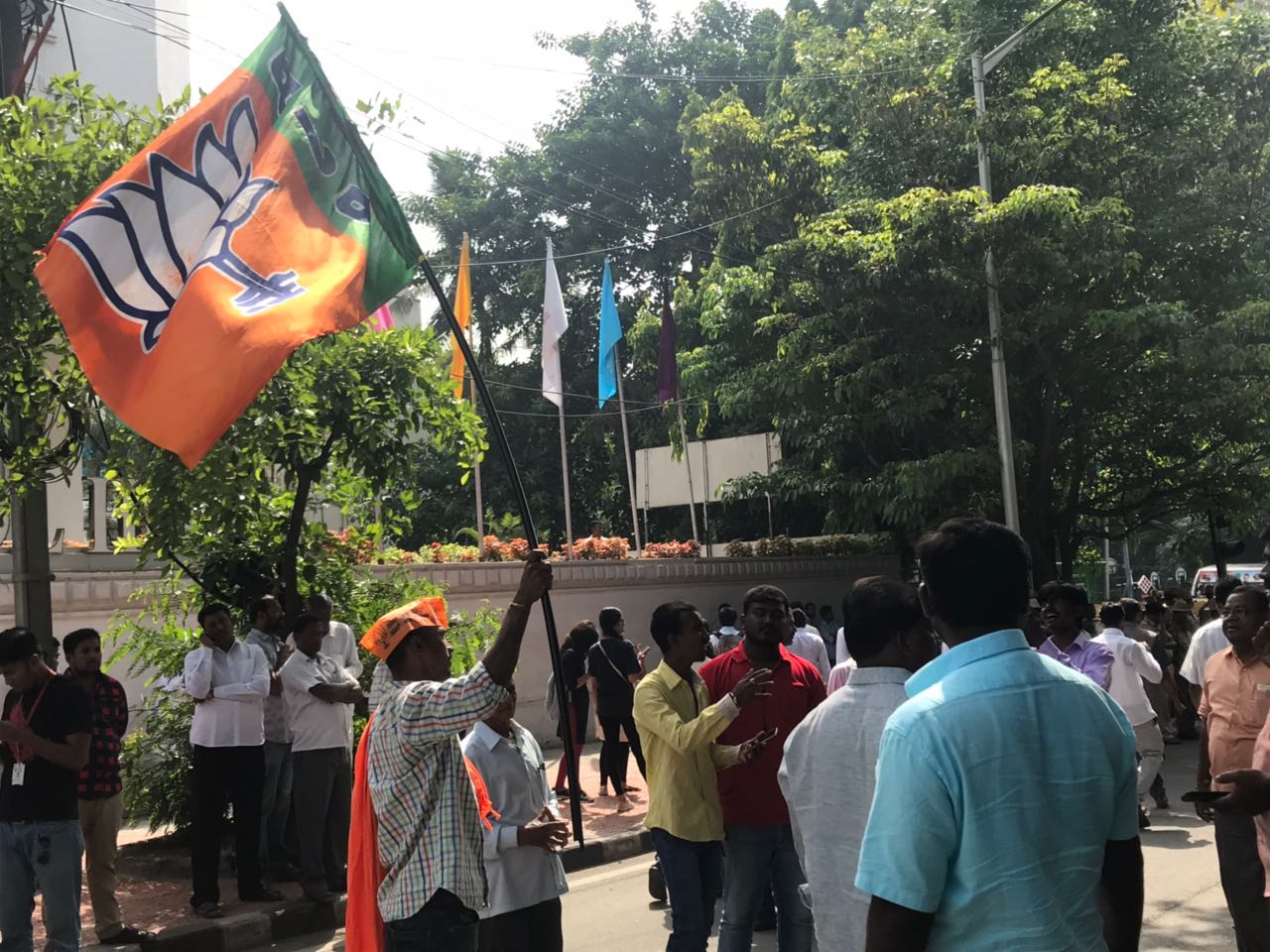
On Dec. 11, the results of five Indian state elections – in Rajasthan, Madhya Pradesh, Chhattisgarh, Telangana, and Mizoram – were announced. These will be the last state elections before the 2019 Indian general election, about which speculation will now begin in earnest.
Predicting national elections is a notoriously difficult exercise; the last three defied many expectations. Given that media commentators project every state election as a trendsetter for national politics, a simple exercise to start thinking about next year's outcome involves transposing the results of every state election over the past five years onto a national election map. Basically, this means taking the number of seats a party won in the last election in each state, dividing it by the total number of seats in the state legislature, and multiplying that number by the Lok Sabha seats representing that state.
Crunch the numbers in this manner, and it brings up the following results: the BJP drops some 103 seats and its allies another 7, giving the BJP a total of 179 and its National Democratic Alliance (NDA) coalition about 207 seats.
For context, no winning party won more seats than that in five general elections between 1996 and 2009. The Congress would certainly gain in this calculation – particularly in Gujarat, Rajasthan, Madhya Pradesh – but would make only about 107 seats total.
Along with its allies, the Congress-led United Progressive Alliance would have 163 seats.
This would represent a big increase from 2014, but is still over 40 short of their competitors. Other regional parties, led by the All India Trinamool Congress, All India Anna Dravida Munnetra Kazhagam, Biju Janata Dal, Telugu Desam Party, and Telangana Rashtra Samiti would be among the largest contributors to 172 seats for third parties and independents.
Now, the caveats. These numbers offer a useful starting point, but should definitely not be interpreted as a prediction, for at least four reasons.
- The first is that Indian voters have historically distinguished between state-level and national-level issues when they voted, and parties will campaign on very different concerns and personalities. A particularly good example of this was the fact that the 2008 Uttar Pradesh elections – won convincingly by the Bahujan Samaj Party (BSP) – was followed shortly thereafter by a strong showing by the Congress in that state in the 2009 general election.
- A second reason is that enough time has elapsed from several state elections, notably in Bihar, Delhi, Maharashtra, and Uttar Pradesh, to suggest that they could have little bearing on the next general election.
- The third reason is that both pre-poll and post-poll alliances will alter calculations, sometimes significantly. How the likes of the BSP, TDP, and others position themselves will make a meaningful difference, as would campaign strategies between allies.
- Finally, state election results disproportionately favour state parties and smaller political movements, who are more likely to be crowded out in a general election when fewer and larger seats are at stake.
Nonetheless, despite these important considerations, a simple transposition of recent state election results on a national electoral map provides a basic starting point for anticipating what is in play in the run up to the 2019 elections.


This article was originally published on Brookings India on December 13, 2018.
Dhruva Jaishankar is Fellow in Foreign Policy Studies at Brookings India in New Delhi and the Brookings Institution in Washington DC.
The views expressed here are those of the author's and do not necessarily represent the views of BloombergQuint or its editorial team.

-
Signature Play: The Classic Cocktail Is Dead. Or Is It?

Classic cocktails are disappearing from India's cocktail menus. But they're still being ordered, taught to bartenders and borrowed from. So, who's really having the last drink?
-
A New Samvat Wishlist: Inclusive Prosperity And Human Development
India has strengthened its economic foundations through infrastructure, digital access and enterprise. Its next growth chapter must deepen productivity, create better livelihoods and widen participation in prosperity.
-
Love, Sex Aur Dhokha: The Audacious Plot To Spy On Jensen Huang
A Taipei dinner, a Singapore chip buyer and a suspected Chinese asset: inside the alleged spy operation that got close to NVIDIA's Jensen Huang.
-
Ten Things I Learnt This Samvat
Patience can be a trap. Cheap stocks can stay cheap. Leverage can wipe you out. What did Samvat 2082 teach us? Niraj Shah writes on 10 lessons from the year gone by.
-
Talking Points This Week: Tech Nerves, FII Buying, And A Faraway Banking Shock
The global markets are not shining this Diwali. The exception in the large markets is, India.
-
Midterm Rally Lasted A Day. The Hard Reality Of A Divided US May Last Two Years | Opinion
Between a contested AI boom, a debt ceiling that arrives in 2027 and a president with every incentive to act alone, the next two years may prove more volatile than the first day's rally suggests.
-
Blue Wave Will Derail the AI Trade but Won't Dismantle the AI Era | Unhedged Position
The Democrats' sweep of the US Congress will see politics collide with economic forces both over the long and short term.
-
It's Time To Take The GST Council's Bet On Trust Global
Payment records can prove India's services exports, and clear, proportionate rules can bring foreign digital sellers into the tax net.
-
Opinion | India at 38: From Innovation Overperformer to Innovation Powerhouse
India now has 453 VC-backed deep science startups, 18 of them late-stage, after 117 percent growth since 2020. Laurus Labs, at USD 9.3 billion, is the most valuable deep science company in any middle-income economy outside China.









