I Was Honest To My Oath, That’s My High Point: Justice Chelameswar
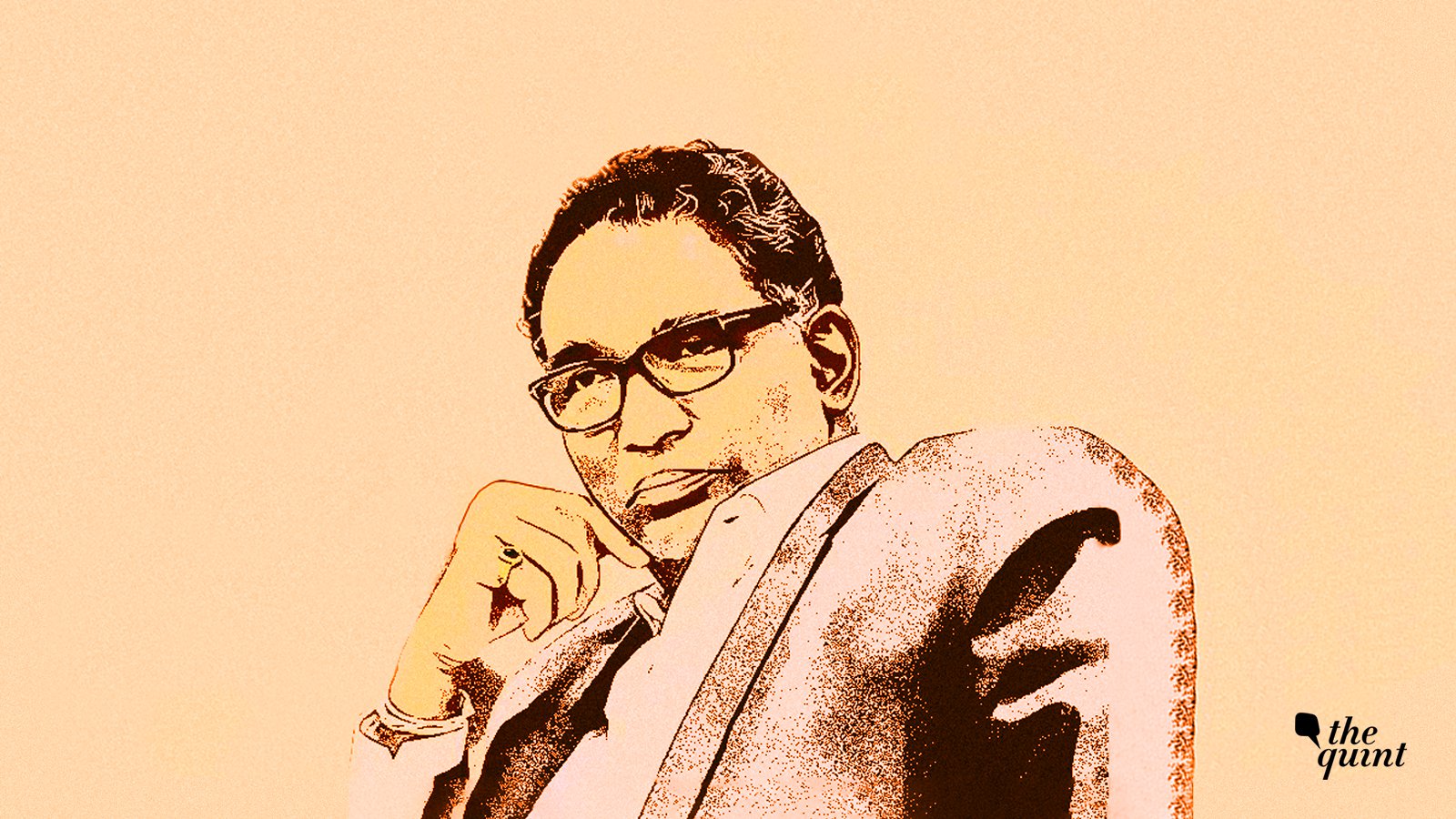
Justice J Chelameswar, who demitted office on 22 June 2018, was known as the “dissenting judge” in the Supreme Court. From being a part of an unprecedented press conference to let the country know that all was not well with the judiciary, to holding his ground on the elevation of Justice KM Joseph to the Supreme Court, Justice Chelameswar's contribution to his profession has been magnanimous.
On his last day in office, he spoke to various news outlets about the press conference, Chief Justice of India, transparency in the Collegium, and the crisis in judiciary.
Chelameswar played an instrumental role in the formation of the National Judicial Appointments Commission in 2015 to do away with an unfair system of appointing judges. Three years down the line, speaking to News18, he said he still believes that the Collegium lacks adequate transparency.


In an interview to The Print, the retired judge rued the fact that though many former judges had hailed him for his decision to highlight the deficiencies in the functioning of the apex court, “right- thinking” persons were still not coming forward.

Justice Chelameswar also disapproved of the Centre's decision not to elevate Justice KM Joseph to the Supreme Court.
I don't know why they (government) are so resistant to his name. But in my view, the reasons given by them are completely untenable. In my letter, I have responded to each and every objection raised by the government. They are completely untenable.Chelameswar to The Print

Justice Chelameswar, who had held an unprecedented press conference along with three other senior Supreme Court judges in January to highlight the alleged discrimination in allocation of cases to benches, told News18 that he had no regrets.
On being asked about the reasons that triggered the press conference and the virtual revolt against Chief Justice Dipak Misra, he told Hindustan Times on 22 June, “There were lot of things which according to us were not right in the Supreme Court and not in the interest of the people of this country. We made our attempts to set the things right according to our perception of what is wrong and what is right in that context. Since we concluded that we were not able to set the things right, we decide to inform the nation. We didn't want anybody to blame us a decade or two later that ‘these fellows did not discharge their duties'.”

In his interview to Hindustan Times, he also said that the press conference might not have been completely successful in setting things right, but it definitely created an awareness about the crisis in the judiciary.

The judge also questioned the setting up of a seven-judge bench and later a five-judge bench to overturn the decision to set up a constitution bench to hear a case relating to allegations against the CJI.
Speaking to Hindustan Times about the cases that have been closest to him through his career, he said, “During the last 21 years, a lot of events took place and some of them did touch me, in the sense that I had to deal with the legal implications of those events as a judge. NJAC case for more than one reason – it will stay with me always – and its become a component of me as a judge.”

Speaking to HT, he also noted that he would prefer a judge with a certain political ideology over a judge who keeps changing his ideology with time.

What is the “high point” of his career, The Print asked him.
His reply, “ I did my job, I was honest to my oath.”

Referring to the key bone of contention between him and Chief Justice of India Dipak Misra, he acknowledged that the CJI was the master of the roster but there was a problem with regard to allocation of cases which needed to be sorted out.
Justice Chelameswar believes that the consultation with the Chief of Justice of India must function on the basis of the same principle as the the Prime Minister's cabinet. He told Hindustan Times, "The idea of collegium, a multi-member body, was mooted 20 years back. The idea of consultative process is inherent and that is democracy. Why not have a Prime Minister alone? Why (is there) a cabinet? Because the constitution framers in their wisdom believed that in a democratic system, plurality of opinions and interaction of minds will yield greater wisdom. Why is the same principle not incorporated in the context of the consultation of the Chief Justice of India?"

He said, "It was justice (PN) Bhagwati who wrote for the first time saying that there is no guarantee that the Chief Justice of India will always protect the institution. If I say this, immediately somebody will interpret as a personal feud between me and Justice Misra. Bhagwati wrote this even before I and Justice Misra were born in the judiciary.”

On being asked whether there is a need to have a hard look at the office of Chief Justice of India, he told HT:
It's not the question of the office of the Chief Justice of India, every public office in a democratic society and every holder of public office is subject to intense public scrutiny. Day in and day out, the civil society and press talk about the performance of ministers, governors and sometimes in not very complimentary terms. Even judges are public office holders and they perform to their strengths and prejudices. They ought to be subject to public scrutiny. In a democracy, no public office holder is beyond scrutiny.

Referring to the letter written by him to former CJI JS Khehar about alleged closeness of sitting SC Justice NV Ramana and Andhra Pradesh Chief Minister, he told India Today that it is important to question "who is meeting those in power and why?"


-
Getting To Work Costs Women More | The Reason Why

It is not just about women paying more than men. It is about women paying much more in cities than in villages.
-
AI Bias In Investing Cannot Be Eliminated, But It Can Be Governed
Framing is a particularly important example as identical financial information presented in terms of gains rather than losses can lead an LLM to reach a different assessment.
-
Joining The Dots | Dark Skies, Steady Diya: Why Hope Holds This Diwali
With war, a weak rupee and foreign outflows weighing on sentiment, policymakers at the NDTV World Summit and market veterans at NDTV Profit Ignite: Diwali Edition offered the same advice: stay invested and filter out the noise.
-
The Curious Case of Equitas Small Finance Bank And A CEO Who Quit For Stock
PN Vasudevan believes persistent investor concerns over a perceived conflict of interest had become a governance overhang on Equitas Small Finance Bank's stock, even as the lender improved profitability and asset quality.
-
Talking Points This Week: AI Cash Burn, A Tiger Comeback And An India That Still Finds Its Own Path
India is not immune to higher oil or tighter global liquidity, yet its earnings base is broader, its domestic policy levers are still available.
-
Foreign Investors Own Half Of HDFC Bank and ICICI Bank. An LTCG Cut Could Matter Most Here
Foreign portfolio investors have US$115 billion parked in HDFC Bank, ICICI Bank. If the government cuts long-term capital gains tax, Jefferies says returning foreign money could land here first.
-
'Never Seen This Level Of Negativity': Sandeep Tandon Says The Next Rally May Be Closer Than You Think
Veteran investor Sandeep Tandon says foreign selling is easing, large-caps are due a comeback and mid-caps are crowded, while he turns positive on gold, power and pharma this Diwali.
-
Indians Stay With Family, Not In Hotels | The Reason Why
India still lacks enough clean, reliable and affordable hotels for budget-conscious travellers.
-
The Economic Imperative: Analysing The Material Driving Force Behind India-Canada Strategic Reset
This economic complementarity is further reinforced by deep institutional investment ties and talent mobility, which form the bedrock of the bilateral framework.
-
Medicine Pricing: Where Must Profit Stop?
India must confront excessive margins, hidden incentives and regulatory gaps that threaten the integrity of medicine.










