Conscious Decision To Not Include Petrol, Diesel Under GST Regime: GST Council
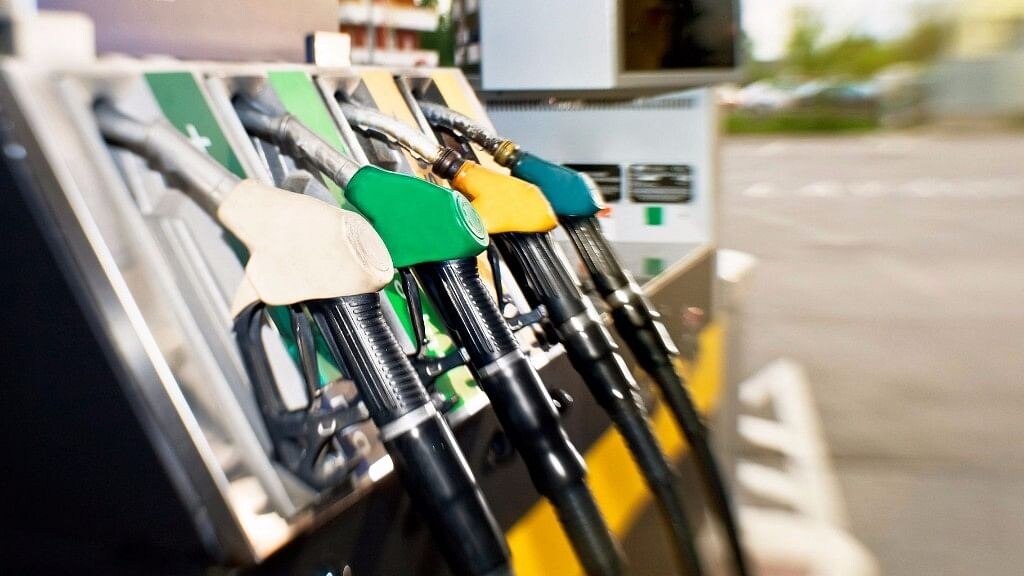
Inclusion of petrol and diesel under the goods and services tax regime will have revenue considerations. And in its 45th meeting, the GST Council unanimously decided to keep both the products out of the GST ambit, the government told the Kerala High Court in an affidavit.
The response, filed jointly by the government and the GST Council, has come after the high court issued notice on a public interest litigation seeking inclusion of petroleum products under the GST.
Petrol and petroleum products form substantial VAT/sales tax revenue for states as well as the centre, the affidavit said.
According to Article 279 A (5), inclusion of specified petroleum products under the GST can take place only on the GST Council's recommendation, which requires the consent of both the centre and member states. The court was informed that a conscious decision had been taken by the council that now is not an appropriate time to include petroleum products under the GST's ambit.
Revenue considerations have become even more important in the light of Covid-19, the affidavit said.
The centre and states are still recovering from the deep ramifications caused by the virus, submitted the council. In this scenario, tax revenues are required to ensure that socioeconomic initiatives undertaken in larger public interest are not adversely affected, it said.
The government and the council also cited Parliament's intent to keep petroleum products out of the GST net.
The petitioner's primary contention was that the non-inclusion of petroleum products results in higher tax/duty rates, which fluctuate quite a lot. This is arbitrary, apart from being violative of right to equality and right to life, the petitioner had submitted.
In its response, the affidavit pointed to the 101st amendment which introduced the GST. The amendment specifically said petroleum and petroleum-based products will not be subjected to the GST till a date is notified by the GST Council.
...the Parliament in 101 Constitutional Amendment Act, in its wisdom also made amendments to the 7th schedule (Section 17) whereby Entry 84 in List 1 Union List was substituted conferring power to levy exercise duties in respect of the specified petroleum products and Entry 54 - State List was substituted enabling tax on sale of the petroleum products.GST Council's Affidavit
Indirect tax laws on petroleum products such as charging provisions, rates, machinery and recovery provisions derive authority from these entries. So, the petitioners' argument that non inclusion of petrol and diesel under the GST regime are violative of fundamental rights are unsustainable, claimed the council.
Finally, fiscal policy is a function of several factors. And, it may not be constrained by the fact that it causes hardship to taxpayers. Once the legislature has sanctioned the law, hardships caused to the petitioner cannot be the only reason to argue that a particular tax is illegal, the affidavit said.
It is well settled that in fiscal matters the legislature/executive have wide powers and the courts cannot interfere under writ jurisdiction if the same does not infringe Constitutional parameters.GST Council's Affidavit
In the present case, however, there is no such infringement. Petitioners' argument that high taxes are affecting their right to work is devoid of merits and need to be junked, argued the council.
The matter is expected to come up for hearing on Dec. 22.

-
Indians Are Travelling, But Not Every Journey Is A Holiday | The Week In Whys

Pilgrims, patients and working women are the real travellers, and the system hasn't quite caught up with them.
-
Getting To Work Costs Women More | The Reason Why
It is not just about women paying more than men. It is about women paying much more in cities than in villages.
-
AI Bias In Investing Cannot Be Eliminated, But It Can Be Governed
Framing is a particularly important example as identical financial information presented in terms of gains rather than losses can lead an LLM to reach a different assessment.
-
Joining The Dots | Dark Skies, Steady Diya: Why Hope Holds This Diwali
With war, a weak rupee and foreign outflows weighing on sentiment, policymakers at the NDTV World Summit and market veterans at NDTV Profit Ignite: Diwali Edition offered the same advice: stay invested and filter out the noise.
-
The Curious Case of Equitas Small Finance Bank And A CEO Who Quit For Stock
PN Vasudevan believes persistent investor concerns over a perceived conflict of interest had become a governance overhang on Equitas Small Finance Bank's stock, even as the lender improved profitability and asset quality.
-
Talking Points This Week: AI Cash Burn, A Tiger Comeback And An India That Still Finds Its Own Path
India is not immune to higher oil or tighter global liquidity, yet its earnings base is broader, its domestic policy levers are still available.
-
Foreign Investors Own Half Of HDFC Bank and ICICI Bank. An LTCG Cut Could Matter Most Here
Foreign portfolio investors have US$115 billion parked in HDFC Bank, ICICI Bank. If the government cuts long-term capital gains tax, Jefferies says returning foreign money could land here first.
-
'Never Seen This Level Of Negativity': Sandeep Tandon Says The Next Rally May Be Closer Than You Think
Veteran investor Sandeep Tandon says foreign selling is easing, large-caps are due a comeback and mid-caps are crowded, while he turns positive on gold, power and pharma this Diwali.
-
Indians Stay With Family, Not In Hotels | The Reason Why
India still lacks enough clean, reliable and affordable hotels for budget-conscious travellers.
-
The Economic Imperative: Analysing The Material Driving Force Behind India-Canada Strategic Reset
This economic complementarity is further reinforced by deep institutional investment ties and talent mobility, which form the bedrock of the bilateral framework.










