Government Effort To Restrain Media Coverage Of Pandemic Met With Supreme Court Caution
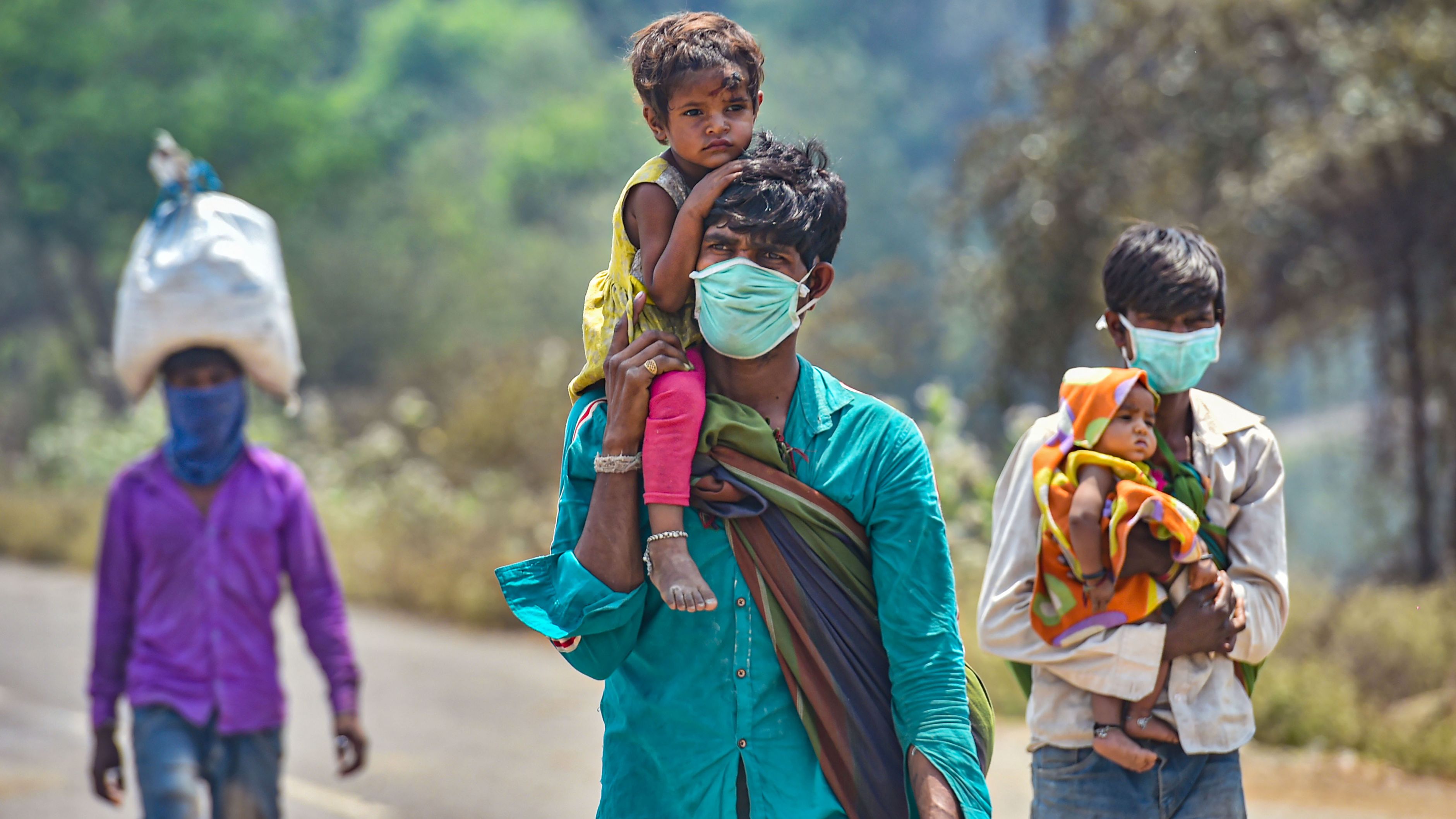
The hearing was on a petition seeking to protect migrant workers in the wake of the Covid-19 pandemic. It prompted the government to seek strictures against media reporting that was not based on official information. The Supreme Court desisted from passing any such order but did caution the media.
The petition, filed by two lawyers, sought to address the situation of migrant workers, thousands of whom left their urban workplaces after the nationwide lockdown was announced on Mar. 24 and set off to their hometowns on foot. Walking hundreds of kilometers, with no food or shelter facilities, and congregating at state borders with no opportunity to implement health precautions.
In the past few days, central and state governments finally acted to help the workers with transport and health checks. Representing the central government, Solicitor General of India and Senior Advocate Tushar Mehta informed the court that as of 11 am on Mar. 31, there was no person walking on the roads in an attempt to reach their home town or village. He claimed to the court that 6,66,291 people have been provided shelter and 22,88,279 have been provided food in over 21,064 relief camps.

The Solicitor General told the court that ‘'the exodus of migrant labourers was triggered due to panic created by some fake/misleading news and social media.''
‘'We are informed that the labourers who are unemployed due to lockdown were apprehensive about their survival. Panic was created by some fake news that the lockdown would last for more than three months.'' Mehta stated, as noted in the Supreme Court order.
In its affidavit submitted to the court, the central government sought the Supreme Court to restrain media coverage of the pandemic. It requested the court to direct that no electronic or print media, web portal or social media shall print, publish or telecast anything without first ascertaining the true factual position from the mechanism provided by the central government.
‘'In an unprecedented situation of this nature, any deliberate or unintended fake or inaccurate reporting either in print, electronic or social media and particularly on web portals has a serious and inevitable potential of causing panic in large sections of the society,'' stated the affidavit filed by the central government.
While the court desisted from passing any strictures on the media, it said it expects all concerned, including state governments, public authorities and citizens to faithfully comply with the directives, advisories and orders issued by the central government. It also cautioned the media.
In particular, we expect the media (print, electronic or social) to maintain a strong sense of responsibility and ensure that unverified news capable of causing panic is not disseminated. A daily bulletin by the Government of India through all media avenues including social media and forums to clear the doubts of people would be made active within a period of 24 hours as submitted by the Solicitor General of India. We do not intend to interfere with the free discussion about the pandemic, but direct the media refer to and publish the official version about the developments.Supreme Court of India
As for migrant workers, the apex court said that at this stage it is satisfied with the response of the government to the Covid-19 crisis.
It directed police authorities to deal with the migrant workers in a humane manner and said that their fear and anxiety should be understood by the authorities. It also asked the central government to ensure that trained counselors or community leaders visit the relief camps and deal with any concerns and fears of the workers. It asked the government to consider engaging volunteers along with the police to ensure welfare activities in the relief camps.
The case has been adjourned and will come up next for hearing on Apr. 7, 2020.

-
Extracting Value From Battery Scrap Could Be Challenging For India | The Reason Why

A discarded lithium-ion battery still contains valuable materials such as lithium, nickel and cobalt. These can be recovered and reused. When such batteries are crushed and shredded, they produce a dark powder called black mass.
-
One El Nino, India Can Handle. Two Could Break The Granary
India's grain stocks can absorb one bad year, but a second El Nino could drain the buffer in two to three years, economists say.
-
India's Troika Of Good Luck | Joining The Dots
As Jensen Huang's exit drags Nvidia down, a cooling AI trade and resilient earnings have revived investor interest in India. A likely RBI rate hike looms.
-
Talking Points This Week: Leadership Shock At Nvidia, Earnings Strength, And The Fog Over Hormuz
The Anthropic IPO pricing and first trading day, Nvidia's upcoming earnings, and any fresh signals from Iran will set the tone for the following week.
-
Signature Play: The Classic Cocktail Is Dead. Or Is It?
Classic cocktails are disappearing from India's cocktail menus. But they're still being ordered, taught to bartenders and borrowed from. So, who's really having the last drink?
-
A New Samvat Wishlist: Inclusive Prosperity And Human Development
India has strengthened its economic foundations through infrastructure, digital access and enterprise. Its next growth chapter must deepen productivity, create better livelihoods and widen participation in prosperity.
-
Love, Sex Aur Dhokha: The Audacious Plot To Spy On Jensen Huang
A Taipei dinner, a Singapore chip buyer and a suspected Chinese asset: inside the alleged spy operation that got close to NVIDIA's Jensen Huang.
-
Ten Things I Learnt This Samvat
Patience can be a trap. Cheap stocks can stay cheap. Leverage can wipe you out. What did Samvat 2082 teach us? Niraj Shah writes on 10 lessons from the year gone by.
-
Talking Points This Week: Tech Nerves, FII Buying, And A Faraway Banking Shock
The global markets are not shining this Diwali. The exception in the large markets is, India.
-
Midterm Rally Lasted A Day. The Hard Reality Of A Divided US May Last Two Years | Opinion
Between a contested AI boom, a debt ceiling that arrives in 2027 and a president with every incentive to act alone, the next two years may prove more volatile than the first day's rally suggests.









