Forty Years After Bhopal Gas Tragedy, Survivors Face Lingering Hazards And Health Crisis
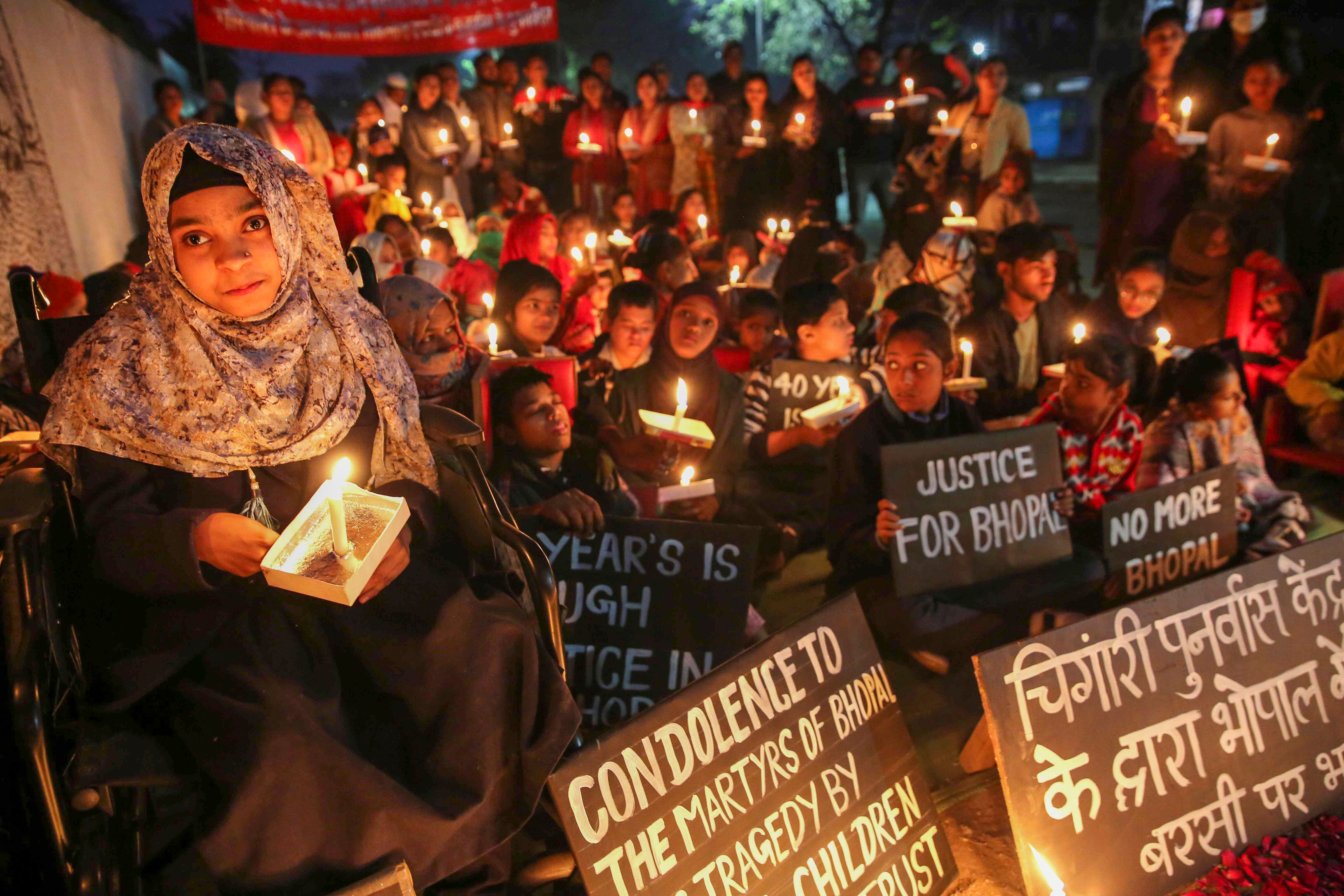
Four decades after the methyl isocyanate gas leak from the Union Carbide plant, 5,479 people died and over 500,000 were affected. Bhopal still faces issues with toxic waste, contaminated soil, and rising health disorders among survivors.
Despite Rs 126 crore being allocated by the Centre to the Madhya Pradesh government for hazardous waste disposal, 337 metric tonnes of toxic waste still sit in a shed on the Union Carbide premises, according to social activists.
Additionally, 1.1 million tonnes of contaminated soil in and around the plant have harmed local water sources, according to ND Jayaprakash, co-convener of the Bhopal Gas Peedith Sangharsha Sahayog Samiti, as reported by PTI.
Delayed Clean-Up And Financial Controversy
In September, the Madhya Pradesh High Court expressed dissatisfaction over the delay in hazardous waste disposal, despite funds being released in March. "The waste on the ground can be safely incinerated in a closed-loop system or stored in stainless containers and sent to the United States," activist Rachna Dhingra of the Bhopal Group for Information and Action told PTI.
She questioned the Rs 126 crore cost estimate for incineration, noting that a German firm had earlier offered to handle the waste for Rs 54 crore before withdrawing due to public outcry in Germany.
The hazardous legacy isn't confined to the factory premises. In 2012, the Supreme Court acknowledged groundwater contamination in 22 nearby communities and ordered the state to provide clean drinking water. However, the issue remains largely unresolved, activists allege.
Persistent Health Crisis Among Survivors
New data analysed by the Sambhavna Trust Clinic paints a grim picture of the health toll on survivors. Among the 16,305 gas-exposed patients studied, rates of respiratory illnesses, mental health disorders, and other chronic conditions were significantly higher than in unexposed populations, PTI reported.
"Both obstructive and restrictive respiratory diseases were 1.7 to 2 times more prevalent in the gas-exposed group," said Dr. Usha Arya, a physician at the clinic. Depression was 2.7 times more common, while diabetes and hypertension were found to be five and three times higher, respectively.
The legacy of the tragedy extends to the next generation. Congenital disabilities, linked to genetic mutations caused by gas exposure, are haunting families. Sharda Yadav, a Bhopal resident, cares for two sons in their twenties born with mental and physical disabilities. "We hoped our second son would be born healthy, but our hope was belied," Yadav told PTI.
Similar stories are echoed by Abdul Saeed Khan, a former Union Carbide employee whose twin sons also suffer from congenital disabilities. Experts attribute such conditions to intrauterine exposure to toxic gas, underscoring the tragedy's intergenerational impact.
Lingering Calls For Justice And Accountability
The slow pace of remediation and the enduring health crisis have fueled frustration among activists and survivors. Satinath Sarangi, founder of the Sambhavna Trust, highlighted the ongoing need for specialised healthcare for survivors. "These observations show a consistent pattern of higher morbidity in both known and emerging conditions among gas victims," he said, calling for sustained medical research and support.
Survivors and activists continue to demand accountability, hoping for a future where their suffering is finally addressed.
(With inputs from PTI.)

-
The Curious Case of Equitas Small Finance Bank And A CEO Who Quit For Stock

PN Vasudevan believes persistent investor concerns over a perceived conflict of interest had become a governance overhang on Equitas Small Finance Bank's stock, even as the lender improved profitability and asset quality.
-
Talking Points This Week: AI Cash Burn, A Tiger Comeback And An India That Still Finds Its Own Path
India is not immune to higher oil or tighter global liquidity, yet its earnings base is broader, its domestic policy levers are still available.
-
Foreign Investors Own Half Of HDFC Bank and ICICI Bank. An LTCG Cut Could Matter Most Here
Foreign portfolio investors have US$115 billion parked in HDFC Bank, ICICI Bank. If the government cuts long-term capital gains tax, Jefferies says returning foreign money could land here first.
-
'Never Seen This Level Of Negativity': Sandeep Tandon Says The Next Rally May Be Closer Than You Think
Veteran investor Sandeep Tandon says foreign selling is easing, large-caps are due a comeback and mid-caps are crowded, while he turns positive on gold, power and pharma this Diwali.
-
Indians Stay With Family, Not In Hotels | The Reason Why
India still lacks enough clean, reliable and affordable hotels for budget-conscious travellers.
-
The Economic Imperative: Analysing The Material Driving Force Behind India-Canada Strategic Reset
This economic complementarity is further reinforced by deep institutional investment ties and talent mobility, which form the bedrock of the bilateral framework.
-
Medicine Pricing: Where Must Profit Stop?
India must confront excessive margins, hidden incentives and regulatory gaps that threaten the integrity of medicine.
-
Why Amazon And Flipkart Are Struggling To Beat Meesho In India's Smaller Cities
With 274 million users and lowest-cost logistics, Meesho is defending its value commerce crown against giants like Amazon and Flipkart.
-
High US Salaries, No Green Card Certainty: The Financial Calculation Facing Indian H-1B Families
The suspension of PERM processing at eight technology employers does not cancel existing H-1B visas. What it does is force a question many Indian families have been avoiding: is the US salary worth tying your career and family plans to one employer?
-
Swiggy vs Eternal: Food Delivery's Two Rivals Are No Longer In The Same Race
Eternal is building a private AI assistant, dark.ai. Swiggy is still working out how to make Instamart pay, with an operating loss of Rs 895 crore in the July-September quarter while Blinkit stayed profitable.










