Fears Of Grid Failure Due To Sunday’s ‘Lights Out’ Are Misplaced: Power Ministry
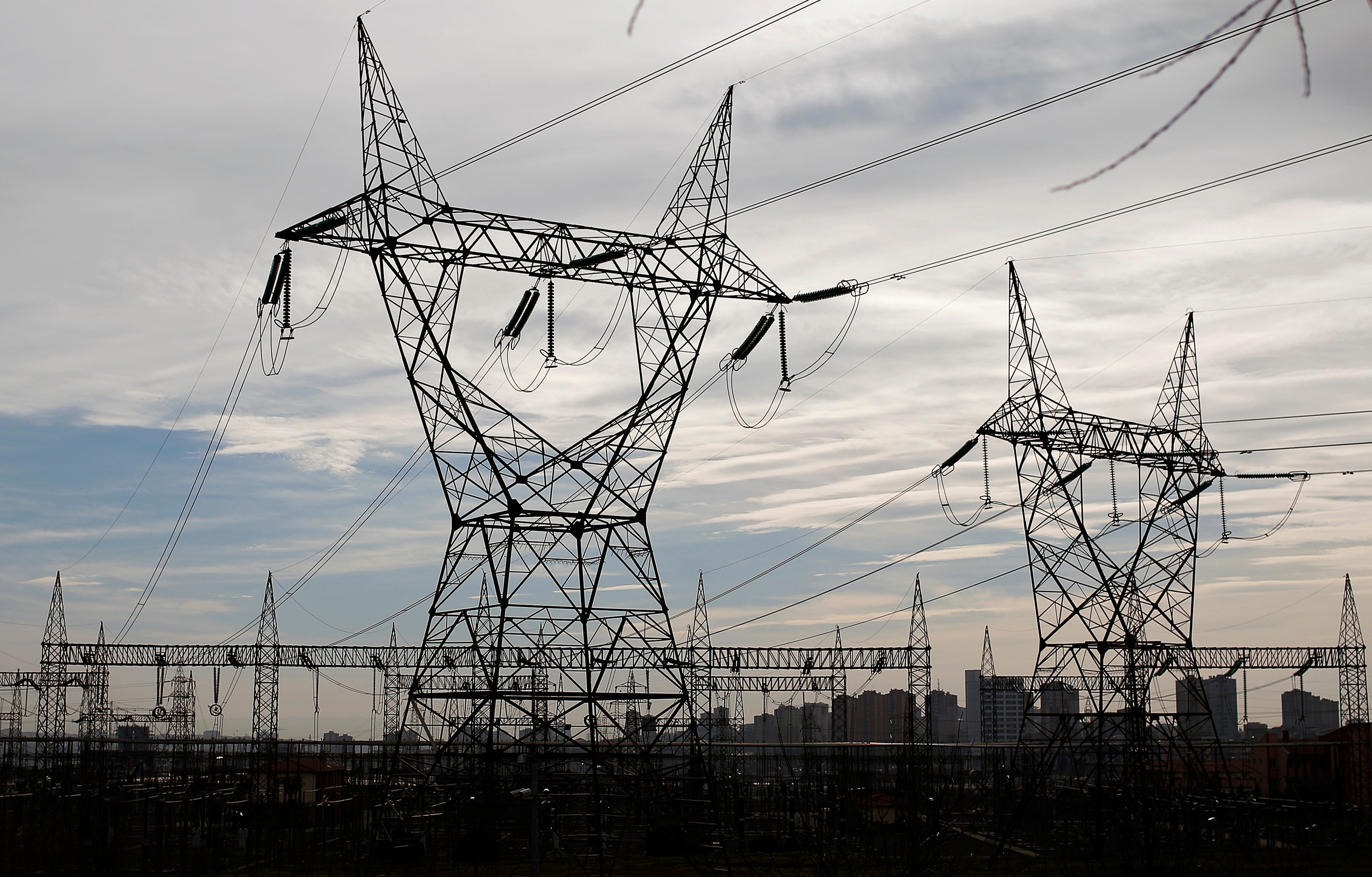
Allaying fears of an electricity grid failure following the Prime Minister's appeal to switch off lights on Sunday night, the power ministry said these apprehensions are misplaced and all protocols are in place to handle the fluctuation in demand.
Prime Minister Narendra Modi had on Friday urged people to switch off the lights at their homes and light up lamps, candles or mobile phone torches for nine minutes at 9 p.m. on Sunday to display the country's "collective resolve" to defeat the coronavirus.
There have been concerns that the blackout may impact the electricity grid due sudden drop in peak power demand, which was already down 25 percent at 125.81 GW on April 2 compared to a year ago.
However, the power ministry in a statement on Saturday said these "apprehensions are misplaced."
The ministry noted there have been some concerns that the blackout on Sunday may cause instability in the grid and fluctuation in voltage, which may harm the electrical appliances.
The Indian electricity grid is robust and stable, and adequate arrangements and protocols are in place to handle the variation in demand, it explained.
The ministry further said the Prime Minister's appeal is to simply switch off the lights, and there is no call to switch off either street lights or appliances like computers, TVs, fans, refrigerators and ACs in homes.
Additionally, the lights in hospitals and all other essential services like public utilities, municipal services, offices, police stations and manufacturing facilities will remain on, it said.
All local bodies have been advised to keep the street lights on for public safety, the power ministry said.
Meanwhile, state load dispatch centres and transmission utilities are gearing up to deal with the situation.
The State Load Dispatch Centre of Uttar Pradesh has written to state utilities to take a series of steps to deal with the possibility of a sudden drop in power demand.
The SLDC in its letter asked the utilities to keep all the reactors of state grid in service while keeping capacitor banks inoperational.
The SLDC has also asked them to start load shedding from 8 p.m. to 9 p.m. on Sunday in a staggered manner.
Similar instructions have been given by the Tamil Nadu Transmission Corporation in a letter to its operational executives, saying that availability of sufficient staff should be ensured in view of the call given by the Prime Minister.
The corporation also asked them to adhere to SLDC directions.
Meanwhile, an official on the condition of anonymity said power demand may fall by 10 GW to 12 GW during the blackout, which will have no bearing on stability of the national power grid.
The official further said this is not the first time the country is going for a blackout, as earlier too such exercises have been conducted for initiatives like 'Earth Hour'.
The official said the advisories issued by the National Load Despatch Centre and SLDCs to the utilities are part of the standard operating procedure before any such event.
Opposition parties have criticised the blackout call given by Prime Minister Narendra Modi.
A state minister has also requested people not to switch off the lights at 9 pm on Sunday.
The country had gone through a grid failure in 2012 due to technical reasons. However, India presently has a strong transmission network which is capable of handling fluctuations in power demand.

-
Extracting Value From Battery Scrap Could Be Challenging For India | The Reason Why

A discarded lithium-ion battery still contains valuable materials such as lithium, nickel and cobalt. These can be recovered and reused. When such batteries are crushed and shredded, they produce a dark powder called black mass.
-
One El Nino, India Can Handle. Two Could Break The Granary
India's grain stocks can absorb one bad year, but a second El Nino could drain the buffer in two to three years, economists say.
-
India's Troika Of Good Luck | Joining The Dots
As Jensen Huang's exit drags Nvidia down, a cooling AI trade and resilient earnings have revived investor interest in India. A likely RBI rate hike looms.
-
Talking Points This Week: Leadership Shock At Nvidia, Earnings Strength, And The Fog Over Hormuz
The Anthropic IPO pricing and first trading day, Nvidia's upcoming earnings, and any fresh signals from Iran will set the tone for the following week.
-
Signature Play: The Classic Cocktail Is Dead. Or Is It?
Classic cocktails are disappearing from India's cocktail menus. But they're still being ordered, taught to bartenders and borrowed from. So, who's really having the last drink?
-
A New Samvat Wishlist: Inclusive Prosperity And Human Development
India has strengthened its economic foundations through infrastructure, digital access and enterprise. Its next growth chapter must deepen productivity, create better livelihoods and widen participation in prosperity.
-
Love, Sex Aur Dhokha: The Audacious Plot To Spy On Jensen Huang
A Taipei dinner, a Singapore chip buyer and a suspected Chinese asset: inside the alleged spy operation that got close to NVIDIA's Jensen Huang.
-
Ten Things I Learnt This Samvat
Patience can be a trap. Cheap stocks can stay cheap. Leverage can wipe you out. What did Samvat 2082 teach us? Niraj Shah writes on 10 lessons from the year gone by.
-
Talking Points This Week: Tech Nerves, FII Buying, And A Faraway Banking Shock
The global markets are not shining this Diwali. The exception in the large markets is, India.
-
Midterm Rally Lasted A Day. The Hard Reality Of A Divided US May Last Two Years | Opinion
Between a contested AI boom, a debt ceiling that arrives in 2027 and a president with every incentive to act alone, the next two years may prove more volatile than the first day's rally suggests.









