Fake News A Multi-Variable Problem, There Is No ‘One Fix’, Says Twitter CEO
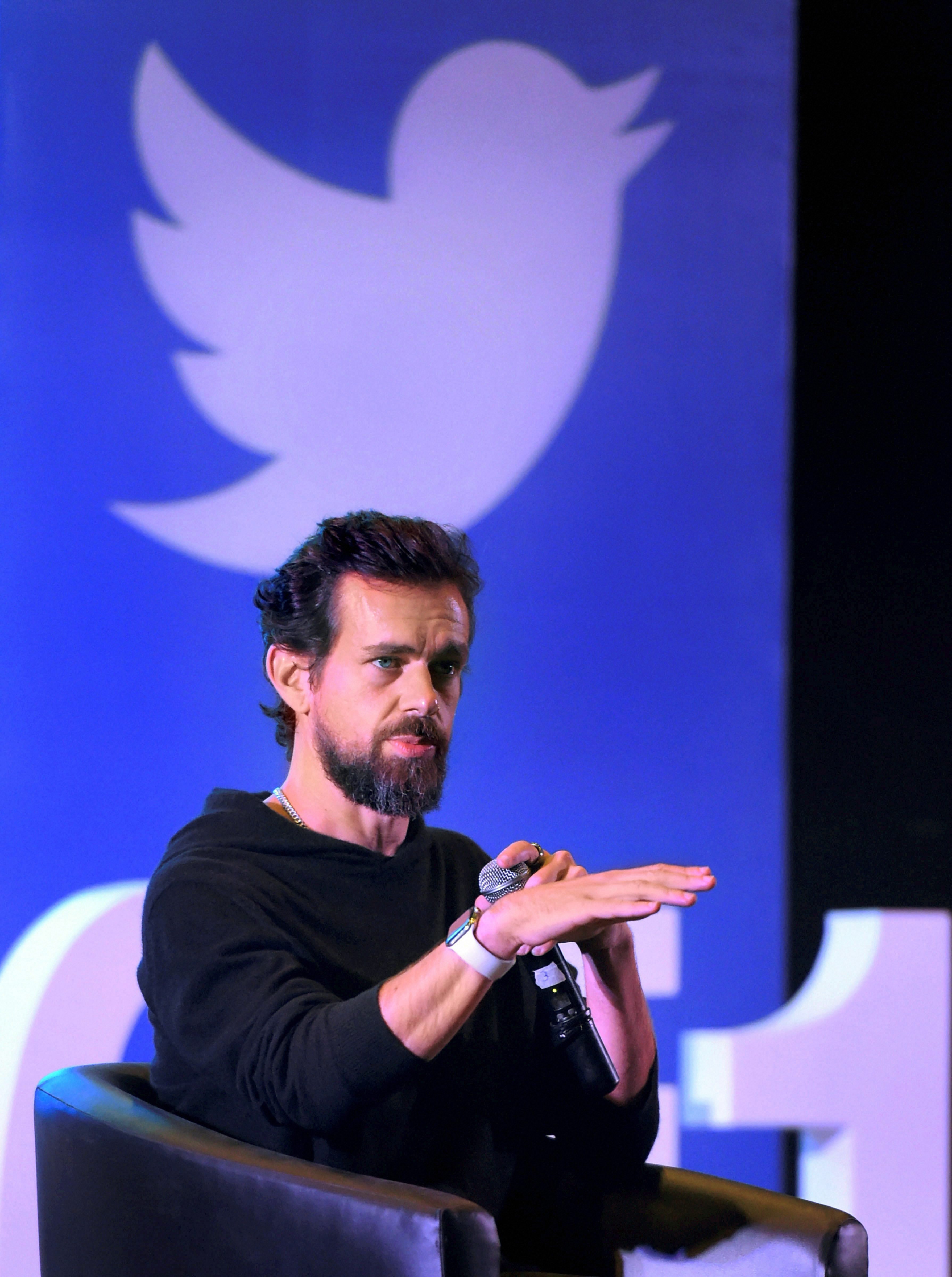
Twitter's Chief Executive Officer and Co-Founder Jack Dorsey on Monday vowed to check spread of fake news, but said there was no "one fix" solution for the "multi-variable" problem.
Twitter—which counts India among its priority markets—has a large number of politicians in the country on its platform, who engage with residents and extensively use it around elections.
"In a number of conversations, it's become more important that we scope the problem as tightly as possible because fake news or misinformation as a category is way too big," he said addressing at the IIT-Delhi in his maiden India visit.
He added that if certain content is found to be misleading, it is the company's job to ensure that such information is picked out and prevented from spreading.
If the intent (of the content) is to mislead, we need to understand and pick out this information and then it's our job to ensure it doesn't spread and our job is to ensure it doesn't gain the impressions beyond its given reach.Jack Dorsey, CEO and Co-Founder, Twitter.
Dorsey, who met Congress President Rahul Gandhi earlier in the day, pointed out that it was also important to understand the intent and context of the information to address the issue of fake news and misinformation.
"This is a multi-variable problem and there is not going to be one fix, it's like security. No one can build a perfect lock that no one can break," he said, adding that the company will have to stay ahead of those spreading misinformation.
Dorsey said artificial intelligence could help build a solution that may be near perfect.
Social media firms have been facing the menace of rumours and fake news floating on their platforms. Organisations like Facebook and WhatsApp have taken a number of steps, including sensitisation programmes among users across the country.
More recently, WhatsApp—which drew flak from the government over circulation of certain fake messages that incited mob-fury in different parts of the country—has initiated measures to curb the circulation of misinformation on its platform.
Dorsey cited the example of a tweet on its platform, posted ahead of the 2016 Presidential elections in the U.S., that said voters could register themselves on the short code provided in the tweet.
In this case, the number of tweets flagging the said content as fake was 10 times that the original message.
Twitter on Monday also launched its '#PowerOf18' initiative aimed at encouraging Indian youth to contribute to public debate and participate in civic engagement in the upcoming election season. According to a survey conducted by Twitter India, voting rights emerged as the top response when asked what people would consider the power of turning 18 years old.
The Twitter survey, conducted with over 3,600 respondents aged 18-30 years, found :
- 94 percent respondents indicating that they would vote in the upcoming elections
- 87 percent said they believed that voting made them a responsible citizen.
- About 53 percent said they are voting because they want to make a difference.
The study also pointed towards the increasing importance of social media for information consumption as 69 percent of Twitter users surveyed said they always stay up to date with political news and events versus 44 percent of non-Twitter users.

-
We May Need Another Tukaram Mundhe To Fight Air Pollution | The Reason Why

Developers may install basic measures such as sprinklers and green nets, resume work, and continue violating rules when this equipment stops working.
-
Extracting Value From Battery Scrap Could Be Challenging For India | The Reason Why
A discarded lithium-ion battery still contains valuable materials such as lithium, nickel and cobalt. These can be recovered and reused. When such batteries are crushed and shredded, they produce a dark powder called black mass.
-
One El Nino, India Can Handle. Two Could Break The Granary
India's grain stocks can absorb one bad year, but a second El Nino could drain the buffer in two to three years, economists say.
-
India's Troika Of Good Luck | Joining The Dots
As Jensen Huang's exit drags Nvidia down, a cooling AI trade and resilient earnings have revived investor interest in India. A likely RBI rate hike looms.
-
Talking Points This Week: Leadership Shock At Nvidia, Earnings Strength, And The Fog Over Hormuz
The Anthropic IPO pricing and first trading day, Nvidia's upcoming earnings, and any fresh signals from Iran will set the tone for the following week.
-
Signature Play: The Classic Cocktail Is Dead. Or Is It?
Classic cocktails are disappearing from India's cocktail menus. But they're still being ordered, taught to bartenders and borrowed from. So, who's really having the last drink?
-
A New Samvat Wishlist: Inclusive Prosperity And Human Development
India has strengthened its economic foundations through infrastructure, digital access and enterprise. Its next growth chapter must deepen productivity, create better livelihoods and widen participation in prosperity.
-
Love, Sex Aur Dhokha: The Audacious Plot To Spy On Jensen Huang
A Taipei dinner, a Singapore chip buyer and a suspected Chinese asset: inside the alleged spy operation that got close to NVIDIA's Jensen Huang.
-
Ten Things I Learnt This Samvat
Patience can be a trap. Cheap stocks can stay cheap. Leverage can wipe you out. What did Samvat 2082 teach us? Niraj Shah writes on 10 lessons from the year gone by.
-
Talking Points This Week: Tech Nerves, FII Buying, And A Faraway Banking Shock
The global markets are not shining this Diwali. The exception in the large markets is, India.









