Explained: What Is Causing A Drop In Delhi's Air Quality?
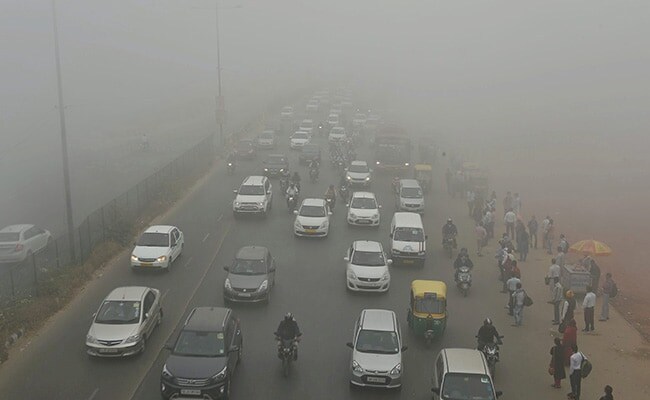
The air quality in Delhi and the National Capital Region (NCR) has been deteriorating since Diwali. The national capital's air quality remained in the ‘very poor' category on Monday, Nov. 3, with an overall Air Quality Index (AQI) of 324 recorded at 6:05 a.m., according to the Central Pollution Control Board's (CPCB) Sameer app. The Air Quality Early Warning System (AQEWS) pegged the AQI at 316 by 9:45 a.m., still ‘very poor'. On Sunday, Nov. 2, the city had already recorded a worse reading of 366.
The sustained pollution can be attributed to weak wind movement, which has reduced the dispersion of particulate matter, and to a gradual dip in minimum temperatures by 1°C to 3°C over the last 24 hours.
Weather Conditions Behind Poor Air Quality
According to the Air Quality Early Warning System for Delhi, the wind speed dropped below 5 kmph from the northwest during evening and night hours of Nov. 2, allowing pollutants to settle close to the ground.
The city recorded a temperature of 20.2°C on Nov. 3 around 10 a.m., while the humidity was reported at 64%, as per the latest India Meteorological Department (IMD) bulletin.
The Air Quality Early Warning System for Delhi has predicted that the air quality is likely to remain ‘very poor' on Nov. 3 and Nov. 5, and may slip into the ‘severe' category on Nov. 4. The trend is expected to persist over the next week.
What Are The Key Pollution Sources In Delhi?
Delhi's toxic air has multiple sources: vehicle emissions, construction dust, demolition activity, and industrial output, all being significant contributors. Seasonal events such as the burning of crop residue and Diwali fireworks worsen the situation. Stubble burning in neighbouring states like Punjab and Haryana is a recurring issue, as northwesterly winds carry smoke from the fields into Delhi's atmosphere, adding to the city's concentration of fine particulate matter (PM2.5).
Why Does Delhi Suffer More Than Other Indian Cities?
Geographically, Delhi is disadvantaged. The city sits in a landlocked plain surrounded by mountains and plateaus, forming a natural basin that traps pollutants. The onset of winter further aggravates the crisis, as cooler air and temperature inversions prevent pollutants from rising and dispersing into the upper atmosphere.
What Do AQI Categories Mean For Health?
According to the Central Pollution Control Board (CPCB), the Air Quality Index (AQI) categorises air quality into six levels, each indicating different health impacts.
An AQI reading between 0 and 50 is considered ‘Good,' posing minimal health impact. Levels between 51 and 100 fall under the ‘Satisfactory' category, which may cause minor breathing discomfort to sensitive individuals. The ‘Moderate' range, from 101 to 200, can lead to breathing difficulties for people with lung, asthma, or heart conditions. When the AQI rises to ‘Poor' (201-300), prolonged exposure may cause discomfort even among the general population. The ‘Very Poor' category, ranging from 301 to 400, can result in respiratory illnesses with extended exposure.
AQI levels between 401 and 500 are deemed ‘Severe,' affecting even healthy individuals and posing serious health risks to those with pre-existing diseases.

-
We May Need Another Tukaram Mundhe To Fight Air Pollution | The Reason Why

Developers may install basic measures such as sprinklers and green nets, resume work, and continue violating rules when this equipment stops working.
-
Extracting Value From Battery Scrap Could Be Challenging For India | The Reason Why
A discarded lithium-ion battery still contains valuable materials such as lithium, nickel and cobalt. These can be recovered and reused. When such batteries are crushed and shredded, they produce a dark powder called black mass.
-
One El Nino, India Can Handle. Two Could Break The Granary
India's grain stocks can absorb one bad year, but a second El Nino could drain the buffer in two to three years, economists say.
-
India's Troika Of Good Luck | Joining The Dots
As Jensen Huang's exit drags Nvidia down, a cooling AI trade and resilient earnings have revived investor interest in India. A likely RBI rate hike looms.
-
Talking Points This Week: Leadership Shock At Nvidia, Earnings Strength, And The Fog Over Hormuz
The Anthropic IPO pricing and first trading day, Nvidia's upcoming earnings, and any fresh signals from Iran will set the tone for the following week.
-
Signature Play: The Classic Cocktail Is Dead. Or Is It?
Classic cocktails are disappearing from India's cocktail menus. But they're still being ordered, taught to bartenders and borrowed from. So, who's really having the last drink?
-
A New Samvat Wishlist: Inclusive Prosperity And Human Development
India has strengthened its economic foundations through infrastructure, digital access and enterprise. Its next growth chapter must deepen productivity, create better livelihoods and widen participation in prosperity.
-
Love, Sex Aur Dhokha: The Audacious Plot To Spy On Jensen Huang
A Taipei dinner, a Singapore chip buyer and a suspected Chinese asset: inside the alleged spy operation that got close to NVIDIA's Jensen Huang.
-
Ten Things I Learnt This Samvat
Patience can be a trap. Cheap stocks can stay cheap. Leverage can wipe you out. What did Samvat 2082 teach us? Niraj Shah writes on 10 lessons from the year gone by.
-
Talking Points This Week: Tech Nerves, FII Buying, And A Faraway Banking Shock
The global markets are not shining this Diwali. The exception in the large markets is, India.









