Economic Challenges The BJP Government Faces In Uttar Pradesh
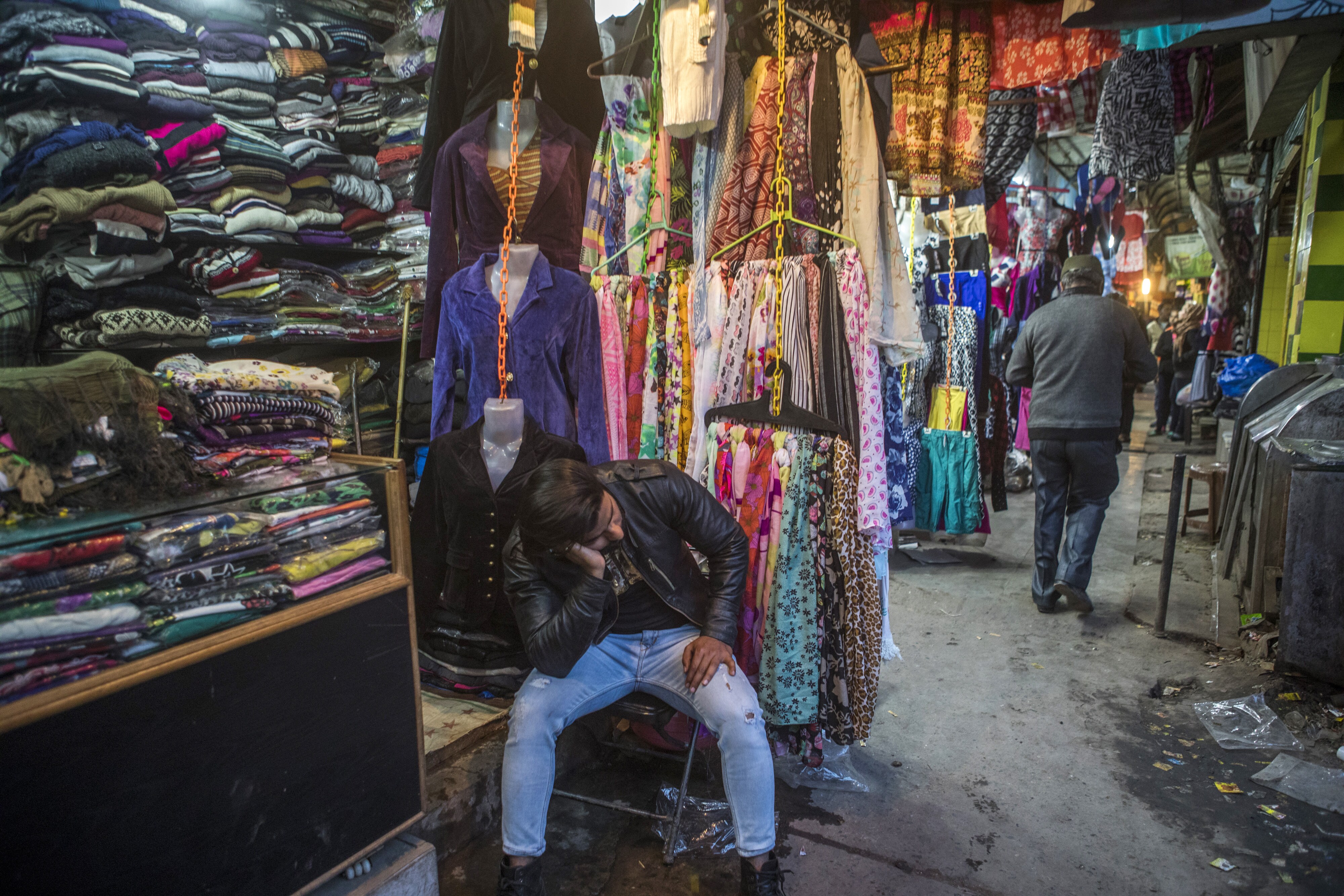
If Uttar Pradesh were an independent country, it would be the fifth most populous in the world ahead of Brazil with more than 200 million people. Its per capita gross domestic product however, is comparable to that of some sub-Saharan countries, and is only ahead of Bihar in India.
From economic growth to citizen health, the state lags peers on most indicators. BloombergQuint looks at key parameters to gauge what challenges the incoming Bharatiya Janata Party government faces in the state.
Growth Hits A Debt Wall

UP's gross domestic product growth has remained almost unchanged over the decade to 2014-15 at 6 percent, lagging India's 7.52 percent pace, data from the Central Statistical Office (CSO) showed.
This is largely due to pressure on the state's finances, which leaves little room to spend on development and infrastructure, said Sunil Sinha, principal economist at India Ratings.
UP is among the top 10 indebted states, with a debt-to-GDP ratio of 30.1 percent, according to budget estimates of 2015. That's higher than the national average of 21 percent.
Previous governments have been inheriting a bad fiscal situation in the last few years due to irresponsible spending, said Sinha. By the time new elections are due, these governments would also resort to unnecessary spending to garner more votes, he added.
Industry in UP expanded by 1 percent in 2014-2015, down from a high of 8.6 percent in 2007, according to CSO data. Manufacturing and services industries in UP are not growing fast enough and lag states like Bihar and Madhya Pradesh, which were once part of the laggard BIMARU club, the data shows.
Nearly 93 percent of businesses in the state are small, employing less than 10 people. There are not many large industries with only 0.01 percent of industries hiring more than 1,000 employees, according to a 2015 state government study.
One-Third Of People Are Poor

The state's per capita income in 2014 was Rs 20,000, half of India's Rs 39,904, according to CSO data. That's lower than Jharkhand and Madhya Pradesh, though Bihar is worse off at Rs 15,506. More than one-third of the state's population lives below the poverty line.
Between 2005 and 2014, India's per capita income rose 65 percent while UP's grew at 55 percent.
Number Of Jobless Growing Fast

The state's unemployment rate touched 7.4 percent last year, higher than the national average of 5 percent, according to data from the Labour Bureau. It lags peers like Bihar (6 percent), Haryana (4.7 percent) and Maharashtra (2.1 percent).
Most of the employment is restricted to one sector – retail of food, beverage and tobacco, according to a report by the state government.
The problem will only get worse said a National Sample Survey Office report, pointing out that the state will add 1 crore unemployed youth in the 15-35 year age bracket by the end of this financial year (FY2016-17).
Among The Worst In Literacy

Also Read: Hurdles Amarinder Singh Faces In Reviving Punjab's Economy
Literacy is low. Approximately 68 percent of people in the state could read and write in 2011 compared to the national average of 74 percent, making it the sixth worst in the country, according to data provided by CSO.
A research report by National University of Educational Planning and Administration published last year found that learning levels of children are dismal in the state. There are more than 70 students per teacher in the state's schools, higher than the 10-30 recommended by the Central Board of Secondary Education (CBSE), the report said.
The number of teachers has increased by 58 percent from 2001-02 to 2012-13, but failed to keep pace with 99 percent growth in schools during the period, the report said.
‘Pathetic' Health Services

“The overall performances of Uttar Pradesh and Bihar in terms of health attainment—both health status and health infrastructure - is pathetic,” said a study published in 2014 in the Indian Journal of Public Health, adding that Bihar is slightly worse off than UP but the difference is minor.
The study said that 47 percent of UP's districts performed below the state average on parameters such as access to healthcare and the quality of treatment received at the health centres.
UP has the fourth-highest infant mortality rate at 50 deaths per thousand births in the state against the national average of 40. Less than half the children are born in formal health centres compared to nearly three-fourths in rest of the country, according to data by ministry of health.
Also Read
Modi Surges to Power in India's Most Crucial State Election
Hurdles Amarinder Singh Faces In Reviving Punjab's Economy

-
Getting To Work Costs Women More | The Reason Why

It is not just about women paying more than men. It is about women paying much more in cities than in villages.
-
AI Bias In Investing Cannot Be Eliminated, But It Can Be Governed
Framing is a particularly important example as identical financial information presented in terms of gains rather than losses can lead an LLM to reach a different assessment.
-
Joining The Dots | Dark Skies, Steady Diya: Why Hope Holds This Diwali
With war, a weak rupee and foreign outflows weighing on sentiment, policymakers at the NDTV World Summit and market veterans at NDTV Profit Ignite: Diwali Edition offered the same advice: stay invested and filter out the noise.
-
The Curious Case of Equitas Small Finance Bank And A CEO Who Quit For Stock
PN Vasudevan believes persistent investor concerns over a perceived conflict of interest had become a governance overhang on Equitas Small Finance Bank's stock, even as the lender improved profitability and asset quality.
-
Talking Points This Week: AI Cash Burn, A Tiger Comeback And An India That Still Finds Its Own Path
India is not immune to higher oil or tighter global liquidity, yet its earnings base is broader, its domestic policy levers are still available.
-
Foreign Investors Own Half Of HDFC Bank and ICICI Bank. An LTCG Cut Could Matter Most Here
Foreign portfolio investors have US$115 billion parked in HDFC Bank, ICICI Bank. If the government cuts long-term capital gains tax, Jefferies says returning foreign money could land here first.
-
'Never Seen This Level Of Negativity': Sandeep Tandon Says The Next Rally May Be Closer Than You Think
Veteran investor Sandeep Tandon says foreign selling is easing, large-caps are due a comeback and mid-caps are crowded, while he turns positive on gold, power and pharma this Diwali.
-
Indians Stay With Family, Not In Hotels | The Reason Why
India still lacks enough clean, reliable and affordable hotels for budget-conscious travellers.
-
The Economic Imperative: Analysing The Material Driving Force Behind India-Canada Strategic Reset
This economic complementarity is further reinforced by deep institutional investment ties and talent mobility, which form the bedrock of the bilateral framework.
-
Medicine Pricing: Where Must Profit Stop?
India must confront excessive margins, hidden incentives and regulatory gaps that threaten the integrity of medicine.










