‘Don’t Blame The Rain,’ Say Experts On Mumbai Stampede
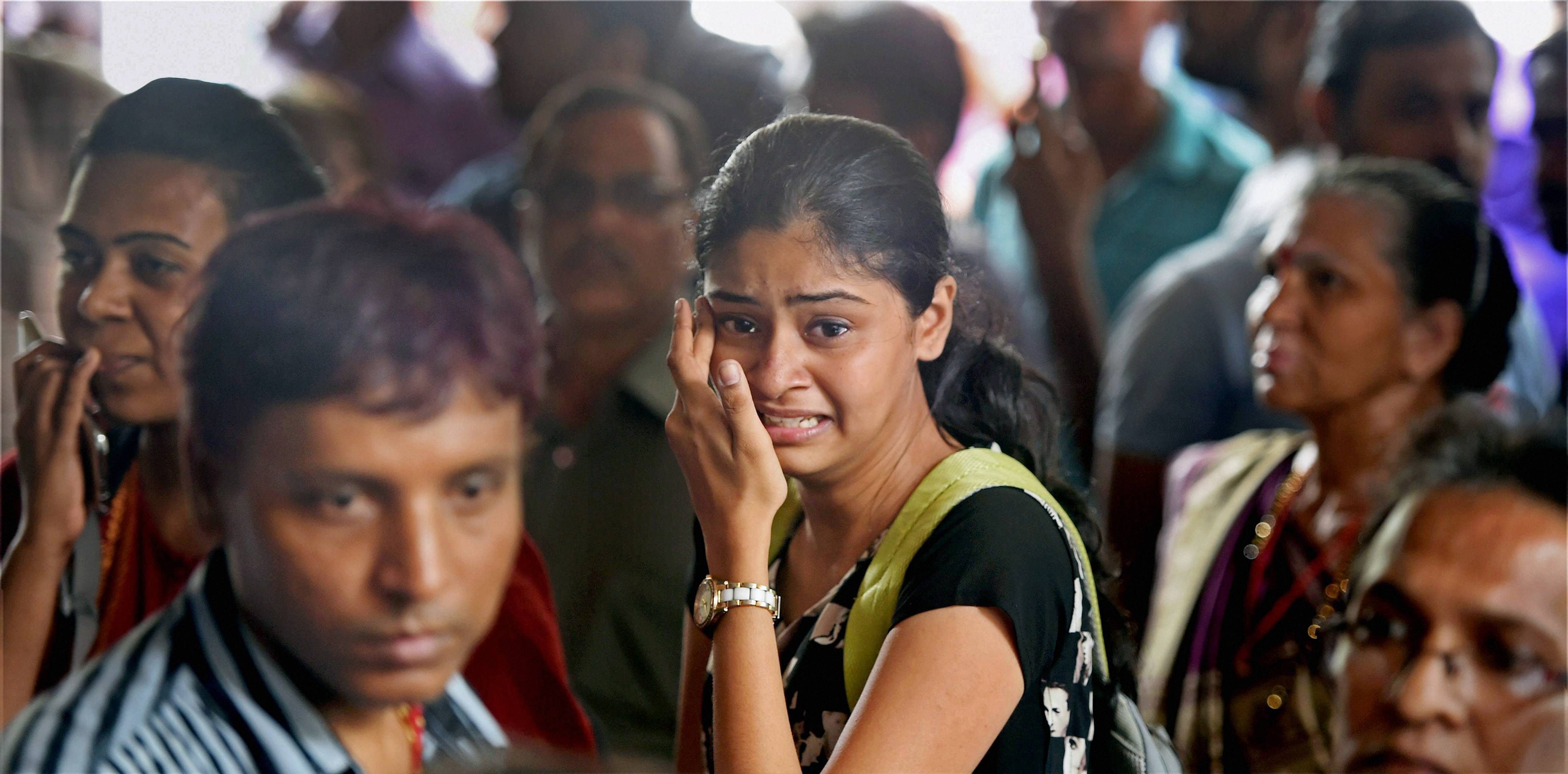
Twenty-two people died and 39 were injured in a stampede at a foot overbridge at Elphinstone Station in Mumbai. While the government has ordered inquires into the incident, the Western Railways in a statement said ‘unprecedented rain' led to overcrowding of the bridge resulting in the subsequent stampede.
Rains were unprecedented and people were caught unawares:Western Railways in a press note #MumbaiStampede
September 29, 2017Prima facie rumours like falling of FOB led ppl to panic,leading to tremendous push from behind twrds exit leading to stampede:Western Rlwys
September 29, 2017Civic activists disagree. “There have been much heavier showers in the past, today's (Thursday) showers were nothing compared to that,” Railway Activist Arun Saxena told BloombergQuint in an interview.
According to Ketan Garodia, a member of the Central Railway Committee on Accidents, one key factor to look at is the huge increase in passenger traffic in that particular station. “Mill lands were allowed to be converted to commercial space and the number of people who travel to Elphinstone and Lower Parel has gone up by at least a 1,000 percent” he said.
It is a case of the left hand not knowing what the right hand is doing.Ketan Garodia, Member, Central Railway Committee on AccidentsWhile Mumbai's municipal authorities give permissions to change the use of mill land to commercial space, railway authorities have not updated their infrastructure, Garodia explained. The lack of coordination does not end there. The railway authorities were not intimated about the change in policy allowing mill lands to be converted, he added.
Also Read: In Photos: Mumbai's Spirit Crumbles After Elphinstone Stampede
Saxena also blames the Commission for Railway Safety which, incidentally, reports to the Ministry of Civil Aviation. “They have to prepare annual reports and must attend to feedback from passengers” he said.
While local civic bodies grant permissions for development of commercial projects, the railways, which carry people to work at these complexes, are under the purview of the Centre. The state government too plays its part. Incidentally, the Bharatiya Janta Party is in power both at the Centre and the state and shares power with the Shiv Sena at the municipal level. BJP Leader Shaina NC, while admitting that the incident was the result of a “complete failure of administration”, also argued for ‘collective responsibility'.
The previous government at the state led by the Congress “did not even have the foresight to build broader and wider foot overbridges and just absolved themselves of responsibility”, she said.
Also Read: Government To Conduct Safety, Capacity Audit Of Railway Footbridges
The Congress meanwhile alleged that the government of the day has not prioritised the Mumbai resident. “For the past three years, the focus of the government is not the Mumbaikar or Mumbai,” Sushiben Shah, general secretary of the Mumbai Congress said. “They are using Mumbai as a milking cow.”
The political rhetoric, however, has little bearing on the average citizen who uses the Mumbai local to commute every day. Ketan Garodia pointed to the need of the hour saying, “The capacity of the Central, Western and Harbour line should be increased by a minimum of 300 percent and this is possible.”
Watch the interview with the Shiv Sena's Arvind Sawant on the Elphinstone station stampede here.

-
Indians Are Travelling, But Not Every Journey Is A Holiday | The Week In Whys

Pilgrims, patients and working women are the real travellers, and the system hasn't quite caught up with them.
-
Getting To Work Costs Women More | The Reason Why
It is not just about women paying more than men. It is about women paying much more in cities than in villages.
-
AI Bias In Investing Cannot Be Eliminated, But It Can Be Governed
Framing is a particularly important example as identical financial information presented in terms of gains rather than losses can lead an LLM to reach a different assessment.
-
Joining The Dots | Dark Skies, Steady Diya: Why Hope Holds This Diwali
With war, a weak rupee and foreign outflows weighing on sentiment, policymakers at the NDTV World Summit and market veterans at NDTV Profit Ignite: Diwali Edition offered the same advice: stay invested and filter out the noise.
-
The Curious Case of Equitas Small Finance Bank And A CEO Who Quit For Stock
PN Vasudevan believes persistent investor concerns over a perceived conflict of interest had become a governance overhang on Equitas Small Finance Bank's stock, even as the lender improved profitability and asset quality.
-
Talking Points This Week: AI Cash Burn, A Tiger Comeback And An India That Still Finds Its Own Path
India is not immune to higher oil or tighter global liquidity, yet its earnings base is broader, its domestic policy levers are still available.
-
Foreign Investors Own Half Of HDFC Bank and ICICI Bank. An LTCG Cut Could Matter Most Here
Foreign portfolio investors have US$115 billion parked in HDFC Bank, ICICI Bank. If the government cuts long-term capital gains tax, Jefferies says returning foreign money could land here first.
-
'Never Seen This Level Of Negativity': Sandeep Tandon Says The Next Rally May Be Closer Than You Think
Veteran investor Sandeep Tandon says foreign selling is easing, large-caps are due a comeback and mid-caps are crowded, while he turns positive on gold, power and pharma this Diwali.
-
Indians Stay With Family, Not In Hotels | The Reason Why
India still lacks enough clean, reliable and affordable hotels for budget-conscious travellers.
-
The Economic Imperative: Analysing The Material Driving Force Behind India-Canada Strategic Reset
This economic complementarity is further reinforced by deep institutional investment ties and talent mobility, which form the bedrock of the bilateral framework.










