Delhi High Court Sets Aside Rs 1,891-Crore Arbitration Award Against NTPC, Cites 'Patent Illegality'
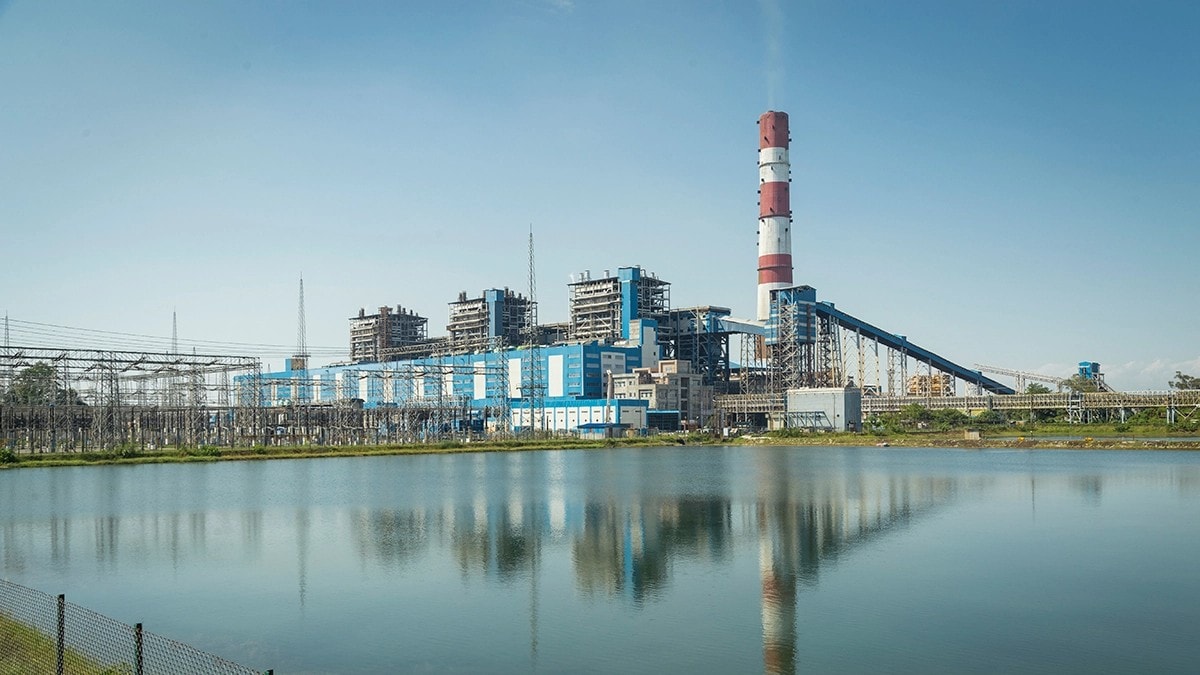
The Delhi High Court recently set aside an arbitral award that directed NTPC Ltd. to pay Rs 1,891 crore to Jindal Infralogistics Ltd., a subsidiary of Jindal SAW Ltd. and part of the OP Jindal group.
The dispute arose out of a seven-year tripartite agreement between NTPC, Jindal ITF, and the Inland Waterways Authority of India. This agreement, signed in 2011, was for the transportation of coal through National Waterway 1 to the Farakka thermal power plant in West Bengal.
The Farakka plant is managed and controlled by NTPC.
Jindal ITF was required to build the necessary infrastructure for the transportation of imported coal. Under the agreement, NTPC entered into various contracts to procure the required coal.
Phase-1 of the infrastructure was required to be constructed within 15 months from the date of the agreement's signing, and Phase-2 was required to be completed within 24 months. However, there was a significant delay of about 400 days in the completion of Phase-1 and an even greater delay of 674 days in the completion of Phase-2.
The fiasco prompted Jindal ITF to initiate arbitration proceedings against NTPC in 2017. Jindal ITF argued that the delay in the construction was attributable to NTPC and therefore sought damages from the public sector undertaking. This, in turn, prompted NTPC to terminate the tripartite agreement.
In 2019, the arbitral tribunal awarded an amount of Rs 1,891 crore to Jindal ITF for wrongful termination of the tripartite agreement.
While setting aside the award, the Delhi High Court noted patent illegality and perversity in the award granted in favour of Jindal ITF. “The award is so perverse, it has to go in totality,” the court said.
It added that the arbitral tribunal failed to show any basis for the quantifications of damages.
“It is a case where apparently, the learned arbitral tribunal has travelled much beyond the contractual terms,” the high court noted.
The high court went on to remark that the arbitral award shocked the conscience of the court and said that the tribunal had an obligation to conduct the arbitral proceedings with appropriate care and skill.
In an exchange filing on Monday, Jindal ITF stated that it will be filing an appeal against the ruling before the division bench of the high court.

-
Navigating Friction And Energy Realities: An Analysis Of Marco Rubio's October Visit To India

Occurring at a critical juncture marked by stalled trade negotiations and escalating geopolitical pressures over global energy supplies, the visit offers a profound window into modern US-India relations.
-
India Exports Capital. Why Not Export Trusteeship?
The big question, then, is whether India can build an institution that global borrowers, investors, banks, and lawyers can trust, even without an Indian connection.
-
France's Economy & Politics Are In Crisis | The Reason Why
Let's look at how the French economy and politics evolved under Nicolas Sarkozy, Franois Hollande and Emmanuel Macron.
-
You May Inherit The Business. You Must Earn Its Credibility.
Succession tests the founder's ability to share authority as much as it tests the next generation's readiness to assume it.
-
Signing Deals Is One Thing; Making Them Work Is Another | The Week In Whys
Sometimes, things don't turn out as planned. Indian companies have lost some bids to rivals, some projects won't produce until 2030.
-
FOMC Wall, PERM Suspension, Hospital Stocks | Talking Points This Week
A PERM suspension would directly affect green-card sponsorship rather than H-1B visas, so the near-term earnings impact could remain relatively limited. The key question is whether this marks a new phase in US scrutiny of Indian IT.
-
Everything, Everywhere, All At Once: Dalal Street's Week To Forget | Joining The Dots
Visa curbs, a Starlink spat and cancer drug caps: what connects this week's shocks for Indian markets
-
India Is Going Abroad For Critical Minerals. But It May Take Years To Pay Off | The Reason Why
Although India's steps are in the right direction, they remain modest compared with India's growing dependence.
-
When Everyone Has AI, What Gives You An Edge?
India's young workforce is entering an uncertain world of work where powerful AI tools are becoming widely accessible. The advantage will belong to those who combine deep expertise with digital fluency, and the distinctly human capabilities that technology cannot manufacture.
-
Wrong Labels, High Pesticide Residues Holding Back Agri Exports | The Reason Why
India needs stronger domestic food-safety and labelling standards, with best practices becoming part of everyday business for farmers, traders and food companies.