Delhi Government Calls Off Odd-Even Scheme After NGT Rules Out Exemptions
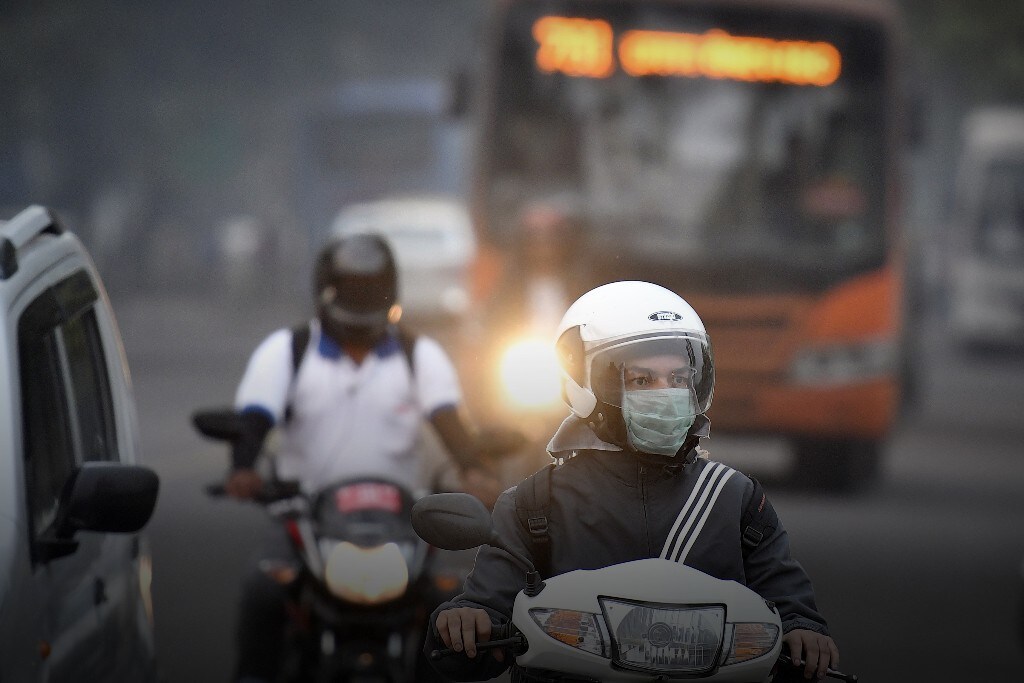
The Delhi government today called off the odd-even scheme, which was to be implemented from Monday, after the National Green Tribunal ordered the withdrawal of exemptions under it.
Transport Minister Kailash Gahlot said the government's decision came in view of the directive by the National Green Tribunal, which ordered the withdrawal of all exemptions, including to two-wheeler riders and woman-only vehicles, under the odd-even scheme.
The government is not ready “to compromise with the safety of women” after the NGT ordered that there should be no exemption to anyone expect emergency vehicles such as ambulances and fire tenders, he added.
We cannot compromise with the safety of women. We cannot take risks. PM2.5 and PM10 levels have also come down.So at the moment we are calling it off. We will file a review application in NGT on Monday.Kailash Gahlot, Delhi Transport Minister
Also Read: Delhi's Air Pollution 26 Times Above Safe Levels
The decision to call-off the scheme was taken at a meeting chaired by Arvind Kejriwal and attended by ministers, including Gahlot, Gopal Rai and Imran Hussain. Senior officials, including the Chief Secretary, were also present in the meeting at Kejriwal's residence.
Earlier this week, the Delhi government had announced implementation of the odd-even scheme from November 13-17, given the high level of smog in the capital. Schools were also shutdown till Sunday.
A landmark IIT-Kanpur study, which covered the period 2013-14, has said that during winters, vehicles are the second largest and the “most consistent” contributing source of pollutants PM10 and PM2.5. In terms of percentage, it comes to around 20-25 percent during winters, according to the report. The contribution of road dust is negligible during the colder months unlike summers when it plays a bigger role.

However, the share of two-wheelers, three-wheelers, four-wheelers, trucks and light commercial vehicles in the total vehicular contribution shows that trucks and two- wheelers are the major polluters.
According to the study, which was commissioned by the Sheila Dikshit government, the share of four-wheelers in the break up of vehicular contribution is 10 per cent each in cases of both PM2.5 and PM10.
On the other hand, the share of trucks and two-wheelers stands at around 46 percent and 33 percent respectively.

-
Signature Play: The Classic Cocktail Is Dead. Or Is It?

Classic cocktails are disappearing from India's cocktail menus. But they're still being ordered, taught to bartenders and borrowed from. So, who's really having the last drink?
-
A New Samvat Wishlist: Inclusive Prosperity And Human Development
India has strengthened its economic foundations through infrastructure, digital access and enterprise. Its next growth chapter must deepen productivity, create better livelihoods and widen participation in prosperity.
-
Love, Sex Aur Dhokha: The Audacious Plot To Spy On Jensen Huang
A Taipei dinner, a Singapore chip buyer and a suspected Chinese asset: inside the alleged spy operation that got close to NVIDIA's Jensen Huang.
-
Ten Things I Learnt This Samvat
Patience can be a trap. Cheap stocks can stay cheap. Leverage can wipe you out. What did Samvat 2082 teach us? Niraj Shah writes on 10 lessons from the year gone by.
-
Talking Points This Week: Tech Nerves, FII Buying, And A Faraway Banking Shock
The global markets are not shining this Diwali. The exception in the large markets is, India.
-
Midterm Rally Lasted A Day. The Hard Reality Of A Divided US May Last Two Years | Opinion
Between a contested AI boom, a debt ceiling that arrives in 2027 and a president with every incentive to act alone, the next two years may prove more volatile than the first day's rally suggests.
-
Blue Wave Will Derail the AI Trade but Won't Dismantle the AI Era | Unhedged Position
The Democrats' sweep of the US Congress will see politics collide with economic forces both over the long and short term.
-
It's Time To Take The GST Council's Bet On Trust Global
Payment records can prove India's services exports, and clear, proportionate rules can bring foreign digital sellers into the tax net.
-
Opinion | India at 38: From Innovation Overperformer to Innovation Powerhouse
India now has 453 VC-backed deep science startups, 18 of them late-stage, after 117 percent growth since 2020. Laurus Labs, at USD 9.3 billion, is the most valuable deep science company in any middle-income economy outside China.









