Data Sharing Not The Purpose Of Deal, Reliance Jio, Facebook Tell CCI
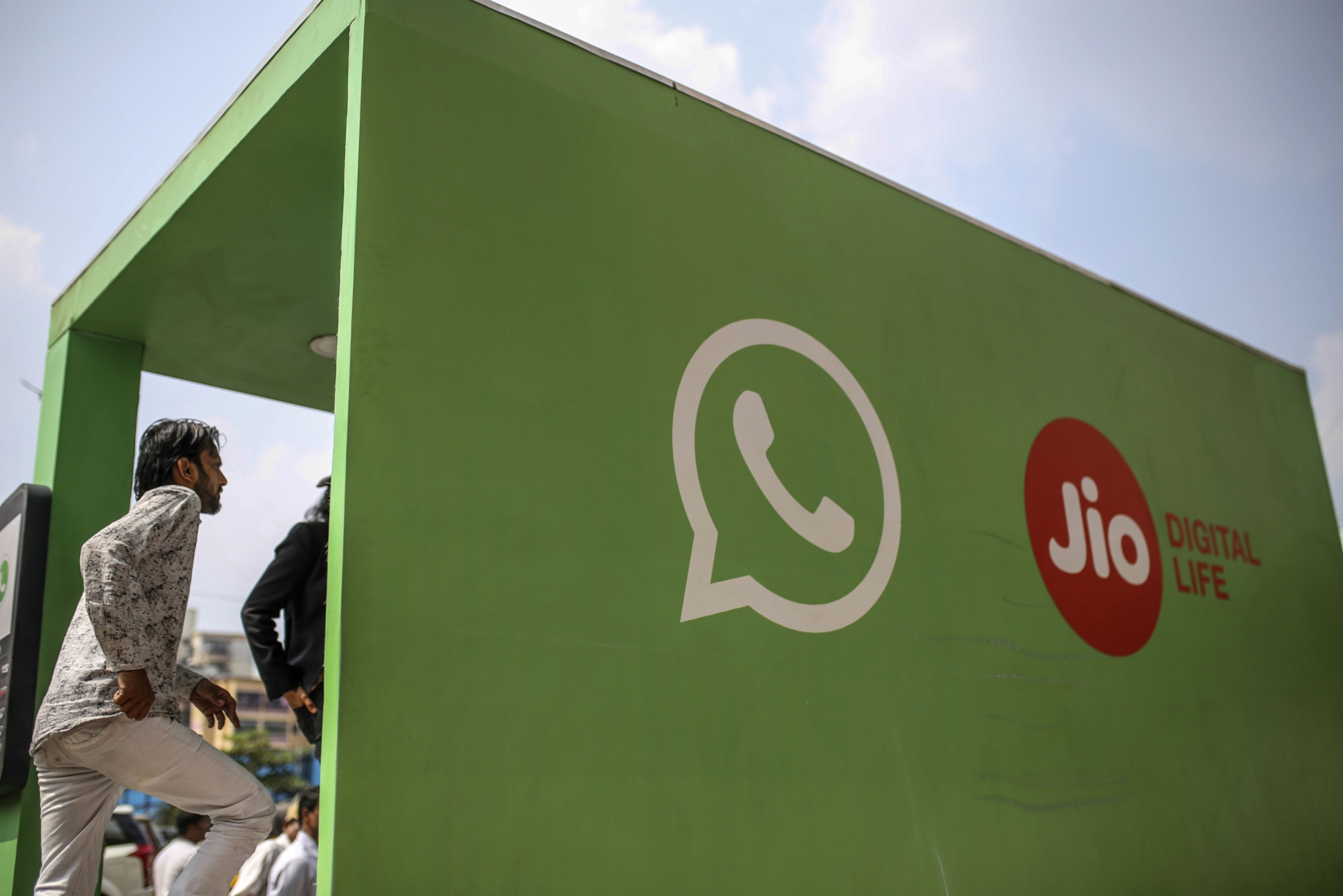
Facebook Inc.'s 9.9% acquisition in Reliance Industries Ltd.'s Jio Platforms Ltd. will not result in either side acquiring ownership of the other's data.
But to implement the commercial arrangement, both parties will share data to facilitate e-commerce transactions on JioMart, according to India's anti-trust regulator's detailed order published this week.
While the Competition Commission of India approved this acquisition by Facebook's wholly owned subsidiary Jaadhu Holdings LLC in June, its order details the issues raised and examined by the regulator. It looked at both the investment agreement and the master services agreement and concluded that the transaction doesn't spark competition concerns.
Specifically, the CCI examined the combined impact of:
WhatsApp-Messenger-JioChat on the market of consumer communication applications.
According to the data shared by the parties, CCI determined their market share to be between 45-55%. But the regulator explained that merely a high market share may not be the apt measure to gauge market position. It pointed to the presence of other free apps like Duo, Hangout, Snapchat, Wechat, imessage, FaceTime, Telegram and Viber to say that Facebook and Jio will have little incentive to engage in any anti-competitive conduct.
Facebook-Instagram-Messenger-Facebook Audience Network-Jio Platforms on advertising services
The transaction documents do not envisage any collaboration between the parties in respect of advertisement business, the CCI said in its order. Additionally, it pointed out, that while advertisement earnings is the main source of revenue for Facebook, it constitutes less than 1% for Jio Platforms. And finally, it observed that Google has a significant presence in the online advertisement space. These factors, according to the regulator, will deter any competition concerns in the online advertising space as a result of this deal.
Potential data sharing between WhatsApp and JioMart
According to the business agreement, WhatsApp will enable its consumers to access JioMart, shop products offered by it and also make payment using WhatsApp Pay, as and when it's launched. Reliance Retail Ltd. and JioMart will enter into this agreement only with WhatsApp for commercial reasons and no other third-party chat services, the CCI order said.
The regulator said deals between entities having access to user data must be examined in light of incentives they may have for pooling their databanks and monetising it. This transaction will give the Facebook Group and Reliance Jio restricted access to each other's data, the CCI pointed out.
Jaadhu Holdings clarified to the regulator that data will be provided only for the purpose of facilitating e-commerce transactions on JioMart. Its use will be limited and proportionate. And any confidential information received from the other party will not be used for their own business purposes.
The CCI accepted their submission that data-sharing is not the purpose of the deal. But it also said that any anti-competitive conduct resulting from any data sharing in the future will be open to scrutiny.
The WhatsApp platform and payment services will be the competitive USP for JioMart and from a competition perspective, it'll become a counterweight to Walmart-Flipkart and Amazon, an anti-trust lawyer told BloombergQuint on the condition of anonymity to speak candidly.
Interestingly, this lawyer said, while WhatsApp hasn't said its offering will be exclusive to JioMart, it'll be too much of a hassle to integrate any other competitors.
For instance, it's unlikely that WhatsApp—the user interface for which is presently very neat- will give its users two windows—one to log in to JioMart and another, let's say, to Amazon; it'll become too cluttered. And would Jio's competitors be comfortable sharing data with WhatsApp—it's unlikely, the lawyer explained.
Also Read: What You Don't Know About Facebook's Investment In Jio Platforms
It's perhaps why the CCI has emphasised that it can look at any competition concerns as a result of data sharing in the future—the regulator didn't need to spell this out since it anyway has the powers but it chose to.
This is clearly an area that the regulator sees as a potential concern, the person quoted above said.

-
'Never Seen This Level Of Negativity': Sandeep Tandon Says The Next Rally May Be Closer Than You Think

Veteran investor Sandeep Tandon says foreign selling is easing, large-caps are due a comeback and mid-caps are crowded, while he turns positive on gold, power and pharma this Diwali.
-
Indians Stay With Family, Not In Hotels | The Reason Why
India still lacks enough clean, reliable and affordable hotels for budget-conscious travellers.
-
The Economic Imperative: Analysing The Material Driving Force Behind India-Canada Strategic Reset
This economic complementarity is further reinforced by deep institutional investment ties and talent mobility, which form the bedrock of the bilateral framework.
-
Medicine Pricing: Where Must Profit Stop?
India must confront excessive margins, hidden incentives and regulatory gaps that threaten the integrity of medicine.
-
Why Amazon And Flipkart Are Struggling To Beat Meesho In India's Smaller Cities
With 274 million users and lowest-cost logistics, Meesho is defending its value commerce crown against giants like Amazon and Flipkart.
-
High US Salaries, No Green Card Certainty: The Financial Calculation Facing Indian H-1B Families
The suspension of PERM processing at eight technology employers does not cancel existing H-1B visas. What it does is force a question many Indian families have been avoiding: is the US salary worth tying your career and family plans to one employer?
-
Swiggy vs Eternal: Food Delivery's Two Rivals Are No Longer In The Same Race
Eternal is building a private AI assistant, dark.ai. Swiggy is still working out how to make Instamart pay, with an operating loss of Rs 895 crore in the July-September quarter while Blinkit stayed profitable.
-
Where You Live Shapes How You Get To Work | The Reason Why
Two-wheelers are the most popular way to get to work in India, accounting for nearly 43% of workplace commutes.
-
Unhedged Position: Can India See An Indonesia-Style Time Correction?
The Nifty is trading below levels it first clocked in 2024. Is there, then, as I have suggested in the headline, potential that the current time correction drags on painfully for the next three-five, even ten years?
-
Navigating Friction And Energy Realities: An Analysis Of Marco Rubio's October Visit To India
Occurring at a critical juncture marked by stalled trade negotiations and escalating geopolitical pressures over global energy supplies, the visit offers a profound window into modern US-India relations.










