Covid-19: Accounting Breather For Real Estate, Aviation, Telecom Companies
The government has revised the Indian accounting standards to reflect the true and accurate impact of Covid-19 on companies' financials and align them with the International Financial Reporting Standards. The revisions will give investors a better picture of the economic impact of the pandemic on a company, experts said.
The Ministry of Corporate Affairs has amended the Indian accounting standards relating to presentation of financial statements, business combinations and changes in accounting estimates, among others. The most significant change relates to Ind AS-116, which sets out the principles for recognition, measurement and disclosures relating to commercial lease in financial statements.
Commercial Lease Accounting: What's Changed?
Covid-19 has caused a storm in the world of commercial leases. Cash-strapped tenants are demanding concessions in the form of suspension, reduction or deferral on their leases. Rentals form a substantial part of the balance sheet for those companies which require large space for manufacturing, warehousing or commercial activities.
Ind AS-116 covers commercial leases, sub leases as well as agreement for right to use an asset. Any material change in lease parameters requires a corresponding change in the balance sheet and accounts of the company.
A concession granted by the landlord results in a ‘lease modification'. This requires necessary adjustments in tenant's accounts as per the applicable accounting standards.
The MCA has now provided a practical way to reflect such changes. Companies are now allowed to not treat any rent concession as a lease modification if the lease fulfills the following conditions:
- The change results in a revised consideration which is lesser or equal to the lease rentals before the change and;
- The reduction only relates to lease payments due on or before June 30 next year.
This accounting relief needs to be accompanied by two additional disclosures.
One, the company must disclose profit or loss arising from the change and state whether the standard has been applied to some or all rent concessions. Two, businesses can retrospectively apply the standard from April 1 last year if their financials have not been finalised.
How Does It Benefit India Inc.?
Deloitte India's Madhu Sudan Kankani said that the amendment has been introduced due to Covid-19 considerations where significant downward revision in contracted rent for many leases may have taken place.
The amendment results in two key benefits for companies, Vishal Divadkar, partner at BDO India LLP, explained.
First, companies who have renegotiated lease agreements and modified lease tenure or payments will not be required to reassess key assumptions like discount rates or re-perform calculations across all renegotiated leases, thus resulting in saving of time and resources, he said.
The second benefit is more significant — the impact on the profit and loss account of a company. Divadkar explained this through an illustration.
Lets say ‘A' — a company in the hospitality sector — negotiates with its landlord that it won't pay rent for April 2020. The rent concession meets the definition of a lease modification. If ‘A' does not apply the revised accounting standard, it will have to remeasure the total revised and remaining consideration using an updated discount rate as on the date of modification. As a result, the ‘right of use' of the asset and lease liability will be adjusted with no impact on profit or loss at the time of modification.
However, applying the revised standard will have a different effect.
The reduction in rent will be accounted for as a variable lease payment and recognized as a credit in the P&L account with a debit to the lease liability, Divadkar said.
A credit in the P&L account reflects income. Thus, the revised standard tries to simplify the accounting and also give the impact of lease concession in financials for the period in which the modification occurred.Vishal Divadkar, partner and leader- assurance BDO India LLP
The accounting relief is only for those concessions which are a direct consequence of the Covid-19 pandemic. As such, every reduction or deferral cannot be treated as a lease concession by companies unless it fulfills this condition.
This will directly benefit companies in the aviation, telecom, retail, healthcare, logistics, warehousing and similar sectors that have significant lease obligations owing to commercial properties and assets taken on hire, Vikas Gupta, partner at Nangia & Co. LLP, told BloombergQuint.
For instance:
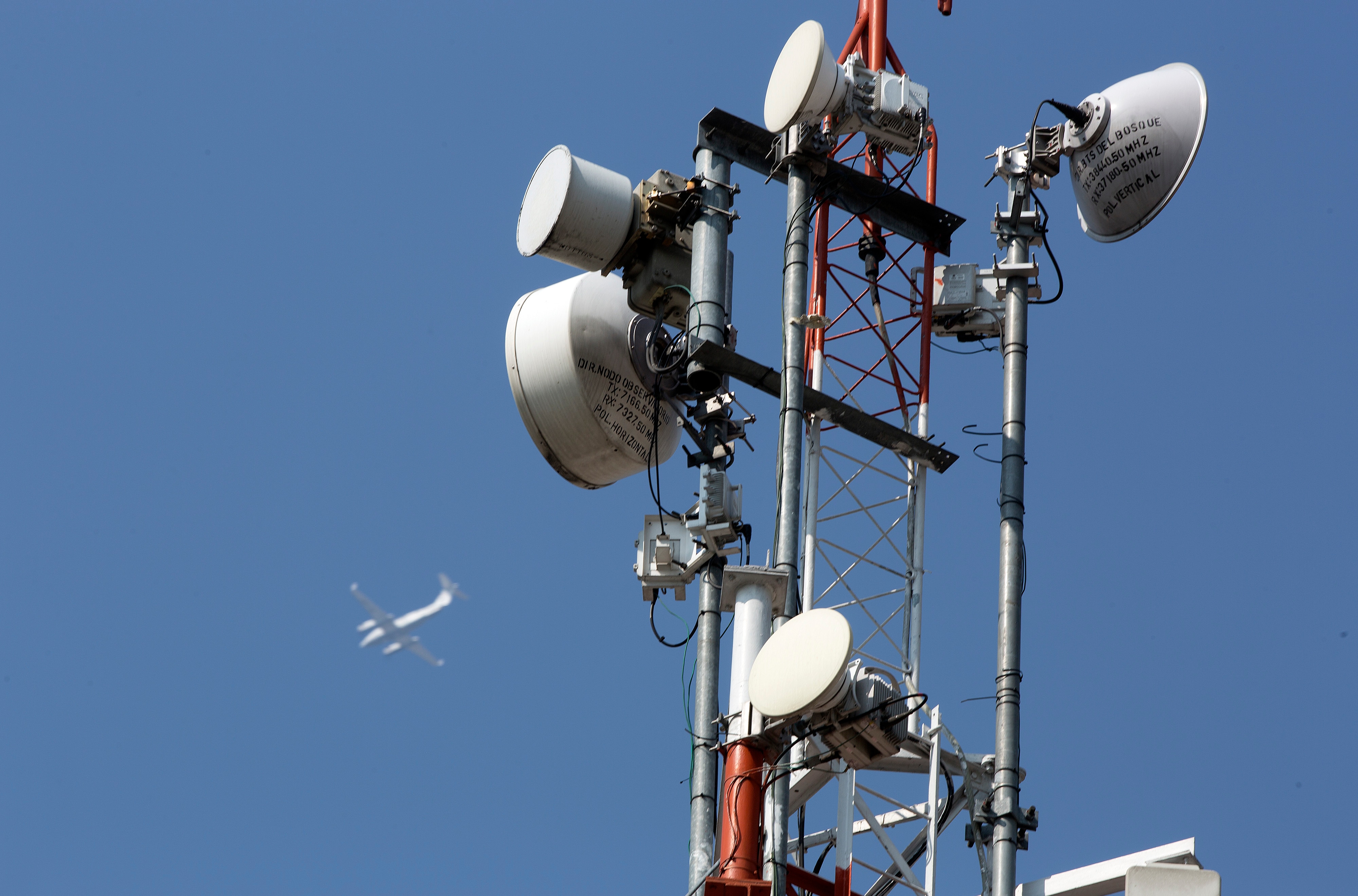
- Telecom companies have large number of leased tower assets.
- Healthcare companies operate hospitals and clinics on lease.
- Retail chains have leased malls and other commercial spaces.
- Warehousing companies lease cold storage and godowns.
All such companies stand to benefit from the change in commercial lease accounting standard.
Companies still have the option to continue with the existing accounting treatments and not apply the amendment.

-
The Economic Imperative: Analysing The Material Driving Force Behind India-Canada Strategic Reset

This economic complementarity is further reinforced by deep institutional investment ties and talent mobility, which form the bedrock of the bilateral framework.
-
Medicine Pricing: Where Must Profit Stop?
India must confront excessive margins, hidden incentives and regulatory gaps that threaten the integrity of medicine.
-
Why Amazon And Flipkart Are Struggling To Beat Meesho In India's Smaller Cities
With 274 million users and lowest-cost logistics, Meesho is defending its value commerce crown against giants like Amazon and Flipkart.
-
High US Salaries, No Green Card Certainty: The Financial Calculation Facing Indian H-1B Families
The suspension of PERM processing at eight technology employers does not cancel existing H-1B visas. What it does is force a question many Indian families have been avoiding: is the US salary worth tying your career and family plans to one employer?
-
Swiggy vs Eternal: Food Delivery's Two Rivals Are No Longer In The Same Race
Eternal is building a private AI assistant, dark.ai. Swiggy is still working out how to make Instamart pay, with an operating loss of Rs 895 crore in the July-September quarter while Blinkit stayed profitable.
-
Where You Live Shapes How You Get To Work | The Reason Why
Two-wheelers are the most popular way to get to work in India, accounting for nearly 43% of workplace commutes.
-
Unhedged Position: Can India See An Indonesia-Style Time Correction?
The Nifty is trading below levels it first clocked in 2024. Is there, then, as I have suggested in the headline, potential that the current time correction drags on painfully for the next three-five, even ten years?
-
Navigating Friction And Energy Realities: An Analysis Of Marco Rubio's October Visit To India
Occurring at a critical juncture marked by stalled trade negotiations and escalating geopolitical pressures over global energy supplies, the visit offers a profound window into modern US-India relations.
-
India Exports Capital. Why Not Export Trusteeship?
The big question, then, is whether India can build an institution that global borrowers, investors, banks, and lawyers can trust, even without an Indian connection.
-
France's Economy & Politics Are In Crisis | The Reason Why
Let's look at how the French economy and politics evolved under Nicolas Sarkozy, Franois Hollande and Emmanuel Macron.










