Former Top Cops Share What Ails Policing In India
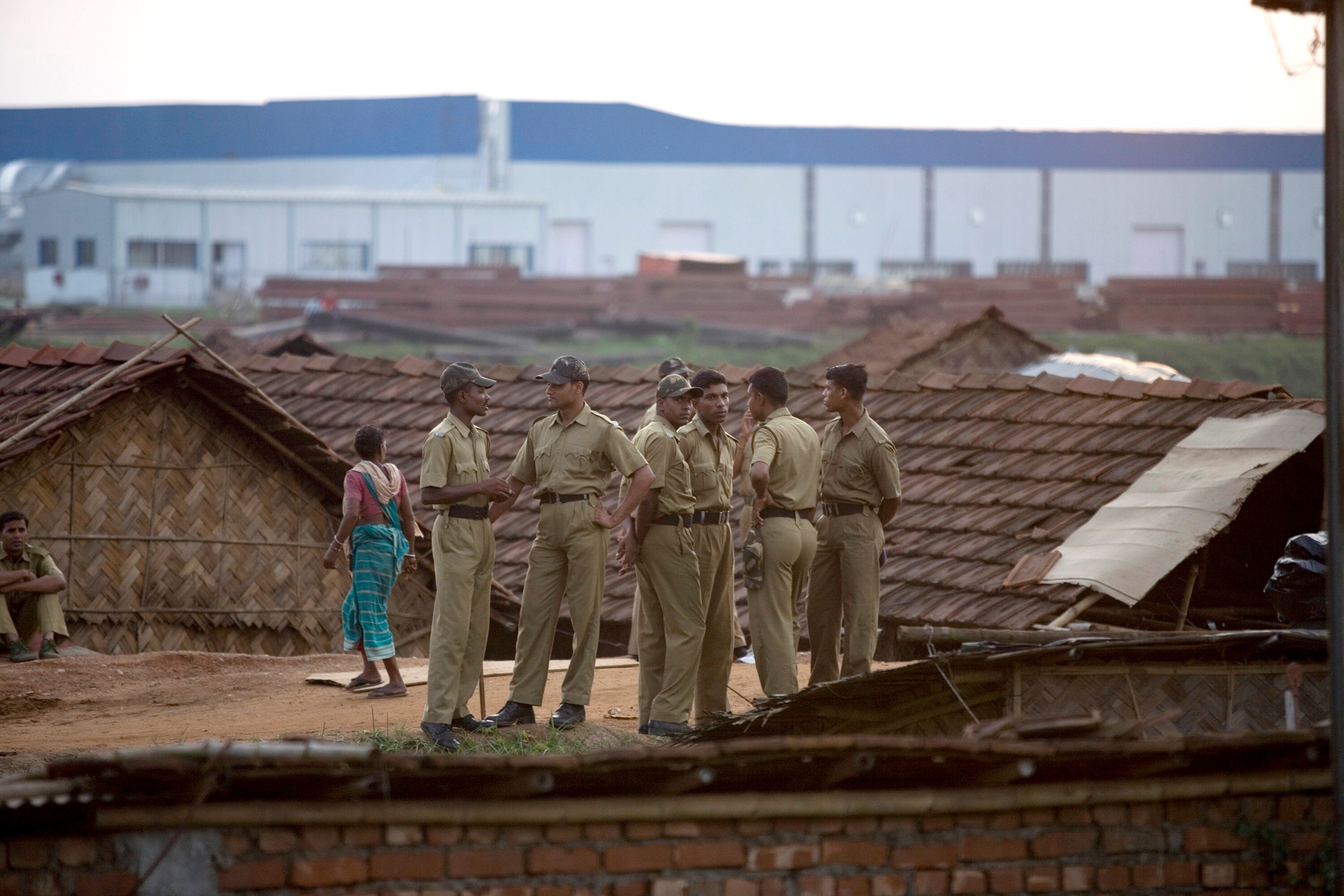
Attempts to reform the way the police function in India have been going on since 1973. And states are yet to implement what the Supreme Court ordered in 2006.
The top court, in a July 3 judgment, again sought to curtail the power state governments exert over police officers. It ordered that the tenure of a director general of police be fixed at two years, and the selection be made from a shortlist by the Union Public Service Commission that is responsible for the recruitment of police officers. The judgment adds that any extension if at all, needs to be for a reasonable tenure.
“I have very little hope the political system will accept the recommendations (made by various Police Reform Commissions),” former Mumbai Police Commissioner MN Singh, best known for leading the investigations in the 1993 Mumbai blasts case, told BloombergQuint. And they, according to him, are not relevant anymore.
The recommendations (made in 1973) are outdated and I would like to throw them in the dustbin. Things have changed a lot.MN Singh, Former Mumbai Police Commissioner
PK Jain, former additional DGP of Mumbai Police, says politicians are unwilling to give up control on the police force. The police system is a state subject under the constitution and politicians in the government often place their preferred officers in top spots, he says, adding that officers are often expected to toe the line of political bosses.
These compromises have become more of a routine rather than an exception.PK Jain, Former Additional DGP, Mumbai Police
Both Singh and Jain shared their own experiences as senior officers where they faced political pressure. Singh says he was under pressure to extend favors during his investigation in the 1993 serial blasts case. He claims he withstood the pressure and faced the consequences by being shunted out to an insignificant posting.
For the next five years I was in the wilderness because the BJP-Shiv Sena government which came to power.MN Singh, Former Police Commissioner, Mumbai Police
The threat of transfers to ‘insignificant' posts, demotions and suspensions is what forces most police officials to toe the political line. “I have faced pressures from ministers just before elections when they want certain goons released from prison,” says Jain. He was asked to hold off on arrests of members of a particular community after the 2006 Malegaon blasts in Maharashtra by the home minister, according to Jain. The late RR Patil of the Nationalist Congress Party was the home minister of Maharashtra at the time.
There was an oral and persistent instruction from the home minister that members from a particular community should not be arrested up to a particular date or time.PK Jain, Former Additional DGP, Mumbai Police
How rampant is the political interference on police force? Here are the personal accounts two retired senior police officers.@TamannaInamdar pic.twitter.com/m4EtbltAOo
July 12, 2018Reforms have been taken up by the Supreme Court at a time when the Indian police suffer from the perception of corruption. “It is impossible for a police officer to be completely honest,” says Singh. He points to poor living conditions, low salaries and a command system that encourages corruption.
Corruption is not typical of the police alone. It's an all pervasive phenomenon.MN Singh, Former Police Commissioner, Mumbai PoliceThe Supreme Court's judgment once again nudges states to loosen their stranglehold on the police force. Singh and Jain are not very optimistic. “Till the time postings and transfers are left to political bosses, there is very little hope for implementation of these reforms,” says Jain.

-
Getting To Work Costs Women More | The Reason Why

It is not just about women paying more than men. It is about women paying much more in cities than in villages.
-
AI Bias In Investing Cannot Be Eliminated, But It Can Be Governed
Framing is a particularly important example as identical financial information presented in terms of gains rather than losses can lead an LLM to reach a different assessment.
-
Joining The Dots | Dark Skies, Steady Diya: Why Hope Holds This Diwali
With war, a weak rupee and foreign outflows weighing on sentiment, policymakers at the NDTV World Summit and market veterans at NDTV Profit Ignite: Diwali Edition offered the same advice: stay invested and filter out the noise.
-
The Curious Case of Equitas Small Finance Bank And A CEO Who Quit For Stock
PN Vasudevan believes persistent investor concerns over a perceived conflict of interest had become a governance overhang on Equitas Small Finance Bank's stock, even as the lender improved profitability and asset quality.
-
Talking Points This Week: AI Cash Burn, A Tiger Comeback And An India That Still Finds Its Own Path
India is not immune to higher oil or tighter global liquidity, yet its earnings base is broader, its domestic policy levers are still available.
-
Foreign Investors Own Half Of HDFC Bank and ICICI Bank. An LTCG Cut Could Matter Most Here
Foreign portfolio investors have US$115 billion parked in HDFC Bank, ICICI Bank. If the government cuts long-term capital gains tax, Jefferies says returning foreign money could land here first.
-
'Never Seen This Level Of Negativity': Sandeep Tandon Says The Next Rally May Be Closer Than You Think
Veteran investor Sandeep Tandon says foreign selling is easing, large-caps are due a comeback and mid-caps are crowded, while he turns positive on gold, power and pharma this Diwali.
-
Indians Stay With Family, Not In Hotels | The Reason Why
India still lacks enough clean, reliable and affordable hotels for budget-conscious travellers.
-
The Economic Imperative: Analysing The Material Driving Force Behind India-Canada Strategic Reset
This economic complementarity is further reinforced by deep institutional investment ties and talent mobility, which form the bedrock of the bilateral framework.
-
Medicine Pricing: Where Must Profit Stop?
India must confront excessive margins, hidden incentives and regulatory gaps that threaten the integrity of medicine.










