Competition Regulator Orders Probe Against Tata Motors
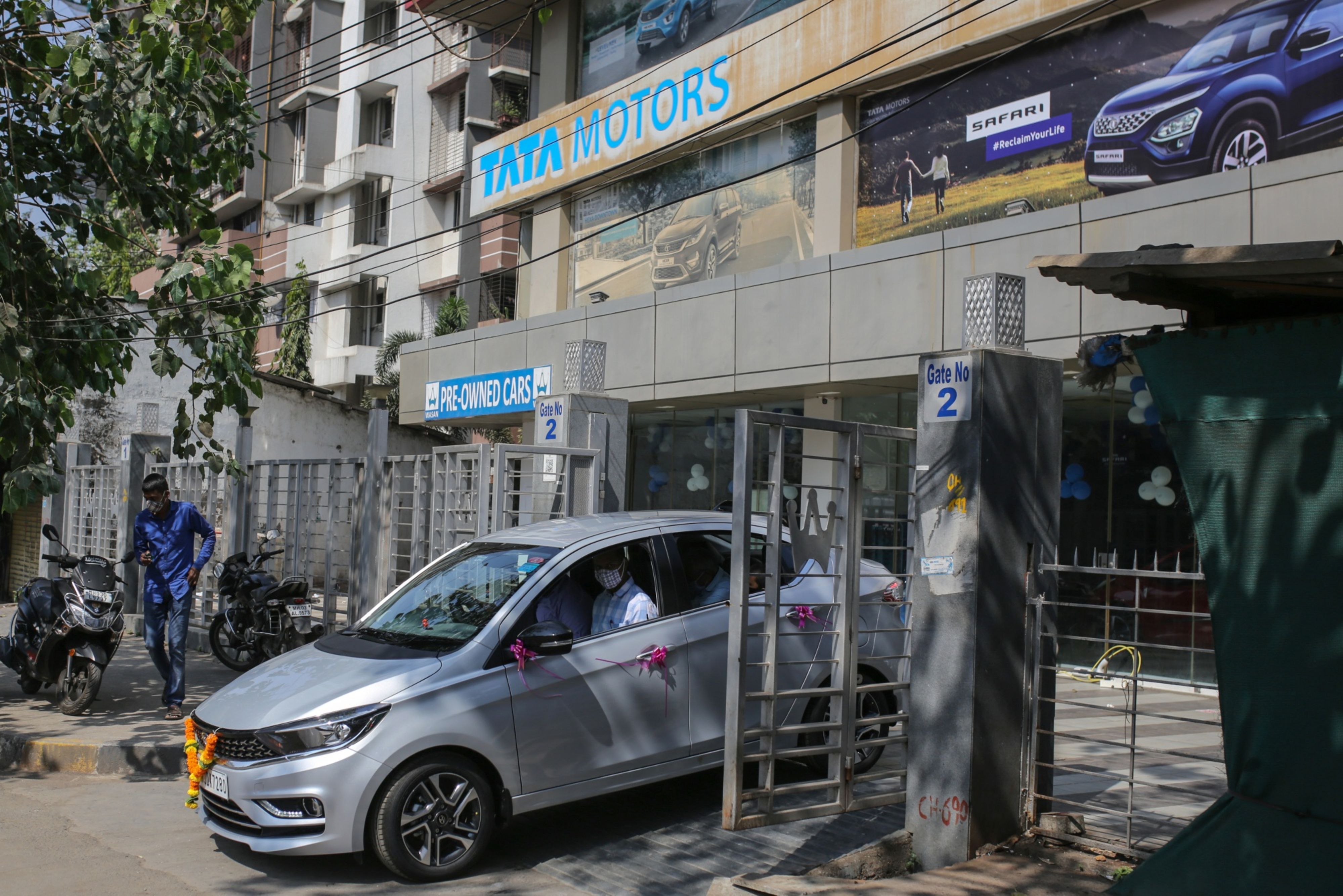
The Competition Commission of India ordered an investigation against Tata Motors Ltd. after finding that its conduct was prima facie abuse of dominance and anti-competitive.
Citing Tata Motors' dealership agreement, the regulator said certain clauses can prevent entry of new players in the market. And could also potentially result in killing competition by hindering entry into the Indian commercial vehicles market.
In an emailed comment to BloombergQuint, Tata Motors said it is currently reviewing the copy of the order available in the public domain and will consult its legal counsel to take necessary steps. "We understand that the CCI has passed a prima facie order and has not made any final or binding observations with regard to the allegations levelled against Tata Motors," a company spokesperson said.
The Complaint
The complainants had alleged that Tata Motors imposed unfair terms and conditions in its dealership agreement for commercial vehicles.
The company coerces its dealers to order the vehicles according to its own whims and fancies—by compelling the dealers to copy-paste the list of vehicles provided by Tata Motors on dealer's letter head and sending it back to the company.
The clauses in the agreement also allowed Tata Motors to restrict and confine the territory of its dealers, the complainants alleged.
Tata Motors Dominant In The Commercial Vehicles Market
The regulator noted that Tata Motors has a market share of 43% in the commercial vehicles segment, which is high compared to competing manufacturers such as Mahindra & Mahindra, Ashok Leyland and VECV-Eicher.
This allows the company to operate independently of the competing forces, the CCI said in its order.
Having concluded Tata Motors' dominance, the CCI examined the allegations of abuse of dominance and anti-competitive clauses in the dealership agreement.
Conditions Prima Facie Unfair: CCI
The regulator, citing the company's email exchanges with its dealer Varanasi Auto Sales Pvt. Ltd., said that on the face of it, the emails suggest that Tata Motors indulged in the practice of coercing the dealers to bill vehicles as per its own needs and requirement.
“The same may result in swarming dealers with a stock of slow-moving vehicles and may further impair the financial health of the dealer … Such a practice appears to be an unfair imposition upon the dealers…” – CCI
The regulator found this conduct to be prima facie an abuse of dominance. Specifically, a violation of the provisions that prohibits dominant entities from imposing unfair and discriminatory conditions in contracts.
The CCI also examined a clause in Tata Motors dealership agreement which says that the dealer shall not start, acquire or indulge in any new business of product or services even if it is not related to the automobile industry.
Pointing to the overarching restriction and the actual implementation of such clauses, the regulator said it has no hesitation in holding that the clause appears to be unduly restrictive and expansive in its coverage and interferes with the freedom of trade.
“The Commission is prima facie of the opinion that such clause is an unfair imposition upon the dealers besides resulting in denial of market access to the dealers to other markets…” - CCI
The matter requires an in-depth investigation, the commission said.
Certain Clauses Can Harm Competition: CCI
The regulator said certain clauses in the dealership agreement could harm competition.
Specifically, the clause that restricts and confines dealers to the allotted territory. The territory, as per the complaint, could be extended or curtailed simply by oral instruction from Tata Motors.
Such a clause “has the potential to create barriers to new entrants in the restricted market besides having the consequence of foreclosing of competition by hindering entry into the market.”
Tata Motors was unable to show any tangible accrual of benefits to consumers or improvements in distribution as a result of this clause, the CCI pointed out. The regulator found this to be a violation of the competition law provision that prohibits exclusive distribution agreements.
The regulator directed its investigation arm to examine the allegations and Tata Motors defence in detail and submit the report within 60 days.

-
One El Nino, India Can Handle. Two Could Break The Granary

India's grain stocks can absorb one bad year, but a second El Nino could drain the buffer in two to three years, economists say.
-
India's Troika Of Good Luck | Joining The Dots
As Jensen Huang's exit drags Nvidia down, a cooling AI trade and resilient earnings have revived investor interest in India. A likely RBI rate hike looms.
-
Talking Points This Week: Leadership Shock At Nvidia, Earnings Strength, And The Fog Over Hormuz
The Anthropic IPO pricing and first trading day, Nvidia's upcoming earnings, and any fresh signals from Iran will set the tone for the following week.
-
Signature Play: The Classic Cocktail Is Dead. Or Is It?
Classic cocktails are disappearing from India's cocktail menus. But they're still being ordered, taught to bartenders and borrowed from. So, who's really having the last drink?
-
A New Samvat Wishlist: Inclusive Prosperity And Human Development
India has strengthened its economic foundations through infrastructure, digital access and enterprise. Its next growth chapter must deepen productivity, create better livelihoods and widen participation in prosperity.
-
Love, Sex Aur Dhokha: The Audacious Plot To Spy On Jensen Huang
A Taipei dinner, a Singapore chip buyer and a suspected Chinese asset: inside the alleged spy operation that got close to NVIDIA's Jensen Huang.
-
Ten Things I Learnt This Samvat
Patience can be a trap. Cheap stocks can stay cheap. Leverage can wipe you out. What did Samvat 2082 teach us? Niraj Shah writes on 10 lessons from the year gone by.
-
Talking Points This Week: Tech Nerves, FII Buying, And A Faraway Banking Shock
The global markets are not shining this Diwali. The exception in the large markets is, India.
-
Midterm Rally Lasted A Day. The Hard Reality Of A Divided US May Last Two Years | Opinion
Between a contested AI boom, a debt ceiling that arrives in 2027 and a president with every incentive to act alone, the next two years may prove more volatile than the first day's rally suggests.
-
Blue Wave Will Derail the AI Trade but Won't Dismantle the AI Era | Unhedged Position
The Democrats' sweep of the US Congress will see politics collide with economic forces both over the long and short term.









