Highlights: Controversial CJI Dipak Misra’s Final Week Slog Over
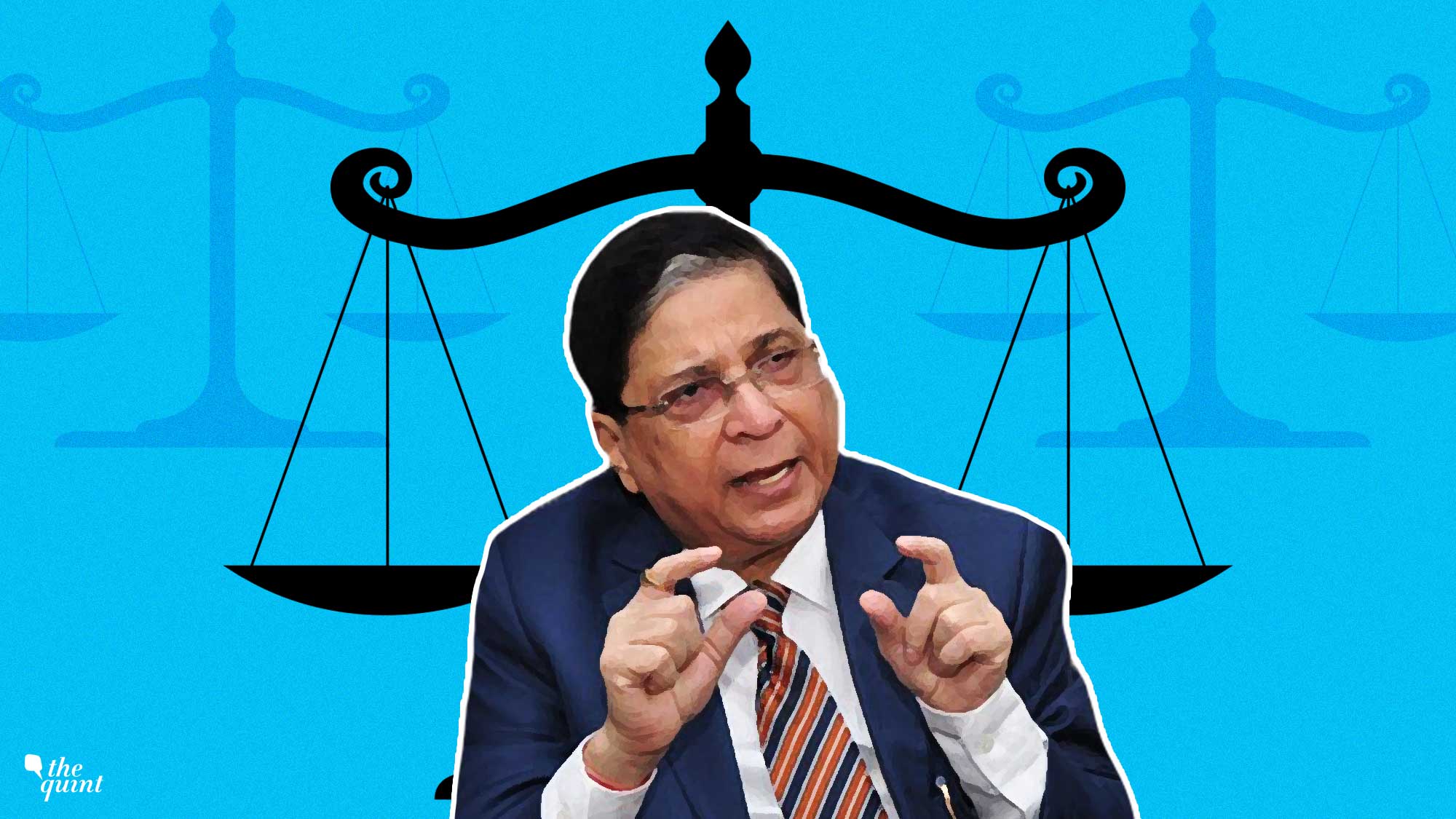
The 45th Chief Justice India, Dipak Misra, rose for the final time in courtroom 1 on Monday, drawing curtains on a 13-month tenure that witnessed unprecedented controversies as well as landmark judgments.
Misra's final week played out like the slog overs of a cricket match with as many as 47 judgments delivered from the Supreme Court. Twenty of those judgments came from the Chief Justice of India's court room, comprising a string of progressive verdicts on individual liberty and gender equality.
On the question of how history will remember him, the wide praise surrounding his judgments on section 377, Sabarimala Temple case and decriminalization of adultery will be tempered by the impeachment motion initiated against him and the unprecedented press conference his colleagues at the Supreme Court held to voice their concerns against Misra's allocation of cases to benches.
Given the unpredictable turns his tenure has taken since he was sworn-in on 28 August, 2017, his last day in court has also ended with a twist. While rising on Monday, Misra thanked the bar saying, “Presently I am responding from my heart. [In the] evening I will respond from my mind”.
Here's a look at the controversies that Justice Misra weathered and the judgments that he was a part of in his final week, ranging from the constitutional validity of Aadhaar to the protection of films against bans. Misra will be succeeded by Justice Ranjan Gogoi as the 46th Chief Justice of India. Gogoi, was among the four Supreme Court Judges who had held the historic press conference earlier in 2018 against Misra's practice of allocation of cases to select benches.
The Slog Overs
25 Sept: Election Candidates Cannot be Disqualified on Framing on Charges
A five-judge bench comprising CJI Dipak Misra ruled that candidates contesting elections cannot be barred on the grounds of a charge sheet being filed against them. The Court, however, provided directions in this matter that a criminal records of candidates must be put out publicly and given wide publicity so that the citizens can make an informed choice about the candidates.
26 Sept: Reservation in Promotions
A five-judge Constitution bench headed by CJI Misra held that the M. Nagaraj judgment of 2006 need not be transferred to a larger bench of seven judges. The Nagaraj case concerns promotions in reservations for SC/ST candidates.
The court held that the direction in the M Nagaraj judgment, which required state governments to collect quantifiable data to ascertain backwardness of a community was bad law. It,however, held that the concept of creamy layer would apply to SC/ST also as far as promotions were concerned.
Sept 26: Constitutional Validity of Aadhaar
Perhaps, the most talked about case, a five-judge bench upheld the Constitutional validity of Aadhaar in a 4:1 majority, with Justice DY Chandrachud as the sole dissenting voice.
In a judgment that ran into 1448 pages and was the second longest running hearing in the Apex Court's history, the Court found Aadhaar to have a “legitimate aim” of delivering welfare schemes and subsidies to the citizens. It also found the passage of the Aadhaar Bill as a money bill to be valid.
However, the judgment struck down several sections of the Act as unconstitutional and read down other parts. Most importantly, it struck down the mandatory linking of Aadhaar numbers with phone and bank connections as well as with educational institutions like the UGC, NEET and CBSE.
It also read down section 57 of the Act that deals with access to Aadhaar by private companies. The majority judgment, however, did not read down section 7, which makes the availability of welfare and subsidies contingent on the production of Aadhaar. The court kept Aadhaar as necessity for availing only government benefits such as a ration and LPG connections.
26 Sept: Live Streaming of Cases
A three-judge bench allowed for the live streaming of cases of Constitutional importance, thus bringing the hallowed portals of the Supreme Court into the drawing rooms of citizens.
In ruling so, the Court also provided directions to the Centre about framing of guidelines to implement this project. The decision is expected to bring greater transparency in the functioning of the judiciary and comes at a time when the accountability of the institution has been questioned since the press conference called by four senior Supreme Court judges.
27 Sept: Adultery Decriminilised
A five-judge bench comprising of CJI Misra, in an unanimous judgment, emphatically struck down section 497 of the Indian Penal Code which criminalised adultery.
In four separate but concurring opinions the Court said that husband is not the master of the wife and that while adultery can be grounds for divorce, it cannot be made a criminal offence.
“Section 497 IPC which deals with Adultery is absolutely manifestly arbitrary,” said Chief Justice of India, Dipak Misra, while reading the verdict. The CJI also said that mere adultery can't be a crime, unless it attracts the scope of Section 306 (abetment to suicide) of the IPC.
27 Sept: Ram Mandir – Babri Case
Is a Mosque essential to offering prayers for Muslims? In a 2:1 majority, a three-judge bench of the Supreme Court comprising CJI Misra, ruled that this question needs to be referred to a larger bench.
The Supreme Court, however, referred the case to a three-judge bench to be set up that will begin hearing from October 29.
In its majority opinion, the Court said that the observations in the Ismail Farooqi v Union of India case of 1994 were made in the context of land acquisition and were not relevant to hearing appeals against the Allahabad High Court verdict.
27 Sept: Entry of Women in Sabarimala Temple
In what has emerged as a landmark ruling, a 4:1 majority of the Supreme Court threw open the doors of Sabarimala Temple in Kerala to women aged 10 to 50.
In striking down Rule 3(b) of Kerala Hindu Places of Public Worship (Authorisation of Entry) Rules, 1965, the bench, headed by CJI Misra, termed the prohibition of women of menstruating age from entering the temple to be inviolation of fundamental rights and Constitutional guarantees.
Chief Justice Dipak Misra reading out the judgment, also on behalf of Justice A.M. Khanwilkar, said that subversion of women's rights under the garb of physiological phenomenon cannot be allowed.
"All devotees are equal and there cannot be any discrimination on the basis of gender," Misra said.
28 Sept: Bhima – Koregaon Activists Arrest Case
A majority judgment of a three-judge bench comprising of CJI Misra, refused to refer the case concerning the arrest of five activists in relation to the violence in Bhima - Koregaon in January, 2018, to a Special Investigative Team.
The judgment, authored by Justice A.M. Khanwilkar, written on behalf of the CJI and himself ruled that the activists in the Bhima Koregaon case will continue being under house arrest for four more weeks. The SC pronounced a 2:1 verdict on a plea by historian Romila Thapar and others seeking the immediate release of the five human rights activists.
The five activists – Varavara Rao, Arun Ferreira, Vernon Gonsalves, Sudha Bharadwaj and Gautam Navlakha are under arrest since 29 August.

-
The Curious Case of Equitas Small Finance Bank And A CEO Who Quit For Stock

PN Vasudevan believes persistent investor concerns over a perceived conflict of interest had become a governance overhang on Equitas Small Finance Bank's stock, even as the lender improved profitability and asset quality.
-
Talking Points This Week: AI Cash Burn, A Tiger Comeback And An India That Still Finds Its Own Path
India is not immune to higher oil or tighter global liquidity, yet its earnings base is broader, its domestic policy levers are still available.
-
Foreign Investors Own Half Of HDFC Bank and ICICI Bank. An LTCG Cut Could Matter Most Here
Foreign portfolio investors have US$115 billion parked in HDFC Bank, ICICI Bank. If the government cuts long-term capital gains tax, Jefferies says returning foreign money could land here first.
-
'Never Seen This Level Of Negativity': Sandeep Tandon Says The Next Rally May Be Closer Than You Think
Veteran investor Sandeep Tandon says foreign selling is easing, large-caps are due a comeback and mid-caps are crowded, while he turns positive on gold, power and pharma this Diwali.
-
Indians Stay With Family, Not In Hotels | The Reason Why
India still lacks enough clean, reliable and affordable hotels for budget-conscious travellers.
-
The Economic Imperative: Analysing The Material Driving Force Behind India-Canada Strategic Reset
This economic complementarity is further reinforced by deep institutional investment ties and talent mobility, which form the bedrock of the bilateral framework.
-
Medicine Pricing: Where Must Profit Stop?
India must confront excessive margins, hidden incentives and regulatory gaps that threaten the integrity of medicine.
-
Why Amazon And Flipkart Are Struggling To Beat Meesho In India's Smaller Cities
With 274 million users and lowest-cost logistics, Meesho is defending its value commerce crown against giants like Amazon and Flipkart.
-
High US Salaries, No Green Card Certainty: The Financial Calculation Facing Indian H-1B Families
The suspension of PERM processing at eight technology employers does not cancel existing H-1B visas. What it does is force a question many Indian families have been avoiding: is the US salary worth tying your career and family plans to one employer?
-
Swiggy vs Eternal: Food Delivery's Two Rivals Are No Longer In The Same Race
Eternal is building a private AI assistant, dark.ai. Swiggy is still working out how to make Instamart pay, with an operating loss of Rs 895 crore in the July-September quarter while Blinkit stayed profitable.










