Security Law Sends Hong Kong Residents Dashing for the Exit
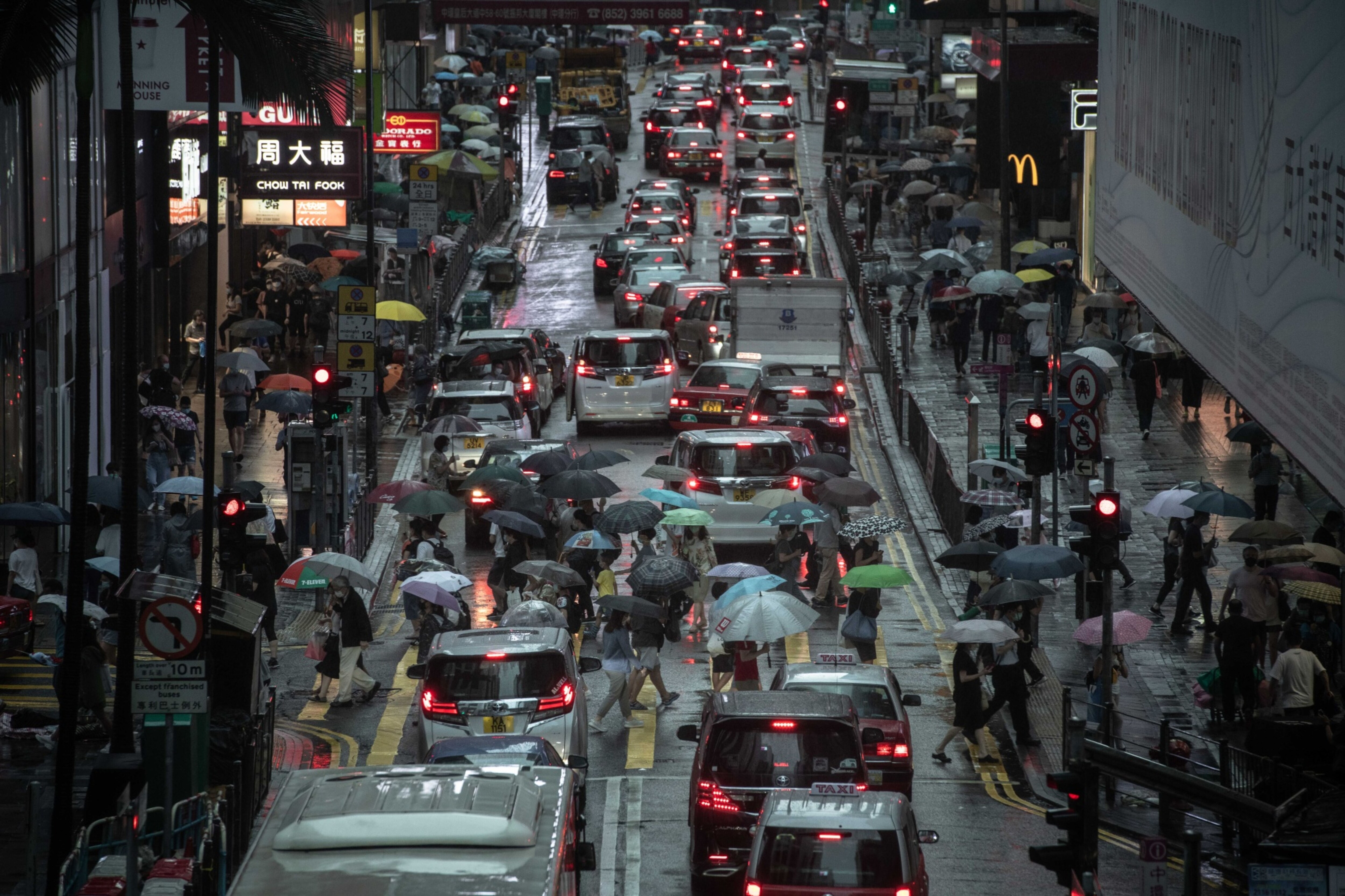
(Bloomberg) -- Phyllis Lam has lived in Hong Kong for 42 years. It's where she was born, went to school, met her husband and planned to raise her two children.
But like a growing number of Hongkongers disillusioned by China's tightening grip on the city, Lam now feels she has little choice but to leave. “I have no confidence in Hong Kong's future,” she said in an interview. “I have two young kids, so I have to plan for them.”
For many in Hong Kong who've long feared an erosion of their freedoms under Chinese rule, last week marked a tipping point. Spurred to action by Beijing's decision to impose controversial national security legislation on the former British colony, residents have been flooding migration consultants with questions on how to move their families overseas.
“We get an inquiry every 2 to 3 minutes,” said Gary Leung, chief executive officer of Global Home, a property and migration consultancy. The firm's client requests have swelled to about 20 times normal levels, with Taiwan and Europe among the most asked-about destinations, Leung said.
With many countries still enforcing travel restrictions to fight the coronavirus, it's too early to gauge how many Hongkongers will ultimately move out. But consultants say the odds of an eventual exodus are growing as lawmakers from the U.K., the U.S. and Taiwan signal they may ease entry requirements for some Hong Kong citizens.
| Read more: |
|---|
| U.K. May Offer Citizenship Path to 3 Million Hong Kong Residents |
| Taiwan to Announce Plan to Assist Hong Kong Citizens |
| Pompeo Says U.S. Now Has No Basis to Treat Hong Kong Specially |
| Capital Flight Fears Grow Alongside Hong Kong Political Turmoil |
A wave of emigration could erode Hong Kong's attractiveness to multinational companies, hundreds of which rely on local talent to drive their growth across the Greater China region and the rest of Asia. The American Chamber of Commerce in Hong Kong has warned that retaining top-tier employees in the city may become more difficult.
Signs that more Hongkongers are planning to leave have been increasing since last year, when a now-scrapped extradition bill sparked mass protests and violent clashes with police in the heart of the city's central business district.
While Hong Kong doesn't publish high-frequency immigration statistics, applications for good citizenship cards -- which certify a person doesn't have a criminal record -- serve as a proxy because they're often needed to apply for foreign visas. The monthly number of applications averaged 2,935 from June 2019 to April 2020, a 50% jump versus 2018.
It's not the first time the city has faced the prospect of a brain drain. An estimated 300,000 people left between 1990 and 1994, fearing Hong Kong's handover to China from Britain would destroy the city's civil liberties and capitalist system. Yet predictions of Hong Kong's demise ultimately proved unfounded, with its status as Asia's premier financial hub only becoming more entrenched over the following two decades.
Hong Kong Chief Executive Carrie Lam said on Friday that the security law will only target “an extremely small minority of illegal and criminal acts” and that the “life and property, basic rights and freedoms of the overwhelming majority of citizens will be protected.” China's central government has made similar remarks in the past week.
Jolie Lo, an administrative executive, is among Hongkongers who plan to stay. She wants to be close to her aging parents and is wary of the challenges she might face overseas.
“I may encounter other problems such as racial discrimination,” said Lo, who has studied in New York and worked in Beijing. “I won't say I regret my decision to come back to Hong Kong. Since we are here now, we should just try our best to preserve our homes.”
Read more: What Are the New Laws China Is Pushing for Hong Kong?
Others see emigration as their best option. David Hui, managing director at Centaline Immigration Consultants (HK) Ltd., said his firm is now receiving as many as 100 inquiries a day from Hongkongers interested in moving to countries including Australia, the U.K. and Canada. Taiwan, Malaysia and Portugal are also becoming increasingly popular. “The national security law is definitely a push factor,” Hui said.
Critics of China's Communist Party worry that it will use the law to crack down on dissent and undermine the “one country, two systems” principle that has kept Hong Kong's judiciary separate from the mainland's since the 1997 handover. In a survey of 9,477 pro-democracy supporters last week by the Hong Kong Public Opinion Program, 96% said they opposed the law. Among those who said they weren't pro-democracy, 29% opposed it and 62% supported it.
“Now I fear censorship could be even more serious in Hong Kong,” said Ming, 30, who works in the art world and declined to give her surname, citing the sensitivity of the subject. “I don't see a future here anymore, so it's time to look for options.”
Phyllis Lam and her husband, who are both holders of British National (Overseas) passports, haven't decided yet where they'll move. Canada is high on the list, but their top choice is the U.K. The country's Home Office has said it may open a path to citizenship for almost 3 million Hong Kong residents who have BN(O) status.
“In any case, we will send the kids away,” Lam said. “We don't think the current environment in Hong Kong is good for them.”
©2020 Bloomberg L.P.

-
Signature Play: The Classic Cocktail Is Dead. Or Is It?

Classic cocktails are disappearing from India's cocktail menus. But they're still being ordered, taught to bartenders and borrowed from. So, who's really having the last drink?
-
A New Samvat Wishlist: Inclusive Prosperity And Human Development
India has strengthened its economic foundations through infrastructure, digital access and enterprise. Its next growth chapter must deepen productivity, create better livelihoods and widen participation in prosperity.
-
Love, Sex Aur Dhokha: The Audacious Plot To Spy On Jensen Huang
A Taipei dinner, a Singapore chip buyer and a suspected Chinese asset: inside the alleged spy operation that got close to NVIDIA's Jensen Huang.
-
Ten Things I Learnt This Samvat
Patience can be a trap. Cheap stocks can stay cheap. Leverage can wipe you out. What did Samvat 2082 teach us? Niraj Shah writes on 10 lessons from the year gone by.
-
Talking Points This Week: Tech Nerves, FII Buying, And A Faraway Banking Shock
The global markets are not shining this Diwali. The exception in the large markets is, India.
-
Midterm Rally Lasted A Day. The Hard Reality Of A Divided US May Last Two Years | Opinion
Between a contested AI boom, a debt ceiling that arrives in 2027 and a president with every incentive to act alone, the next two years may prove more volatile than the first day's rally suggests.
-
Blue Wave Will Derail the AI Trade but Won't Dismantle the AI Era | Unhedged Position
The Democrats' sweep of the US Congress will see politics collide with economic forces both over the long and short term.
-
It's Time To Take The GST Council's Bet On Trust Global
Payment records can prove India's services exports, and clear, proportionate rules can bring foreign digital sellers into the tax net.
-
Opinion | India at 38: From Innovation Overperformer to Innovation Powerhouse
India now has 453 VC-backed deep science startups, 18 of them late-stage, after 117 percent growth since 2020. Laurus Labs, at USD 9.3 billion, is the most valuable deep science company in any middle-income economy outside China.









