China, Russia Deepen Nuclear Concord That Has Pentagon On Edge
(Bloomberg) -- China and Russia are deepening cooperation on a key atomic technology that has Pentagon planners on edge because of its potential to upset the global balance of nuclear weapons.
Russian President Vladimir Putin and Chinese counterpart Xi Jinping announced a long-term deal to continue developing so-called fast-neutron reactors. The announcement came among a raft of agreements presented late on Tuesday following Xi's three-day visit to Moscow, which also touched on topics from energy to news broadcasting.
In December, the Kremlin-controlled nuclear giant Rosatom Corp. finished transferring 25 tons of highly-enriched uranium to China's first fast reactor, the CFR-600 — a facility which analysts say could produce fuel for some 50 nuclear warheads a year.
Congress has been pushing the White House to crack down on what it views as “dangerous” ties between Rosatom and the China National Nuclear Corp.
“Russia and the People's Republic of China's nuclear cooperation goes much farther than just civilian projects,” wrote the chairmen of Congress's armed services, foreign affairs and intelligence committees last week in a letter to National Security Advisor Jake Sullivan.

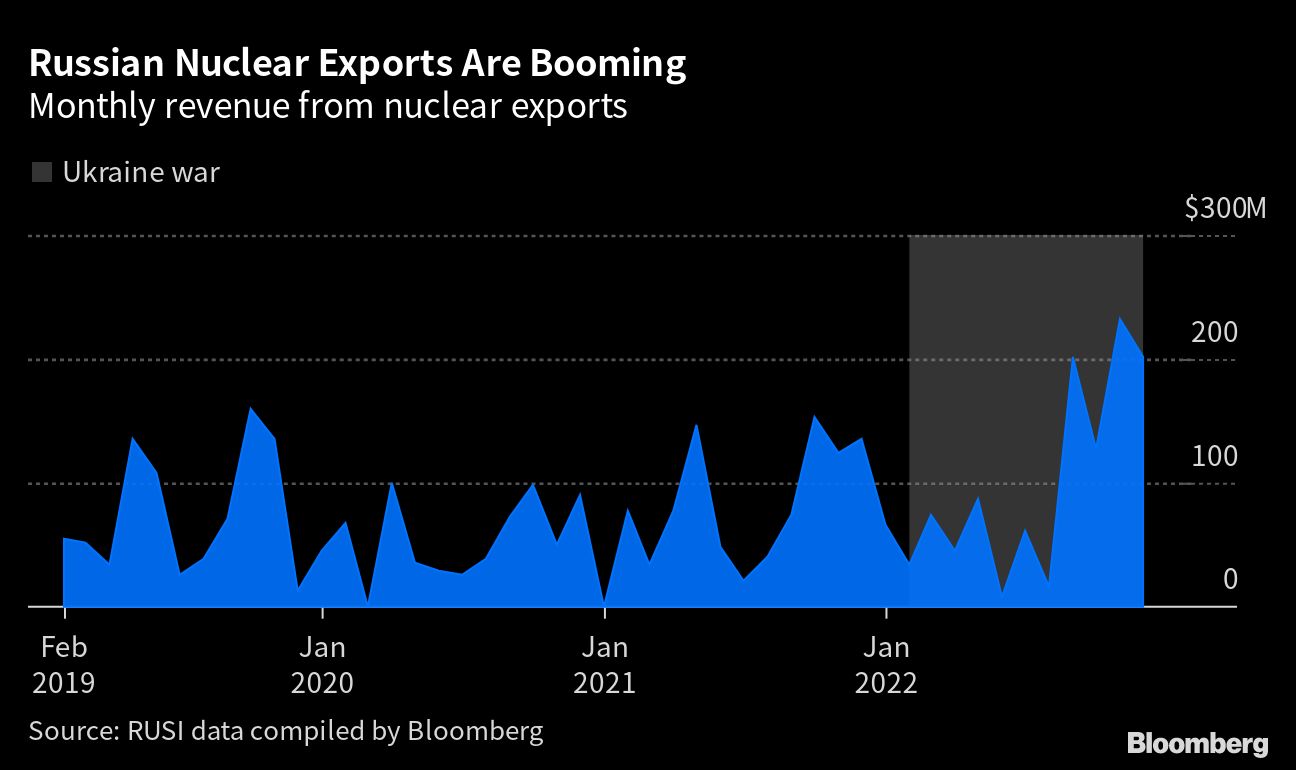
Despite sanctions over its invasion of Ukraine, Russia's nuclear exports have surged over the last year, boosting the Kremlin's revenue and cementing its influence over a new generation of global buyers. It's the world's biggest supplier of nuclear reactors and fuel. China's fast-reactors, which use liquid metal instead of water to moderate operation, are based on Russian technology.
US Department of Defense officials have repeatedly raised alarm over China's nuclear-weapons ambitions since issuing a 2021 report to Congress. Military planners assess that the CFR-600 is poised to play a critical role in raising China's stockpile of warheads to 1,500 by 2035 from an estimated 400 today.
China has repeatedly rejected US concerns that the CFR-600 will be used to increase its nuclear-weapons stockpile. The unit is connected to the power grid and is part of the country's ambitious $440 billion program to overtake the US as the world's top nuclear-energy generator by the middle of next decade.
More stories like this are available on bloomberg.com
©2023 Bloomberg L.P.

-
Signature Play: The Classic Cocktail Is Dead. Or Is It?

Classic cocktails are disappearing from India's cocktail menus. But they're still being ordered, taught to bartenders and borrowed from. So, who's really having the last drink?
-
A New Samvat Wishlist: Inclusive Prosperity And Human Development
India has strengthened its economic foundations through infrastructure, digital access and enterprise. Its next growth chapter must deepen productivity, create better livelihoods and widen participation in prosperity.
-
Love, Sex Aur Dhokha: The Audacious Plot To Spy On Jensen Huang
A Taipei dinner, a Singapore chip buyer and a suspected Chinese asset: inside the alleged spy operation that got close to NVIDIA's Jensen Huang.
-
Ten Things I Learnt This Samvat
Patience can be a trap. Cheap stocks can stay cheap. Leverage can wipe you out. What did Samvat 2082 teach us? Niraj Shah writes on 10 lessons from the year gone by.
-
Talking Points This Week: Tech Nerves, FII Buying, And A Faraway Banking Shock
The global markets are not shining this Diwali. The exception in the large markets is, India.
-
Midterm Rally Lasted A Day. The Hard Reality Of A Divided US May Last Two Years | Opinion
Between a contested AI boom, a debt ceiling that arrives in 2027 and a president with every incentive to act alone, the next two years may prove more volatile than the first day's rally suggests.
-
Blue Wave Will Derail the AI Trade but Won't Dismantle the AI Era | Unhedged Position
The Democrats' sweep of the US Congress will see politics collide with economic forces both over the long and short term.
-
It's Time To Take The GST Council's Bet On Trust Global
Payment records can prove India's services exports, and clear, proportionate rules can bring foreign digital sellers into the tax net.
-
Opinion | India at 38: From Innovation Overperformer to Innovation Powerhouse
India now has 453 VC-backed deep science startups, 18 of them late-stage, after 117 percent growth since 2020. Laurus Labs, at USD 9.3 billion, is the most valuable deep science company in any middle-income economy outside China.









