China Trumpets Victory Over Covid Again in Front-Page Editorial
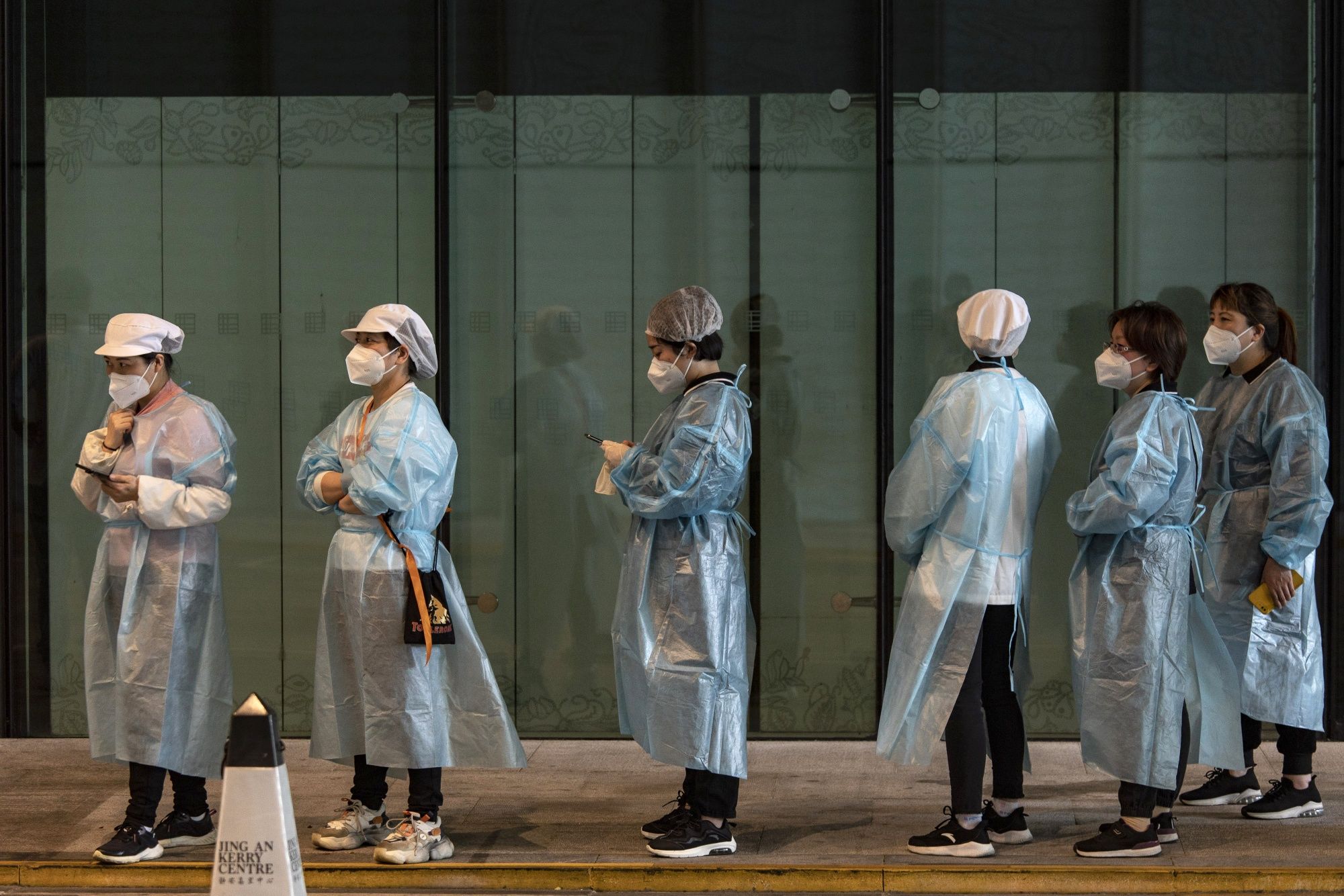
(Bloomberg) -- China declared victory over Shanghai's coronavirus outbreak as the nation reported its fewest new cases in more than three months, vindicating Covid Zero in the eyes of Beijing despite the policy's rising economic and social toll.
A report on the front page of the People's Daily newspaper Thursday headlined “Great Achievements Have Been Made in the Defense of Shanghai” claimed victory in the fight against the virus in the city of 25 million. In a separate commentary, the chief mouthpiece of the Communist Party said it proved yet again that Covid Zero is the strategy most suited for China because of the country's aging population, relatively low vaccination rate among the elderly and children, and inadequate medical resources.
New infections fell to 61 across China on Wednesday, from 68 on Tuesday and the lowest since Feb. 17. It's a marked turnaround from the tens of thousands of cases reported daily in the first half of April, when Shanghai's outbreak appeared to be spiraling out of authorities' control, triggering a city-wide lockdown that disrupted business and upended people's lives.

The city reported just 13 cases for Wednesday, when movement restrictions were eased to allow about 90% of Shanghai's residents to move about freely for the first time in more than two months.
Hit of Shanghai Lockdown Endures as Business Surveys the Damage
The dramatic drop in nationwide infections from a peak of almost 30,000 in mid-April will be seen as justification President Xi Jinping is charting the right course. China's leader has made zero tolerance for Covid a cornerstone of his rule as he seeks an unprecedented third term at the Party congress due later this year. The original epicenter of Covid, China has trumpeted what it sees as its triumph over the pathogen, with its zealous approach leading to one of the lowest death tolls in the world, especially compared to the U.S. with its more than 1 million fatalities.
But keeping the virus out -- especially in the face of more contagious and immune-evasive variants -- is exacting a hefty price, with the country shut off from the rest of the world and most economists predicting the country will fail to meet its economic growth target for this year. Factories have been shuttered for months in some cases, and supply chains snarled as China deploys a playbook of movement restrictions, mass testing and mandatory isolation of all Covid cases and their close contacts.
The capital, Beijing, only averted a lockdown through aggressive curbs such as asking its 22 million residents to work from home and get tested every day.
The outbreak there is now effectively under control, municipal officials said Wednesday, though the risk of a flareup remains. Authorities are mulling measures to stimulate consumer spending after shopping malls and other entertainment venues were shut last month and only recently started to reopen with capacity limits. Beijing reported 14 cases for Wednesday.
But while Covid seems to be contained for now, there are signs China is girding for the next incursion.
To keep the virus at bay, a network of tens of thousands of testing booths is being set up across China's largest and most economically vital cities, with the goal of having residents always just a 15 minute walk away from a swabbing point. The infrastructure will allow cities like Beijing, Shanghai and tech hub Shenzhen to require tests as often as every 48 hours, with negative results needed to get on the subway, go to a tourist attraction, or even enter a store.
And with China committed to its Covid Zero policy -- at least through to the Communist Party congress -- the possibility that more lockdowns will be swiftly reimposed in the event of any further virus outbreaks still hangs over the nation.
(Updates with more detail on case numbers from third paragraph.)
More stories like this are available on bloomberg.com
©2022 Bloomberg L.P.

-
Talking Points This Week: Leadership Shock At Nvidia, Earnings Strength, And The Fog Over Hormuz

The Anthropic IPO pricing and first trading day, Nvidia's upcoming earnings, and any fresh signals from Iran will set the tone for the following week.
-
Signature Play: The Classic Cocktail Is Dead. Or Is It?
Classic cocktails are disappearing from India's cocktail menus. But they're still being ordered, taught to bartenders and borrowed from. So, who's really having the last drink?
-
A New Samvat Wishlist: Inclusive Prosperity And Human Development
India has strengthened its economic foundations through infrastructure, digital access and enterprise. Its next growth chapter must deepen productivity, create better livelihoods and widen participation in prosperity.
-
Love, Sex Aur Dhokha: The Audacious Plot To Spy On Jensen Huang
A Taipei dinner, a Singapore chip buyer and a suspected Chinese asset: inside the alleged spy operation that got close to NVIDIA's Jensen Huang.
-
Ten Things I Learnt This Samvat
Patience can be a trap. Cheap stocks can stay cheap. Leverage can wipe you out. What did Samvat 2082 teach us? Niraj Shah writes on 10 lessons from the year gone by.
-
Talking Points This Week: Tech Nerves, FII Buying, And A Faraway Banking Shock
The global markets are not shining this Diwali. The exception in the large markets is, India.
-
Midterm Rally Lasted A Day. The Hard Reality Of A Divided US May Last Two Years | Opinion
Between a contested AI boom, a debt ceiling that arrives in 2027 and a president with every incentive to act alone, the next two years may prove more volatile than the first day's rally suggests.
-
Blue Wave Will Derail the AI Trade but Won't Dismantle the AI Era | Unhedged Position
The Democrats' sweep of the US Congress will see politics collide with economic forces both over the long and short term.
-
It's Time To Take The GST Council's Bet On Trust Global
Payment records can prove India's services exports, and clear, proportionate rules can bring foreign digital sellers into the tax net.
-
Opinion | India at 38: From Innovation Overperformer to Innovation Powerhouse
India now has 453 VC-backed deep science startups, 18 of them late-stage, after 117 percent growth since 2020. Laurus Labs, at USD 9.3 billion, is the most valuable deep science company in any middle-income economy outside China.









