Chief Justice Ramana To Journalists: News Mixed With Views Is A Dangerous Cocktail
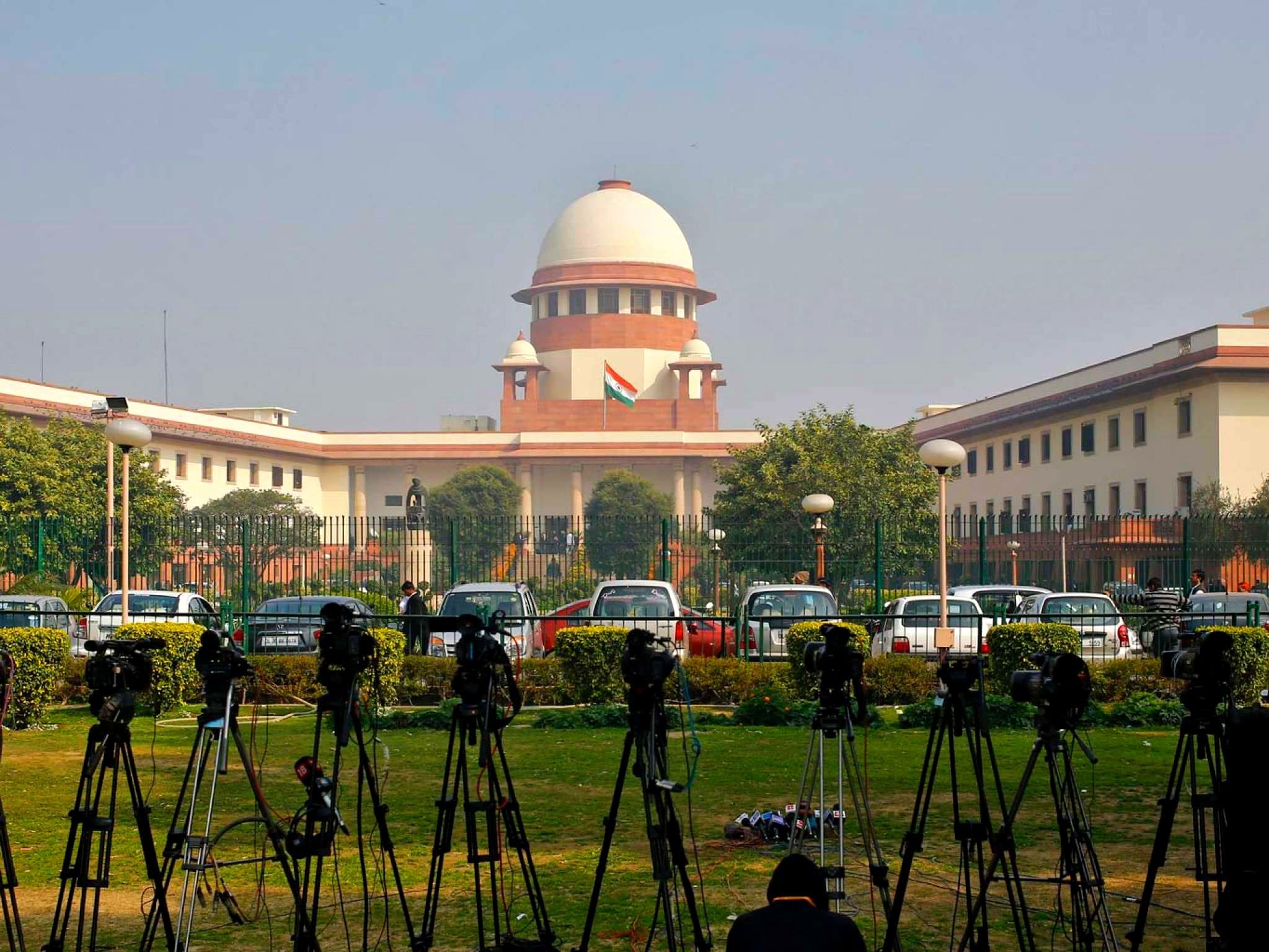
News mixed with views is a dangerous cocktail, Chief Justice of India NV Ramana said while cautioning journalists from succumbing to ideological biases.
The Chief Justice of India was speaking at the RedInk Awards, 2021 organised by the Mumbai Press Club.
Chief Justice Ramana began his speech by highlighting the personal and professional challenges being faced by journalists today.
Those who are serving in conflict zones are willing to risk their lives. Those on regular beats are also no longer safe. Some of those in powerful positions, both political leaders and bureaucracy, mafia of all shades and those on the wrong side of the law—none of them are comfortable with a professional journalist. As a result, you keep getting unpleasant and disturbing messages. I know it's not easy for you and your families to deal with such threats.
Journalists Are Like Judges: CJI Ramana
Appointed chief justice of India in April 2021, Justice Ramana was born to an agricultural family in 1957. He shared that he had been a journalist at the start of his professional career.
Journalists are much like judges, he said. They must do their duty without being influenced by the ideology they hold dear. Report only the facts, with a view to give a complete and accurate picture.
It is often said that the legal profession is a noble profession. I can state that the journalist's job is as noble and is an integral pillar of democracy. Like the legal professional, a journalist also needs to have a strong moral fibre and moral compass. Your conscience is your guide in this profession.
He also made the case for more specialist journalists. "I think it might be necessary for working journalists' unions to organise training camps and orientation programmes for journalists like what we do for judges."

Justice NV Ramana (right) takes oath as the new Chief Justice of India, on April 24, 2021. (Photograph: President of India/Twitter)
Everything Is Subject To Reporting: CJI Ramana
The senior-most judge in the country noted changes to the profession over the years. The evolution from print media to digital and social media "has changed the entire profession", he said.
While easier access to information is a good thing, 24x7 reporting has its downsides.
Nowadays, everything is subject to reporting. Every moment is available to the scrutiny of millions as things get reported 24x7. This places an enormous pressure not only on the person or professional being reported about, but also on the journalist doing the reporting. In the race for ratings, the important journalistic tenet of verification before publishing isn't being followed.
Follow Principles Of Natural Justice: CJI Ramana
This leads to incorrect reporting and social media amplifies that incorrect news in a matter of seconds, the judge lamented.
Unlike print and electronic media, unfortunately, it's almost impossible to hold the social media platforms accountable, he pointed out.
He urged journalists to follow the principles of natural justice when reporting on a story.
...it is almost impossible to hold the social media platforms such as YouTube accountable even after they host most derogatory and defamatory stuff which has potential to ruin careers and lives. You media professionals will have to voluntarily come forward with solutions for such a menace. I advise all of you to follow the principles of natural justice before making adverse comments against someone who is not in a position to defend himself.
News Mixed With Views Is A Dangerous Cocktail: CJI Ramana
The CJI also spoke about ideological biases in news reporting.
Allowing yourself to be coopted by an ideology or the State is a recipe for disaster, he said.
Connected to this is the problem of partial reporting, of cherry-picking facts to give it a particular colour, he added.
Nothing can be more lethal to democracy than the deadly combination of confrontational polity and competitive journalism. Tragically, they feed on each other. History is witness to this hard truth.
Making A Case For Independent Media: CJI Ramana
Round-the-clock news, lack of verification, clickbait headlines are perils facing the profession the chief justice warned.
Making a subtle case for independent media he said...
Experience and reflections suggest that the media organisations run by independent and exclusive Trusts and by the companies which are only into the business of news are still in a position to ward off the pressures of various kinds to a great extent.
For the full text of Chief Justice Ramana's speech, click here.

-
Signature Play: The Classic Cocktail Is Dead. Or Is It?

Classic cocktails are disappearing from India's cocktail menus. But they're still being ordered, taught to bartenders and borrowed from. So, who's really having the last drink?
-
A New Samvat Wishlist: Inclusive Prosperity And Human Development
India has strengthened its economic foundations through infrastructure, digital access and enterprise. Its next growth chapter must deepen productivity, create better livelihoods and widen participation in prosperity.
-
Love, Sex Aur Dhokha: The Audacious Plot To Spy On Jensen Huang
A Taipei dinner, a Singapore chip buyer and a suspected Chinese asset: inside the alleged spy operation that got close to NVIDIA's Jensen Huang.
-
Ten Things I Learnt This Samvat
Patience can be a trap. Cheap stocks can stay cheap. Leverage can wipe you out. What did Samvat 2082 teach us? Niraj Shah writes on 10 lessons from the year gone by.
-
Talking Points This Week: Tech Nerves, FII Buying, And A Faraway Banking Shock
The global markets are not shining this Diwali. The exception in the large markets is, India.
-
Midterm Rally Lasted A Day. The Hard Reality Of A Divided US May Last Two Years | Opinion
Between a contested AI boom, a debt ceiling that arrives in 2027 and a president with every incentive to act alone, the next two years may prove more volatile than the first day's rally suggests.
-
Blue Wave Will Derail the AI Trade but Won't Dismantle the AI Era | Unhedged Position
The Democrats' sweep of the US Congress will see politics collide with economic forces both over the long and short term.
-
It's Time To Take The GST Council's Bet On Trust Global
Payment records can prove India's services exports, and clear, proportionate rules can bring foreign digital sellers into the tax net.
-
Opinion | India at 38: From Innovation Overperformer to Innovation Powerhouse
India now has 453 VC-backed deep science startups, 18 of them late-stage, after 117 percent growth since 2020. Laurus Labs, at USD 9.3 billion, is the most valuable deep science company in any middle-income economy outside China.









