Central Government Expenses On Civilian Salaries Up Threefold In A Decade, Vacancies Stay The Same
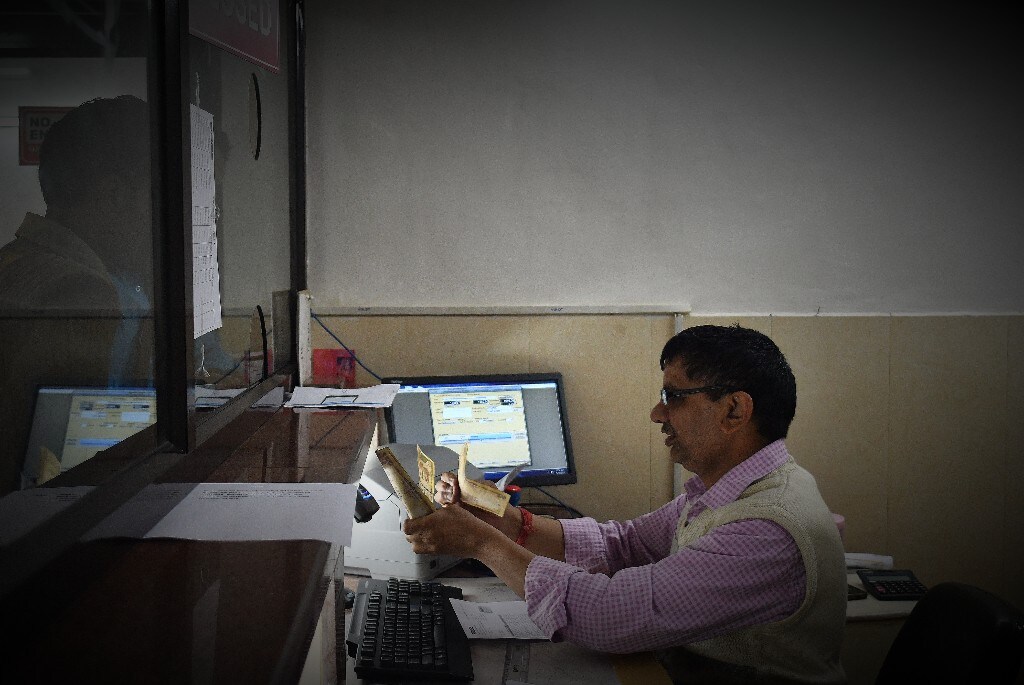
The central government's expenditure on the salaries of civilian employees increased threefold in 10 years between 2006-07 and 2016-17, even as nearly 500,000 posts remained vacant, on average, every year, according to government data.
“A poor country with weak state capacity like India, when confronted with the pressure to redistribute, had necessarily to redistribute inefficiently, using blunt and leaky instruments,” said the Economic Survey of 2016-17. State capacity refers to the government's ability to utilise resources to deliver essential services, such as education and health.
Concerns regarding the quality of government services being affected due to understaffing were raised in the 2015 report of the Seventh Central Pay Commission, the committee to review and revise central government employee pay packages. For every 100,000 people, India had 139 central government employees, compared to the U.S., which had 668, the report said.
Overworked doctors at the Centre-run Safdarjung Hospital demanded an increase in staff to extend out-patient department hours, the Hindu reported on July 14. Similarly, the quality of teaching and research in central universities was affected because a third of teaching posts were vacant, IndiaSpend reported on Aug. 16.
The central government has spent Rs 11 lakh crore ($160 billion), nearly twice the Sri Lanka's gross domestic product in 2017 ($87 billion), on 3.2 million employees in 10 years to 2016-17. The expense rose 340 percent, from Rs 41,676 crore in 2006-07 to Rs 182,513 crore in 2016-17.
There were, on average, 500,000 vacancies in central government jobs over 10 years.
In 2006, of the 3.5 million sanctioned posts, only 88 percent or 3.1 million positions were filled, a gap of 417,495 employees, the data showed. In 2016, 89 percent or 3.2 million of 3.6 million were filled, a vacancy of around 412,752 employees.
Most vacancies were in group C (clerks and office aides) jobs, the data showed. Of the 3.2 million sanctioned posts in group C in 2016-17, 87 percent or 2.8 million were filled.
Vacancies of around 300,000-320,000 posts in group C alone are about three times the employees added (111,909) over 10 years.
Increase In Employee Pay Scale, Increase In Expenditure
“To keep the salary structure of the employees viable, it has become necessary to improve the pay structure of their employees so that better, more competent and talented people could be attracted for governance,” said the report of the Seventh Central Pay Commission, which said government employee salaries should be competitive with the private sector.
The expenditure on base pay increased 331 percent, from Rs 27,834 crore to Rs 1,20,002 crore, over a decade to 2017. Employees received 157 percent more in-hand cash, after the Seventh Central Pay Commission report and the hike in minimum wages (Rs 7,000 to Rs 18,000).
Dearness allowance (DA)–additional compensation to cover cost-of-living increases–accounted for a larger share of the pay structure (42 percent) than basic pay (36 percent) between 2011-12 and 2015-16. The trend changed in 2016-17, after the revisions recommended by the Seventh Central Pay Commission.
In 2016-17, basic salary formed 66 percent of central government salaries, followed by DA (16 percent). House rent and other allowances made up the remaining 4 percent and 14 percent, respectively, according to the report on Pay and Allowance 2016-17.

The department of science and technology, which funds research and development of science and technology associated with water, energy, health, environment, climate, agriculture and food, is running at less than half its capacity, from 37 percent vacancy in 2014 to 55 percent posts vacant in 2016.
Up to 49 percent posts are vacant in the Civil Aviation Ministry, followed by the Corporate Affairs Ministry with 44 percent.
The Defence Ministry had the most vacancies in 2016 with 187,054 posts (31 percent).
Overall, there appears to be a shortage of 25 percent-35 percent staff, on average, across 51 ministries, the data show.
To fill some vacancies, the central government is planning to employ professionals in senior management posts, such as joint secretaries, on contract across 10 areas.
Although there are no data on the number of contract employees, according to this November 2016 reply to the Lok Sabha (lower house of Parliament) by Labour Minister Bandaru Dattatreya, the central government was a major employer of contract workers, according to data released by the Seventh Central Pay Commission. The Centre spent over Rs 300 crore on contractual manpower in 2012-13.
As many as 43 percent of government employees held temporary jobs, according to the 2014 report by the Indian Staffing Federation, an organisation that covers regulations related to outsourcing of skills.
(Chhetri, a graduate of Lady Shri Ram College for Women, is an intern with IndiaSpend.)
This copy has been published in arrangement with IndiaSpend.

-
The Economic Imperative: Analysing The Material Driving Force Behind India-Canada Strategic Reset

This economic complementarity is further reinforced by deep institutional investment ties and talent mobility, which form the bedrock of the bilateral framework.
-
Medicine Pricing: Where Must Profit Stop?
India must confront excessive margins, hidden incentives and regulatory gaps that threaten the integrity of medicine.
-
Why Amazon And Flipkart Are Struggling To Beat Meesho In India's Smaller Cities
With 274 million users and lowest-cost logistics, Meesho is defending its value commerce crown against giants like Amazon and Flipkart.
-
High US Salaries, No Green Card Certainty: The Financial Calculation Facing Indian H-1B Families
The suspension of PERM processing at eight technology employers does not cancel existing H-1B visas. What it does is force a question many Indian families have been avoiding: is the US salary worth tying your career and family plans to one employer?
-
Swiggy vs Eternal: Food Delivery's Two Rivals Are No Longer In The Same Race
Eternal is building a private AI assistant, dark.ai. Swiggy is still working out how to make Instamart pay, with an operating loss of Rs 895 crore in the July-September quarter while Blinkit stayed profitable.
-
Where You Live Shapes How You Get To Work | The Reason Why
Two-wheelers are the most popular way to get to work in India, accounting for nearly 43% of workplace commutes.
-
Unhedged Position: Can India See An Indonesia-Style Time Correction?
The Nifty is trading below levels it first clocked in 2024. Is there, then, as I have suggested in the headline, potential that the current time correction drags on painfully for the next three-five, even ten years?
-
Navigating Friction And Energy Realities: An Analysis Of Marco Rubio's October Visit To India
Occurring at a critical juncture marked by stalled trade negotiations and escalating geopolitical pressures over global energy supplies, the visit offers a profound window into modern US-India relations.
-
India Exports Capital. Why Not Export Trusteeship?
The big question, then, is whether India can build an institution that global borrowers, investors, banks, and lawyers can trust, even without an Indian connection.
-
France's Economy & Politics Are In Crisis | The Reason Why
Let's look at how the French economy and politics evolved under Nicolas Sarkozy, Franois Hollande and Emmanuel Macron.











